
New needle-free flu vaccine aims for major lift in uptake rates
Researchers at The Kids Research Institute Australia hope an Australian-first nasal spray vaccine for two to 11-year-olds will boost flu vaccination this winter.
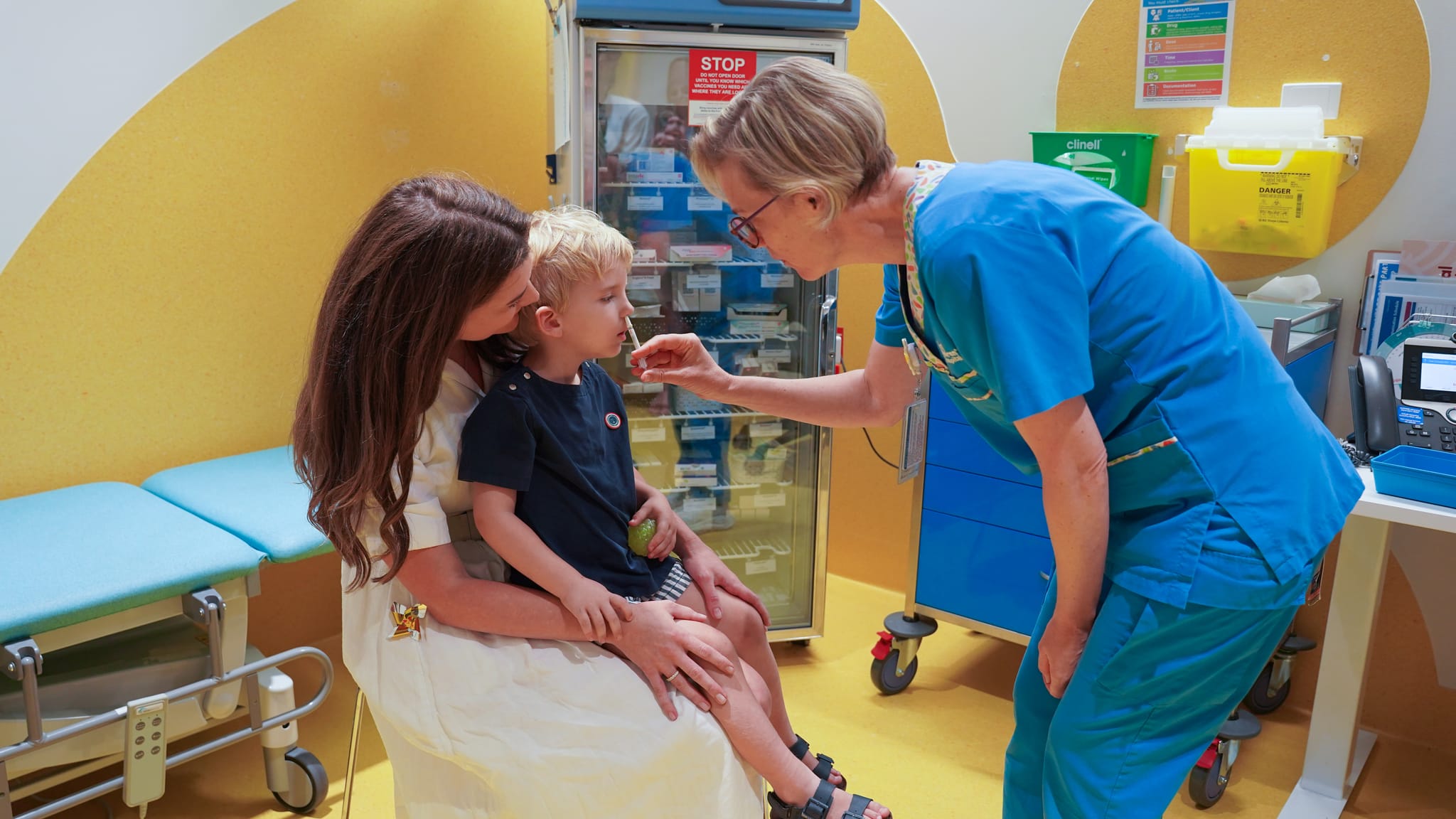
Researchers from The Kids Research Institute Australia hope to see a dramatic rise in the number of children receiving protection against influenza this winter thanks to the introduction of an Australian-first intra-nasal vaccine for kids aged two to 11 years.
Launched today by Hon Meredith Hammat MLA, Minister for Health; Mental Health, and Hon Sabine Winton MLA, Minister for Education; Early Childhood; Preventative Health; Wheatbelt, the FluMist vaccine is delivered via a nasal spray and is now available as part of a new initiative to boost vaccination rates against the life-threatening virus.
Professor Chris Blyth, Head of the Wesfarmers Centre of Vaccines and Infectious Diseases, based at The Kids, Paediatrician at Perth Children’s Hospital and Professor at The University of Western Australia’s Medical School, said that despite a record-breaking flu season in 2025, fewer than one in four Western Australian children aged five or under received the flu vaccine last year, and coverage was even lower in primary school-aged children.
“Each year we hear heart-breaking stories of influenza-related deaths occurring in young children, yet less than 25 per cent of under-fives are receiving vital protection against flu,” Professor Blyth said.
Through extensive consultation with parents and immunisation providers, we know needles are a significant barrier to vaccination for children of all ages. We therefore expect the introduction of FluMist will be a gamechanger for families looking for convenient, safe, needle-free protection.
“FluMist offers the same level of protection against the flu as the traditional injectable vaccine and has been successfully implemented in vaccination programs throughout the northern hemisphere for over twenty years, so it’s fantastic see our 10-year campaign to bring it to Australia come to fruition,” he said.
Western Australia’s nasal vaccine program boasts the broadest eligibility nation-wide, with Queensland, New South Wales, and South Australia the only other states providing the nasal vaccine for children from two to five years.
Professor Hannah Moore OAM, Theme Head, Infectious Diseases at The Kids, and Professor at Curtin University’s School of Population Health, said the extended eligibility to 11 years of age will have a major impact on the state’s influenza cases.
“Our modelling data has demonstrated that investment in safeguarding primary school-aged children is extremely beneficial, and this is because this age group is often the one spreading the virus to vulnerable community members,” Professor Moore said.
If we can increase flu vaccine uptake rates in school-aged children by just 10 or 20 per cent, this would reduce flu cases across all age groups by up to 30 per cent.
“With needle-free protection now widely available through GPs, pharmacies and immunisation clinics, we hope to see Western Australian kids having the highest flu vaccine uptake rates in Australia, and I applaud the commitment of the Cook Labor Government in prioritising protection against influenza,” Professor Moore said.
Visit the Healthy WA influenza page for more information about the new nasal flu vaccine.
First published Tuesday 14 April 2026.
View all news articles