
Australia’s first RSV immunisation program cuts newborn hospitalisations by almost half
Australia’s new respiratory syncytial virus (RSV) immunisation program cut hospital admissions for Australia’s youngest babies by almost half in its first year, a new major national study has shown.
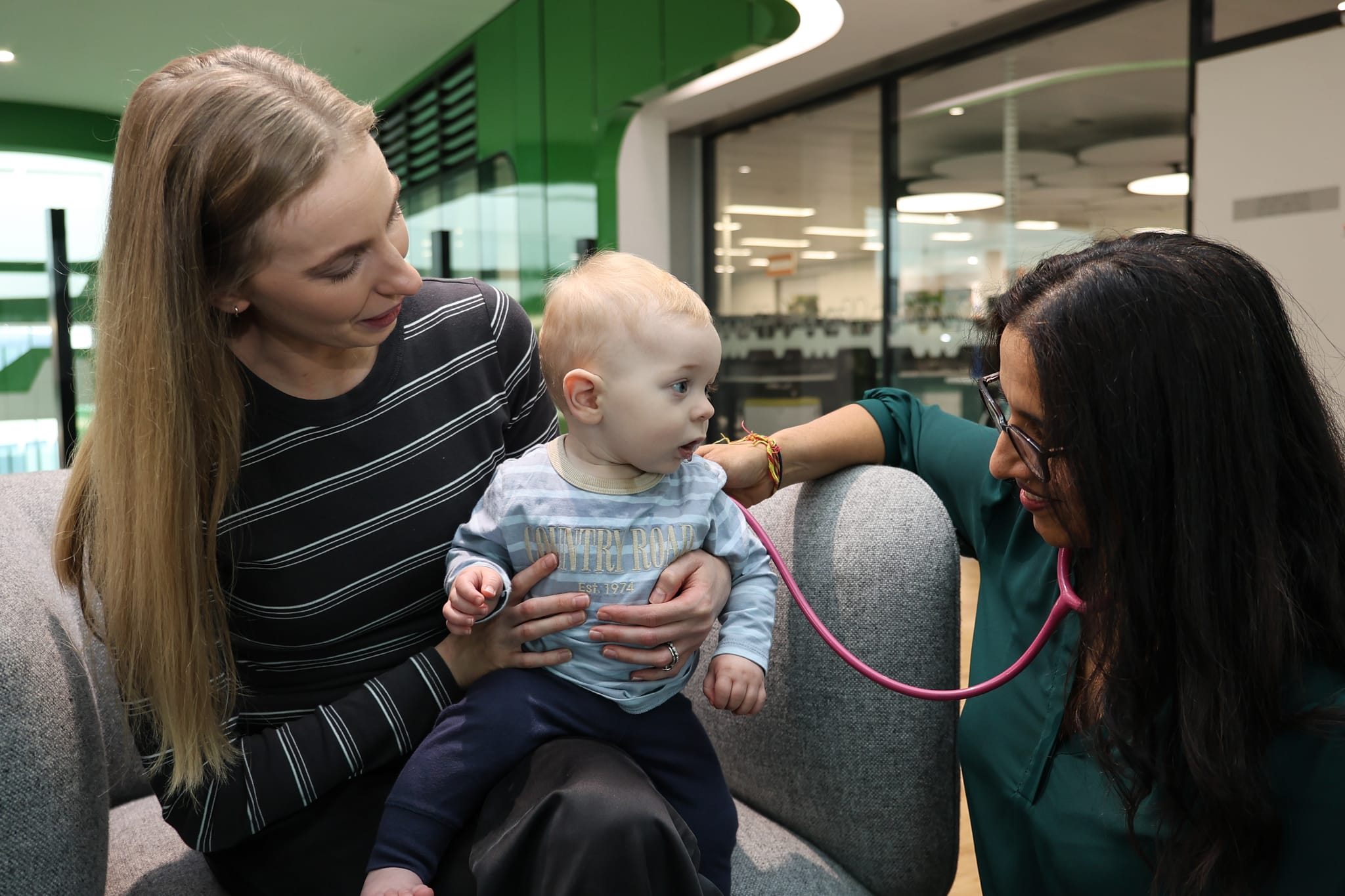
Australia’s new respiratory syncytial virus (RSV) immunisation program cut hospital admissions for Australia’s youngest babies by almost half in its first year, a new major national study has shown.
Launched in February 2025, the RSV Maternal and Infant Protection Program (RSV-MIPP) offered free maternal RSV vaccination to pregnant women across the country under the National Immunisation Program, thanks to a $174.5 million investment by the Federal Government. Newborns who did not receive protection during pregnancy were eligible for the monoclonal antibody nirsevimab through state- and territory-funded programs.
Latest research conducted by The Kids Research Institute Australia, the National Centre for Immunisation Research and Surveillance (NCIRS) and Monash University, in collaboration with 13 hospitals across Australia, found RSV-associated hospitalisations fell by 43.8% in babies aged less than three months – the group at highest risk of severe RSV disease.
Lead researcher Dr Ushma Wadia, clinician-scientist at the Wesfarmers Centre of Vaccines and Infectious Diseases, based at The Kids, and Paediatrician at Perth Children’s Hospital, said the results showed both the maternal vaccination and immunisations for babies were highly effective in providing protection against RSV.
“These findings represent the first real-world evidence from the southern hemisphere demonstrating the effectiveness of a hybrid RSV prevention strategy at national scale,” Dr Wadia said.
“In 2025, we followed young children with RSV admitted to hospitals from the Paediatric Active Enhanced Disease Surveillance network and Influenza Complications Alert Network (PAEDS-FluCAN).
"Babies born to mothers who received the vaccine were 80 per cent less likely to be admitted to hospital with RSV and babies who received nirsevimab 90 per cent less likely to be admitted compared with those who were not immunised.
“Newborns are particularly vulnerable to the life-threatening complications of RSV such as severe bronchiolitis and pneumonia, so it’s especially pleasing to see a 44 per cent reduction in hospitalisations in babies up to three months of age.
“We also found that babies born between October 2024 and mid-February 2025 who received nirsevimab as part of a catch-up cohort received strong protection against the virus, with 87 per cent lower risk of admission with RSV.”
The newly introduced immunisation program is the result of more than two decades of research, modelling and collaborative efforts by researchers dedicated to providing babies and young children with vital protection against RSV.
NCIRS Associate Director and paediatrician, Professor Nick Wood, said RSV was a leading cause of hospitalisation in young infants in Australia with limited treatment options once infected, placing significant pressure on families and hospitals each respiratory season.
“Prior to the implementation of the RSV prevention program, about one in 50 children required hospitalisation for RSV in their first year of life, with almost all infants infected by age three,” Professor Wood said.
“Seeing fewer very young babies admitted to hospital with RSV thanks to the new prevention products is a significant step forward in protecting babies from this nasty infection and helps ensure paediatric hospital beds and resources are available for those who need them most.”
Surveillance through PAEDS-FluCAN is ongoing and will inform future research to better understand how long protection from immunisation lasts and how the program performs over multiple RSV seasons. FluCAN and PAEDS networks are funded by the Australian Department of Health, Disability and Aged Care.
Read the study here: Impact and Effectiveness of Australia's 2025 Hybrid RSV Immunisation Program: Results from the PAEDS-FluCAN Network.
For more information on Australia’s RSV immunisation program visit Respiratory syncytial virus (RSV) vaccine | Australian Government Department of Health, Disability and Ageing.
About the Wesfarmers Centre of Vaccines and Infectious Diseases
The Wesfarmers Centre of Vaccines and Infectious Diseases at The Kids Research Institute Australia was established in 2014 thanks to a four-year, $5 million grant from Wesfarmers Limited. The Wesfarmers Centre has become a national leader in its field, utilising international collaborations to prevent and improve the treatment of infectious diseases in children and adolescents.
The Wesfarmers Centre is home to a world-class community of researchers working on a broad range of competitively funded and potentially ground-breaking projects. The success of the Wesfarmers Centre has secured additional funding through to 2026, allowing it to continue to grow and become a global leader in children’s infectious diseases research.
About the National Centre for Immunisation Research and Surveillance
The National Centre for Immunisation Research and Surveillance is the leading research organisation in Australia working to support evidence-based policy development for the evaluation of the National Immunisation Program and surveillance of vaccine preventable diseases, vaccine coverage and vaccine safety.
First published Thursday 14 May 2026.
View all news articles