
Simple intervention can improve health outcomes for premature babies
An inexpensive set of eye masks and ear plugs can help premature babies develop a circadian rhythm increase their growth, enhance their immunity, and increase sleep by nearly one hour per day.
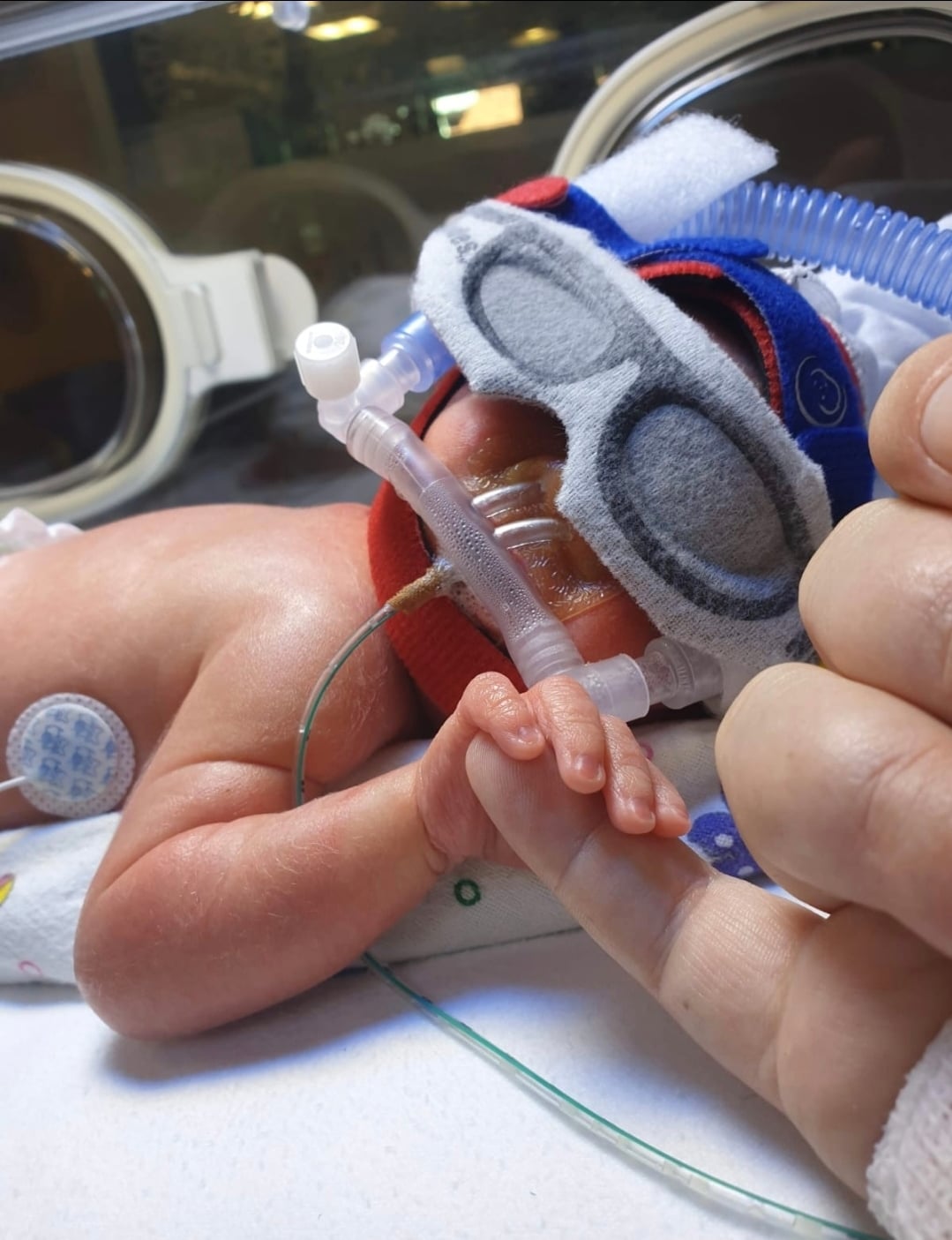
New research from The Kids Research Institute Australia shows the simple intervention helped babies born extremely premature establish circadian rhythms, which play an important role in regulating immune function and supporting healthy growth and development.
The CIRCA DIEM Study, a partnership between The Kids Research Institute Australia and the Child and Adolescent Health Service, recruited more than 800 preterm infants across 11 hospitals in Australia and New Zealand to take part in the landmark study.
During their hospital stay, preterm infants were randomised to an intervention group which simulated a day and night cycle with eye masks and ear plugs worn overnight to reduce exposure to light and noise – alongside their removal during the daytime - with the infants in the control group receiving standard care in which light and noise levels remain relatively constant.
Led by Professor Jane Pillow, Head of Developmental Chronobiology at The Kids Research Institute Australia and Senior Principal Research Fellow at The University of Western Australia, said the results clearly showed that even extremely premature babies benefit for having a circadian rhythm.
Dr Jane Pillow
“Our results showed that babies in the intervention group slept longer and more efficiently, grew longer, and were almost two-thirds less likely to develop necrotising enterocolitis, a terrible and severe inflammation of the gut lining which can cause sepsis and death in neonates, and have lifelong implications for survivors,” Professor Pillow said.
The study showed babies with circadian rhythms were also 23 per cent more likely to have been discharged from a tertiary hospital to a step-down unit, and 20 per cent more likely to be discharged home at any point during their hospital admission.
With neonatal intensive care costing the healthcare system thousands of dollars per day, simple, inexpensive interventions can make a significant difference - helping babies get home sooner, freeing up valuable neonatal intensive care capacity and easing pressure on the hospital system," she said.
"The masks and ear plugs, which cost just $66 per newborn over an eight-to-twelve-week period, have the potential to support babies’ healthy development while also easing some of the pressures experienced by parents.
“By supporting longer periods of sleep and healthy brain development in premature babies, this approach may give parents more opportunity to rest and recover once the babies are discharged home following what can be a physically and emotionally challenging birth and newborn experience."
Next month, researchers will launch the CIRCA DIEM KIDS Study that will evaluate children in the study as they start primary school, to determine whether establishing a circadian rhythm earlier in life also improves their physical, neurological, and wellbeing outcomes as they grow older.
“It’s our hope that children who used the masks and ear plugs will have increased school readiness, vision, hearing, sleep, lung function, and overall wellbeing, protecting them against the lifelong health and wellbeing impacts that typically affect people born premature," Professor Pillow said.
This research was made possible by funding from the NHMRC and Channel 7 Telethon.
----
Family Story: Jennifer Batten and son, Thomas

I went into the first stages of labour at around 22 weeks and was admitted to hospital, with doctors warning Thomas could be born that night. Thankfully, he held on until 31 weeks, which amazed everyone. We were approached about joining the CIRCA DIEM trial when we'd only been in the NICU for about half a day.
Thomas was in the high-care nursery, where the noise and stimulation were constant. We'd only experienced it for a few hours and already found it overwhelming, so we couldn't help thinking about what it must be like for a tiny baby. Joining the study was a no-brainer for us. I thought it would give Thomas a chance to escape some of the chaos of the NICU overnight. We'd come in and find him tucked up with his little sunglasses and earplugs on, which was really lovely.
Thomas came home at around 36 weeks, earlier than doctors had initially expected. He's just turned six and is now in Year 1. When I think back to those early conversations with doctors, who prepared us for every possible outcome, I look at him now and feel incredibly lucky. He's fit, healthy and incredibly smart.
First published Wednesday 11 November 2026.
View all news articles