
Prime Minister's Prize for Professor Asha Bowen
Infectious diseases clinician researcher Professor Asha Bowen OAM has received the prestigious Frank Fenner Prize for Life Scientist of the Year at the 2026 Prime Minister's Prizes for Science.
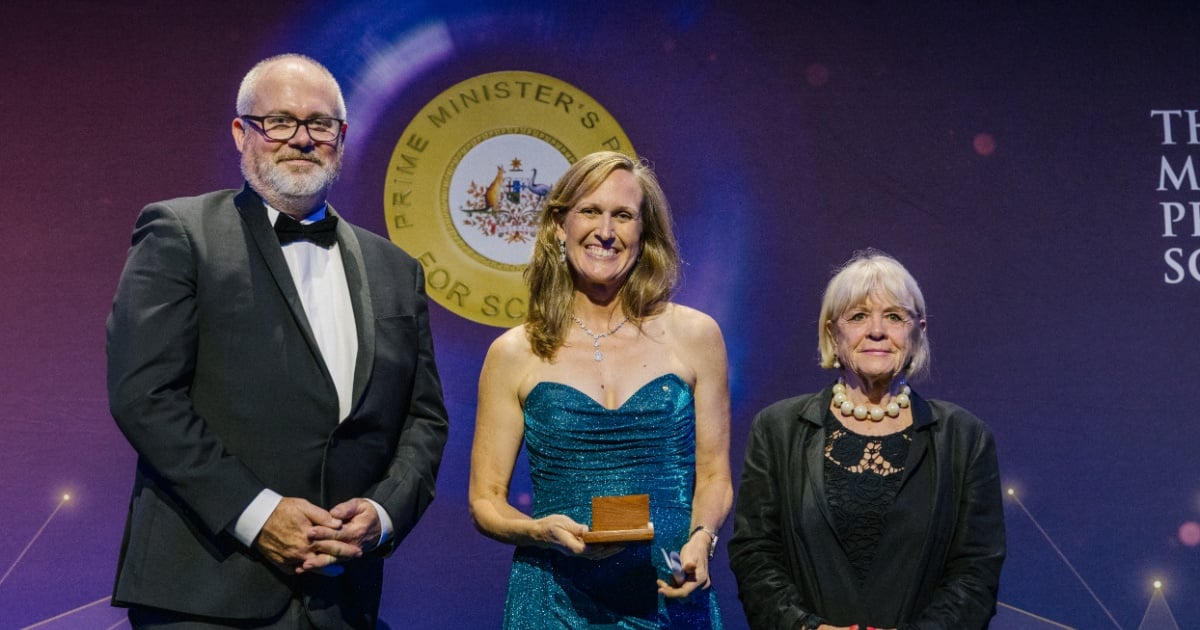
The Hon Tim Ayres, Minister for Industry and Innovation, Professor Asha Bowen OAM, and Marilyn Fenner, Frank Fenner’s daughter.
Infectious diseases clinician researcher Professor Asha Bowen OAM has received the prestigious Frank Fenner Prize for Life Scientist of the Year at the 2026 Prime Minister's Prizes for Science.
The prize recognises her pioneering research that has transformed the prevention and treatment of childhood skin infections and improved health outcomes for Aboriginal children across Australia.
Head of the Healthy Skin and ARF Prevention team at The Kids Research Institute Australia, a paediatric infectious diseases physician at Perth Children’s Hospital, and Professor at The University of Western Australia, Professor Bowen has dedicated her career to addressing one of Australia's most significant but under-recognised child health inequities.
Her research revealed that Aboriginal children living in remote communities had the world's highest documented prevalence of impetigo, with almost half of children affected by painful skin sores at any given time. Rather than simply documenting the problem, Professor Bowen worked alongside Aboriginal communities to develop practical, evidence-based solutions.
This culminated in the landmark See, Treat, Prevent (SToP) Trial, conducted across nine remote Kimberley communities involving 915 children. Through a model combining surveillance, treatment, prevention and community-led health promotion, the trial achieved a 50 per cent reduction in skin infections - the first significant decrease recorded in more than 50 years.
Professor Bowen's PhD research also demonstrated that an oral antibiotic was as effective as painful penicillin injections for treating skin sores, providing children and families with a simpler and less invasive treatment option. Her work further established the role of Strep A skin infections in serious health conditions including acute rheumatic fever and rheumatic heart disease, helping shape national prevention guidelines for RHD.
Professor Bowen and her team have worked with remote and urban living Aboriginal Elders, leaders, communities and children to develop a suite of healthy skin resources including in local language and the team has also recently launched an Aboriginal community-led and co-designed Australian-first sun safety and skin cancer awareness campaign, Every Shade Every Mob.
Professor Bowen said the prize reflected the contributions of the many communities, families, health workers, students, project staff and researchers she had worked alongside throughout her career.
"Aboriginal children living in remote communities of Australia had the highest burden of impetigo in the world. Once I discovered this appalling statistic, I knew that I had the skills, passion and motivation to do something about it," Professor Bowen said.
"In partnership with communities, I have really achieved important change for remote-living Aboriginal children."
The Kids Executive Director Professor Caroline Homer AO said the prize was richly deserved.
"This is fantastic recognition of Asha's contribution to child health, infectious diseases research and health equity," Professor Homer said. "Asha has shown extraordinary leadership over many years, working in genuine partnership with Aboriginal communities to deliver research that has changed clinical practice, informed national policy and improved the lives of children and families across Australia."
First published Wednesday 25 November 2026.
View all news articles