
ELITE: Early Detection of Lung Disease to Improve Lifelong Trajectories
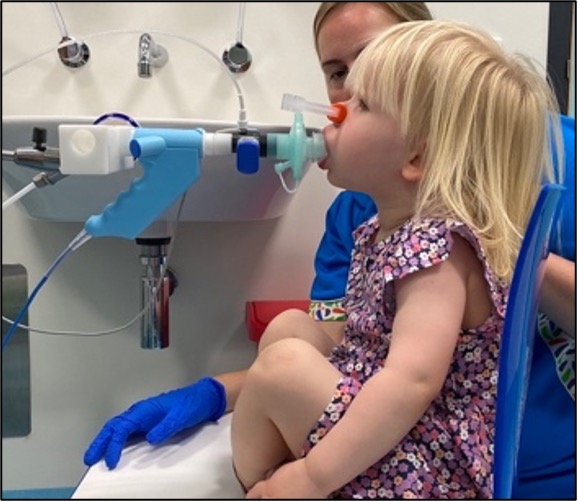
This national, multi-centre study will generate the evidence needed to implement promising preschool lung function tests, multiple breath washout (MBW) and oscillometry (OSC), into clinical practice to enable early detection of lung function impairment in young children.
Investigators
- A/Prof Kathryn Ramsey
- A/Prof Shannon Simpson
- Dr Elizabeth Smith
- Dr David Hancock
- Prof Andre Schultz
- Natasha Bear
- Heidi Redmond
Project description
Lung function in early life is a strong predictor of lifelong respiratory health. Lung growth and development begins in utero and continues throughout childhood, leading to a trajectory of lung function, which peaks in early adulthood, and then naturally declines with age. During the critical phases of lung development, early-life insults (e.g., maternal smoking, preterm birth, environmental exposures, infections) have a disproportionate impact on lung growth and structure, resulting in early decrements in lung function. Individuals with persistently low lung function have an increased risk of early-onset chronic lung disease, cardiovascular disease, and premature death. Therefore, optimisation of lung function from early childhood is critical.
Sensitive lung function tests in young children are lacking. Spirometry, the current gold standard technique to quantify lung function impairment and monitor progression, is difficult for young children to perform due to the complex forced expiratory manoeuvres required. The implementation of accurate, sensitive, and feasible lung function tests to detect abnormalities in peripheral airway function in young children will aid early detection and diagnosis of chronic lung disease.
The ELITE project will encompass the optimisation of two lung function tests that are 1) highly feasible in young children because they rely on relaxed, tidal breathing rather than the maximal, forced breathing manoeuvres required for spirometry; and 2) sensitive to changes in peripheral airway function (where early lung disease develops), in contrast to spirometry which can only detect changes to central, large airway function, which occurs in later-stage established lung damage. These techniques have been utilised extensively in the research setting with promising results but currently lack the evidence, standardisation, and refinement for implementation into routine clinical practice.
We hypothesise that MBW and OSC can facilitate early detection of lung function impairment in young children, thus enabling earlier intervention to reduce morbidity and mortality from chronic respiratory disease.
Study design
This project will provide the evidence and standardisation needed to establish MBW and OSC as clinical tests to detect peripheral airway abnormalities and identify those children with a high likelihood of developing progressive chronic lung disease. To achieve this, we will:
- Utilise existing Australian longitudinal cohort data to fill gaps in evidence on the clinical utility of OSC and MBW to detect lung function impairment and progression in young children
- Prospectively assess the utility of MBW and oscillometry for early detection and monitoring of lung function abnormalities in young children at high risk of chronic lung disease.
- Identify and address barriers to clinical implementation of MBW and oscillometry using a structured mixed‑methods Delphi process to inform feasible, site‑specific implementation strategies.
Eligibility
- Recurrent wheeze (>3 episodes of wheezing in the past year), severe prematurity (<28wks gestation), chronic wet cough (current history of daily wet cough >4 weeks duration), or no history of respiratory disease
- Aged between 2-6 years of age
For more information, please email elite@thekids.org.au.
Funders
Medical Research Future Fund (GTN2045636)
External collaborators
- Prof Phil Robinson, Dr Cassidy Du Berry, A/Prof Shiv Shanthikumar, Dr Liam Welsh, (Murdoch Childrens Research Institute)
- Prof Peter Sly, Prof Paul Robinson, Dr Tamara Blake, Dr Matthew Wong (University of Queensland)
- A/Prof Sanja Stanojevic (Dalhousie University)
- Prof Zoltan Hantos (University of Szeged)
- Dr Marshall Makate (Curtin University)
- Mrs Amber Bates (Tiny Sparks WA)[KR1]
- Judy Wettenhall
- Michelle Johnson
- Jo Armstrong (Cystic Fibrosis Australia)
- Tanya deKroo (Lung Foundation Australia)
- Dr Hayley See (TSANZ)