
Search
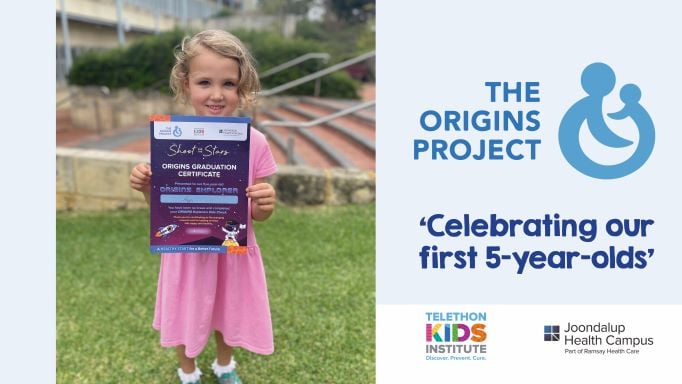
ORIGINS is celebrating its first five-year-old 'graduates'.

By participating in ORIGINS, you are contributing to one of the largest and most comprehensive birth cohort studies in Australia.
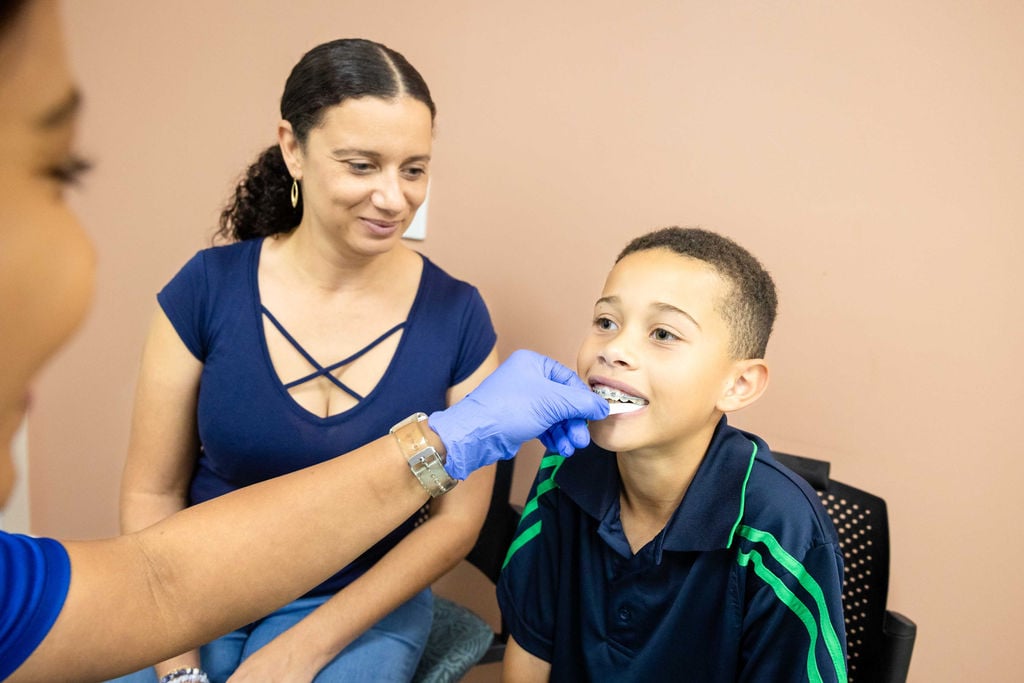
ORIGINS is an interventional cohort study, meaning participants receive timely feedback and an action plan to address any potential abnormalities.
ORIGINS is an interventional cohort study, meaning participants receive timely feedback and an action plan to address any potential abnormalities.
Previous studies have reported that mode of delivery, particularly cesarean delivery is associated with neurodevelopmental outcomes in children. This study evaluates behavioral and neuropsychological test scores in children based on mode of delivery.
Parent-child interactions (PCI) in infants with an elevated likelihood (EL) of autism start to diverge from other infants toward the end of the first year. This divergence is often attributed to emerging features of autism impacting infant social interactions in ways that become increasingly amplified. The aim was to identify which, if any, 12-month autism features were associated with later PCI qualities.
Research from large population-based studies investigating the language and academic outcomes for bilingual children is rare. The current study aimed to investigate the influence of dual language exposure on (i) English vocabulary outcomes at 5 years (126 bilinguals, 1675 monolinguals), and 10 years (vocabulary: 92 bilinguals, 1413 monolinguals:), and (ii) academic outcomes at 10 years (107 bilinguals, 1746 monolinguals).

The Kids Research Institute Australia's Professor Andrew Whitehouse and Sarah Pillar share four things families can do to support their child while waiting to receive an ADHD or autism diagnostic assessment.

Professor Andrew Whitehouse, the Angela Wright Bennett Professor of Autism Research and CliniKids Director, has been appointed Deputy Director (Research) at The Kids Research Institute Australia.
Autism spectrum disorder (ASD) is a group of neurodevelopmental disorders which are more common in males. The 'prenatal sex steroid' hypothesis links excessive sex-steroid exposure during foetal life with the behavioural differences observed in ASD. However, the reason why sex steroid exposure may be excessive remains unclear. Epidemiological studies have identified several environmental risk factors associated with ASD, including developmental vitamin D (DVD) deficiency.