Skip to content

Search

Showing results for "lung disease preterm"

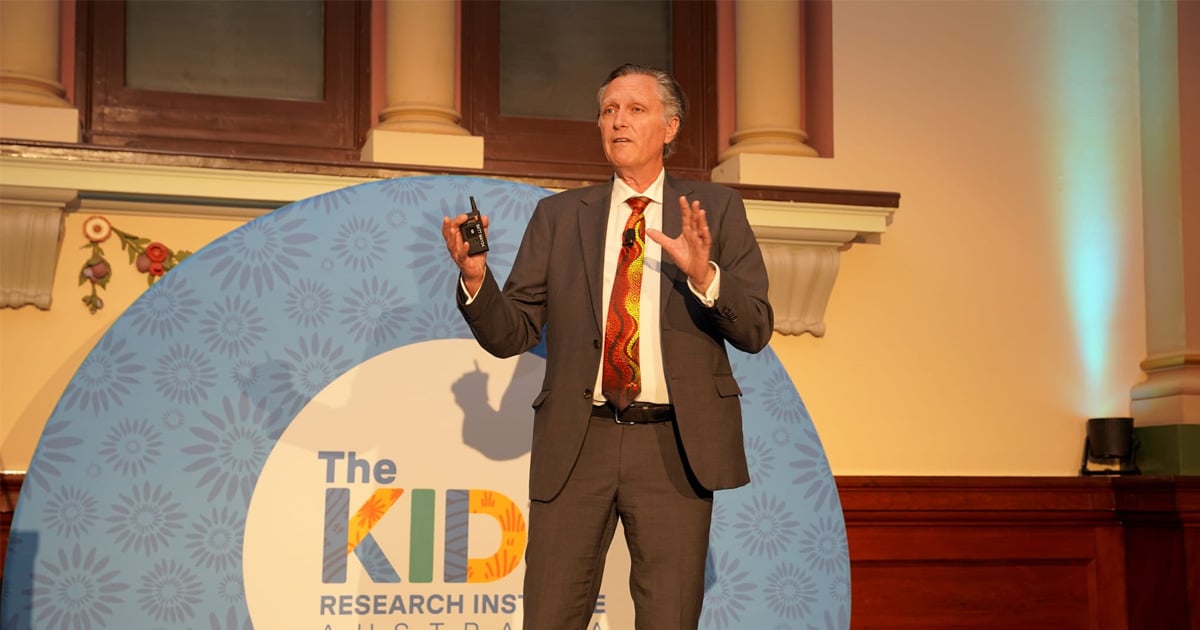
Associate Professor Glenn Pearson

Director of First Nations Strategy and Leadership; Head, First Nations Health and Equity Research

Meet END RHD CRE Researcher Dr Simone Reynolds

Learn more about the background and motivations of END RHD CRE Research Fellow Simone Reynolds.

Prevalence of respiratory viruses in community-acquired pneumonia in children: a systematic review and meta-analysis

Respiratory viruses are increasingly detected in children with community-acquired pneumonia but prevalence estimates vary substantially. We aimed to systematically review and pool estimates for 22 viruses commonly associated with community-acquired pneumonia.

Association between maternal hyperglycemia in pregnancy and offspring anthropometry in early childhood: the pandora wave 1 study

In-utero hyperglycemia exposure influences later cardiometabolic risk, although few studies include women with pre-existing type 2 diabetes (T2D) or assess maternal body mass index (BMI) as a potential confounder.

Incidence of Stroke in the Aboriginal and Non-Aboriginal Populations of Australia: A Data Linkage Study

Most estimates of stroke incidence among Aboriginal and Torres Strait Islander (hereinafter Aboriginal) Australians are confined to single regions and include small sample sizes. We aimed to measure and compare stroke incidence in Aboriginal and non-Aboriginal residents across central and western Australia.

Spatial distribution of rotavirus immunization coverage in Ethiopia: a geospatial analysis using the Bayesian approach

Rotavirus causes substantial morbidity and mortality every year, particularly among under-five children. Despite Rotavirus immunization preventing severe diarrheal disease in children, the vaccination coverage remains inadequate in many African countries including Ethiopia.

Frankenstein Cas9: engineering improved gene editing systems

The discovery of CRISPR-Cas9 and its widespread use has revolutionised and propelled research in biological sciences.

Molecular analysis of human tick-bitten skin yields signatures associated with distinct spatial and temporal trajectories - A proof-of-concept study

Tick-associated diseases present challenges due to tridirectional interactions among host-specific responses, tick toxins and salivary proteins as well as microbes. We aimed to uncover molecular mechanisms in tick-bitten skin samples and contralateral skin samples collected simultaneously from the same participants, using spatial transcriptomics.