Skip to content

Search

Showing results for "1"

Forest cover and climate as potential drivers for dengue fever in Sumatra and Kalimantan 2006–2016: a spatiotemporal analysis

Dengue fever in Sumatra and Kalimantan was highly seasonal and associated with climate factors and deforestation

Prominent IgE-binding and cytokine-inducing capacities of a newly cloned N-terminal region of Der f 14, an apolipophorin-like house dust mite allergen

The aims of this study were to clone the cDNA of Der f 14 corresponding to M-177 and to elucidate the allergenic capacities of the Der f 14-N.

The relationship between nutrition in infancy and cognitive performance during adolescence

Nutrition in early childhood may have a long-term association with fundamental cognitive processing speed, which is likely to be related to enhanced brain...

Progression of early structural lung disease in young children with cystic fibrosis assessed using CT

Cross-sectional studies implicate neutrophilic inflammation and pulmonary infection as risk factors for early structural lung disease in infants and young...

Aboriginal Advisory Committee - Kids Easy Breathing Study

We are looking for Aboriginal parents who are passionate about lung health to join the Aboriginal Advisory Committee (AAC) for our Kids Easy Breathing Study (KEBS). Research shows 1 in 5 Aboriginal* bubs in hospital for bronchiolitis (a common viral chest infection) later had serious damage to their lungs. The aim of our study is to find out why Aboriginal bubbies are more likely to develop long-term lung sickness.

Six cases of ENPP1 pathogenic variants causing autosomal recessive hypophosphatemic rickets type 2 and generalized arterial calcification of infancy

Autosomal recessive hypophosphatemic rickets type 2 (ARHR2) and generalized arterial calcification of infancy (GACI) occur secondary to biallelic ectonucleotide pyrophosphate/phosphodiesterase 1 (ENPP1) loss-of-function pathogenic variants. GACI is a life-threatening condition, often presenting in the neonatal period with heart failure and hypertension, caused by calcification of the media in large- and medium-sized arteries.

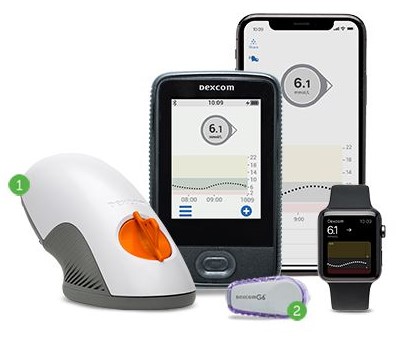
CGM accuracy: Contrasting CE marking with the governmental controls of the USA (FDA) and Australia (TGA): A narrative review

The National Institute for Clinical Excellence updated guidance for continuous glucose monitoring (CGM) in 2022, recommending that CGM be available to all people living with type 1 diabetes. Manufacturers can trade in the UK with Conformité Européenne (CE) marking without an initial national assessment. The regulatory process for CGM CE marking, in contrast to the Food and Drug Administration (FDA) and Australian Therapeutic Goods Administration (TGA) process, is described.

Preparing for school in 2024

It's the new school year and by now your child's school should have a copy of their updated Diabetes Management Plan. Adele Connor, Diabetes in

Diabetes and the new school year

It is important to make sure your school has an up-to-date diabetes management plan now that school has begun.

In other news ....

Diabetes-related news, funding announcements and our latest published research.