
Search
Showing results for "lung disease preterm"
A new study has found that infectious diseases are the most common reason that children under two years of age are admitted to hospital.
Trial of new vaccine that could provide women with additional protection against Human Papillomavirus (HPV) types known to cause cervical cancer.
Australian researchers have found that exposure to measured doses of ultraviolet light, such as sunlight, could reduce asthma.

There are many benefits to becoming a Supply Partner to the Institute that can help your business in a variety of ways.
This five-year project in Western Australia (WA) aims to promote vitamin D sufficiency among Aboriginal people by developing food-based dietary strategies to increase vitamin D intakes and by encouraging safe sun exposure.
This project investigates the prevalence, risk factors, and causal impact of COVID-19 lockdowns on mental health disorders, self-harm, and suicide among Australian children.
Jennifer Peter Kent Richmond RN MBBS MRCP(UK) FRACP Clinical Research Manager Head, Vaccine Trials Group Jennifer.Kent@thekids.org.au Clinical
We reviewed literature and RettNet to explore firsthand perspectives of gastrointestinal issues in Rett Syndrome, then developed recommendations with experts.
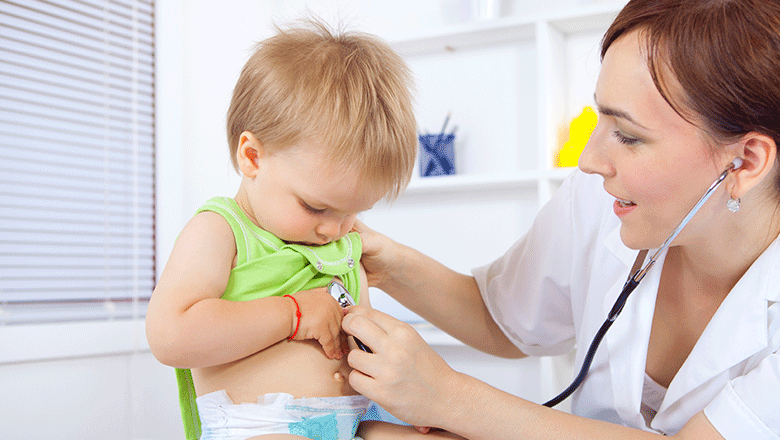
A The Kids Research Institute Australia study designed to gauge community awareness of respiratory syncytial virus (RSV) has found parents and parents-to-be are highly aware of the virus and are open to immunisation to tackle it.

All participating families to receive $10 e-voucher for this generous donation.*