
Search
Showing results for "Childhood interstitial lung disease "
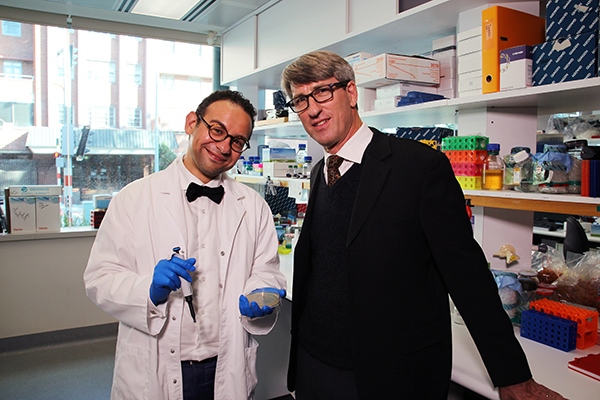
The Kids Research Institute Australia and WA pharmaceuticals company Boulos and Cooper have signed a $685,000 agreement to develop what could be the first new class of antibiotics in decades.
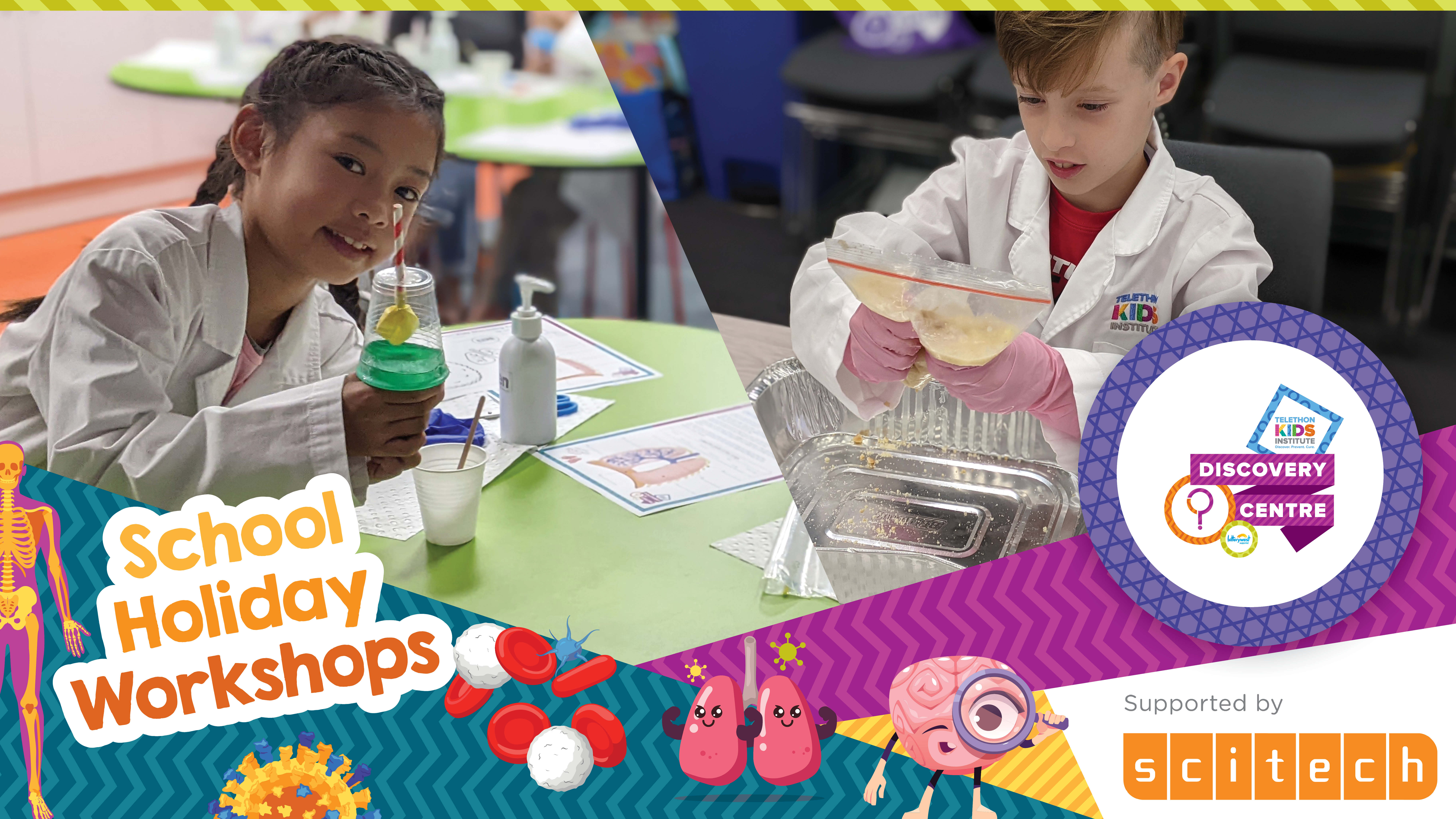
Everything you need to know to book tickets to our upcoming school holiday workshops held at Scitech!
Contact us If you'd like to get in touch, please contact us by phone or email. Phone: 0400 450 240 Email: vtg@thekids.org.au Clostridium difficile

The Kids Research Institute Australia strongly supports the Federal Government’s announcement today to introduce a suite of reforms aimed at banning non-prescription vaping products in Australia.
Licensed recombinant protein respiratory syncytial virus (RSV) vaccines can prevent substantial morbidity in older adults. However, revaccination to prevent waning protection may be suboptimal, prompting the exploration of candidates for heterologous boosting. In this clinical trial of RSV vaccine-naive older adults, we evaluated SCB-1019T, a novel unadjuvanted bivalent RSV prefusion F (preF) protein vaccine stabilized via Trimer-Tag technology, in comparison to the licensed AS01E-adjuvanted RSV vaccine Arexvy.
SARS-CoV-2 nucleocapsid (N) protein antibodies can be used to identify the serological response to natural infection in those who have previously received a COVID-19 spike-based vaccine. Anti-N antibody responses can also be induced by inactivated whole SARS-CoV-2 virus vaccines, such as CoronaVac. We aimed to characterise antibody responses to the N protein following COVID-19 and following vaccination with CoronaVac.

Secondary students have the opportunity to hear from Associate Professor Asha Bowen, a 2018 L’Oreal-UNESCO Women in Science Fellow, in a free online event this National Science Week.
We have previously reported the safety and immunogenicity four weeks after two doses of the Clover COVID-19 vaccine candidate, SCB-2019, a stabilized pre-fusion form of the SARS-CoV-2 S-protein (S-trimer). We now report persistence of antibodies up to 6 months after vaccination, and cross-neutralization titers against three Variants of Concern.
Preterm infants are particularly susceptible to bacterial late-onset sepsis (LOS). Diagnosis by blood culture and inflammatory markers have sub-optimal sensitivity and specificity and prolonged reporting times. There is an urgent need for more rapid, accurate adjunctive diagnostics in LOS to improve management and minimise antibiotic exposure.
Streptococcus pyogenes is a leading cause of infection-related morbidity and mortality. A reinvigorated vaccine development effort calls for new clinically relevant human S pyogenes experimental infection models to support proof of concept evaluation of candidate vaccines. We describe the initial Controlled Human Infection for Vaccination Against S pyogenes (CHIVAS-M75) study, in which we aimed to identify a dose of emm75 S pyogenes that causes acute pharyngitis in at least 60% of volunteers when applied to the pharynx by swab.