
Search
Showing results for "8"

Scientific Software Developer
Amy Carol Finlay-Jones Bower BPsych(Hons), MPsych(Clinical), MHealthEcon, PhD (Clin Psych) MBBS MSc PhD FAFPHM DLSHTM FPHA Head, Early
Martyn Amy Symons Finlay-Jones B.A. (Hons) PhD. BPsych(Hons), MPsych(Clinical), MHealthEcon, PhD (Clin Psych) Honorary Research Associate Head, Early

Following last year's World Rett Syndrome Congress held in New Orleans, the 3rd European Rett Syndrome Conference was held in the Netherlands over 3 days.
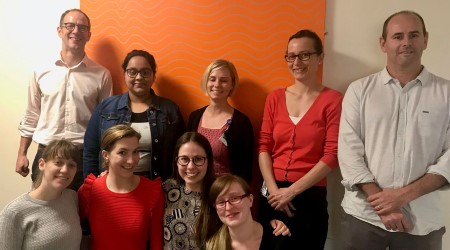
Clinical Professor Tobias Strunk, Dr Andrew Currie and their Neonatal Infection and Immunity Team have become the newest members of the Wesfarmers Centre of Vaccines and Infectious Diseases.

The ORIGINS Project’s Early Moves study is investigating whether a baby’s early movements can predict learning difficulties later in childhood.
There is lots of news to report from the clinic including holiday shutdown dates, appointment scheduling, staff updates, changes to creche, and service availability.
Early childhood wheeze is a major risk factor for asthma. However, not all children who wheeze will develop the disease. The airway epithelium has been shown to be involved in asthma pathogenesis. Despite this, the airway epithelium of children with acute wheeze remains poorly characterized.
Nirsevimab is a long-acting monoclonal antibody used to prevent respiratory syncytial virus (RSV) infection in infants and high-risk children. During the 2024 RSV season in Western Australia, 21 922 doses were administered to infants entering their first season and 1221 doses to at-risk children. In this context, the selection and spread of escape variants are a potential concern. This study aimed to investigate nirsevimab binding site mutations using clinical and wastewater data.
Tools that can be used to collect behavioural data during pandemics are needed to inform policy and practice. The objective of this project was to develop the Your COVID-19 Risk tool in response to the global spread of COVID-19, aiming to promote health behaviour change. We developed an online resource based on key behavioural evidence-based risk factors related to contracting and spreading COVID-19. This tool allows for assessing risk and provides instant support to protect individuals from infection.