Skip to content
The Kids Research Institute Australia logo
Donate

No results yet

Search

Research

Inflammatory responses to individual microorganisms in the lungs of children with cystic fibrosis

We hypothesized that the inflammatory response in the lungs of children with cystic fibrosis (CF) would vary with the type of infecting organism, being...

Research

Measuring use and cost of health sector and related care in a population of girls and young women with Rett syndrome

This study measured use and cost of health sector and related services in Rett syndrome and effects of socio-demographic, clinical severity and genetic factors

News & Events

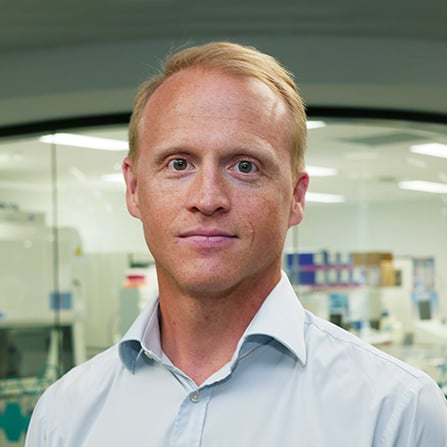
Meet scientist Nick

Nick is a researcher, but he doesn't wear a lab coat. His research is all about helping kids with a disability get a good night's sleep.

Research

Cyanide in bronchoalveolar lavage is not diagnostic for Pseudomonas aeruginosa in children with cystic fibrosis

Early detection of the cyanobacterium Pseudomonas aeruginosa in the lungs of young children with cystic fibrosis (CF) is considered the key to delaying...

Research

Autism and intellectual disability are differentially related to sociodemographic background at birth

We used population data on Western Australian singletons born from 1984 to 1999 (n = 398,353) to examine the sociodemographic characteristics of children...

Research

Vitamin D deficiency causes deficits in lung function and alters lung structure

The prevalence of vitamin D deficiency is increasing and has been linked to obstructive lung diseases including asthma and chronic obstructive pulmonary disease

Research

In utero cigarette smoke exposure impairs somatic and lung growth in BALB/c mice

The aim of this study was to assess whether in utero tobacco smoke exposure alone affects early-life lung growth and development. Pregnant BALB/c mice...

Alcohol

It’s a conversation that can be tricky to navigate – how and when to talk to your kids about drinking alcohol safely.

Research

Plasma versus serum levels of osteopontin and mesothelin in patients with malignant mesothelioma-Which is best

Blood-based markers for malignant mesothelioma (MM), particularly soluble mesothelin and osteopontin, are currently of great clinical interest.

Research

Global strategy for the diagnosis and management of asthma in children 5 years and younger

Asthma is the most common chronic disease of childhood and the leading cause of childhood morbidity from chronic disease as measured by school absences...

Research

Prenatal stress and risk of behavioral morbidity from age 2 to 14 years:

The maternal experience of stressful events during pregnancy has been associated with a number of adverse consequences for behavioral development offspring...

Research

The effectiveness of enhanced cognitive behavioural therapy for eating disorders: An open trial

The aim of this study was to examine the effectiveness of Enhanced Cognitive Behaviour Therapy (CBT-E) for eating disorders in an open trial for adults...

Your impact

Ever wondered just what your gift means to us? Here's a snapshot.

Research

Clinical decision rules for diagnosis of Streptococcus pyogenes sore throat in Fiji: a prospective diagnostic accuracy study

Acute rheumatic fever is an immune-mediated condition triggered by Streptococcus pyogenes sore throat and possibly skin infection, with a substantial burden in resource-limited settings. Clinical decision rules (CDRs) are commonly used to guide antibiotic treatment of sore throat based on signs and symptoms, but their diagnostic accuracy varies by study and setting. This work aimed to assess the accuracy of multiple CDRs in Fiji to diagnose S. pyogenes sore throat.

Research

Approaches that support Indigenous children and families in the transition to school: A systematic review

The early years are critical for lifelong wellbeing, with transition to formal school a key period for development. For Indigenous children, this transition provides opportunities to build on cultural strengths and belonging. However, many children face systemic barriers that impact their transition experiences, highlighting a need for culturally safe programs that support Indigenous families during this significant time.

Research

Fetal Alcohol Spectrum Disorder (FASD)

Fetal Alcohol Spectrum Disorder (FASD) is a lifelong condition characterised by severe neurodevelopmental impairment due to prenatal exposure to alcohol.

Research

Fc-Engineered B7-H3 Antibody with Prolonged Serum Half-Life for Enhanced Cancer Therapy

Monoclonal antibodies are revolutionizing the landscape of current cancer treatment, bringing hope to patients with incurable cancers. B7-H3 (CD276) is an attractive therapeutic target for antibody-based therapy due to its low or absent expression in normal tissues and high expression in various types of tumors, including prostate cancer, pancreatic cancer, and high-mortality esophageal squamous cell carcinoma (ESCC). In recent years, various B7-H3-targeting antibodies have been developed for cancer treatment, with a few making their way to clinical trials.

Research

CAR T cells targeting B7H3 demonstrate potent preclinical activity against AML and ESCC

T cells engineered to express chimeric antigen receptors (CARs) are a promising modality to treat refractory cancers. CD19 CAR-T therapy has achieved remarkable responses in against B-cell lymphomas, however, challenges persist for acute myeloid leukemia (AML) and solid malignancies. B7H3 is an immune regulatory molecule that is highly expressed in various tumor cells. Its abnormal expression in acute AML and esophageal squamous cell carcinoma (ESCC) is closely related to tumor progression. 

Research

Physicochemical compatibility of alprostadil injection with parenteral medications used in neonatal intensive care settings

The physicochemical compatibility of alprostadil injection with secondary intravenous (IV) drugs and 2-in-1 parenteral nutrition (PN) solutions used in Neonatal Intensive Care Unit settings was investigated.

COVID-19 Research

Thanks to 30 years of support from the WA community, The Kids Research Institute Australia is home to some of the world’s best researchers.