Skip to content
The Kids Research Institute Australia logo
Donate

No results yet

Search

Research

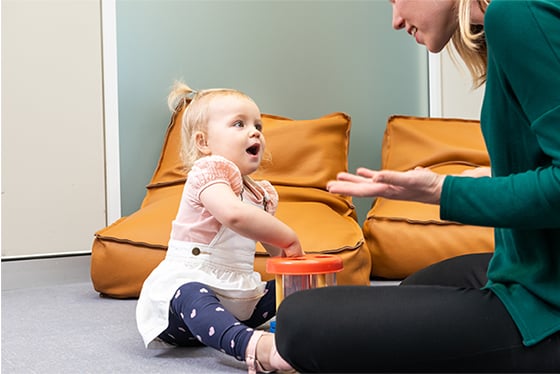
“Coronavirus Changed the Rules on Everything”: Parent Perspectives on How the COVID‐19 Pandemic Influenced Family Routines, Relationships and Technology Use in Families with Infants

This study explores how the first wave of the COVID‐19 pandemic influenced family routines, relationships and technology use (smartphones and tablet computers) among families with infants. Infancy is known to be an important period for attachment security and future child development, and a time of being susceptible to changes within and outside of the family unit.

Research

Sex-Specific Environmental Impacts on Initiation and Progression of Multiple Sclerosis

The immunological mechanisms that contribute to multiple sclerosis (MS) differ between males and females. Females are 2-3 times more likely to develop MS compared to males, however the reason for this discrepancy is unknown. Once MS is established, there is a more inflammatory yet milder form of disease in females whereas males generally suffer from more severe disease and faster progression, neural degradation, and disability.

Research

Revaccination with Bacille Calmette-Guérin (BCG) is associated with an increased risk of abscess and lymphadenopathy

The reported frequency and types of adverse events following initial vaccination and revaccination with Bacille Calmette-Guérin (BCG) varies worldwide. Using active surveillance in a randomised controlled trial of BCG vaccination (the BRACE trial), we determined the incidence and risk factors for the development of BCG injection site abscess and regional lymphadenopathy.

Research

Clindamycin adjunctive therapy for severe Staphylococcus aureus treatment evaluation (CASSETTE)-an open-labelled pilot randomized controlled trial

Combination antibiotic therapy with an antitoxin agent, such as clindamycin, is included in some guidelines for severe, toxin-mediated Staphylococcus aureus infections. The evidence to support this practice is currently limited to in vitro, animal and observational human case-series data, with no previous randomized controlled trials (RCTs).

Research

Modelling temperature-driven changes in species associations across freshwater communities

Due to global climate change–induced shifts in species distributions, estimating changes in community composition through the use of Species Distribution Models has become a key management tool. Being able to determine how species associations change along environmental gradients is likely to be pivotal in exploring the magnitude of future changes in species’ distributions.

Research

Does a major change to a COVID-19 vaccine program alter vaccine intention? A qualitative investigation

On 8th April 2021, the Australian Technical Advisory Group on Immunisation (ATAGI) made the Pfizer-BioNtech (Comirnaty) vaccine the “preferred” vaccine for adults in Australia aged < 50 years due to a risk of thrombosis with thrombocytopenia syndrome (TTS) following AstraZeneca vaccination. We sought to understand whether this impacted COVID-19 vaccine intentions.

Research

Emulator-based Bayesian optimization for efficient multi-objective calibration of an individual-based model of malaria

Individual-based models have become important tools in the global battle against infectious diseases, yet model complexity can make calibration to biological and epidemiological data challenging. We propose using a Bayesian optimization framework employing Gaussian process or machine learning emulator functions to calibrate a complex malaria transmission simulator.

Research

A multifaceted approach increased staff confidence to develop outside of school hours care as a health promoting setting

Outside-of-school-hours-care (OSHC) services are well positioned to influence the health behaviours of 489, 800 Australian children, and are an important setting for health promotion given the current rates of childhood overweight and obesity and associated health risks. OSHC Professionals are ideally placed to become positive influencers in this setting, although they may require training and support to confidently perform this role.

Research

Perspectives of patients, family members, health professionals and the public on the impact of COVID-19 on mental health

The coronavirus (COVID-19) pandemic has seen a global surge in anxiety, depression, post-traumatic stress disorder (PTSD), and stress. Aims: This study aimed to describe the perspectives of patients with COVID-19, their family, health professionals, and the general public on the impact of COVID-19 on mental health.

Research

Changes in serum neurofilament light chain levels following narrowband ultraviolet B phototherapy in clinically isolated syndrome

To determine whether serum neurofilament light chain (sNfL) levels are suppressed in patients with the clinically isolated syndrome (CIS) following narrowband ultraviolet B phototherapy (UVB-PT).