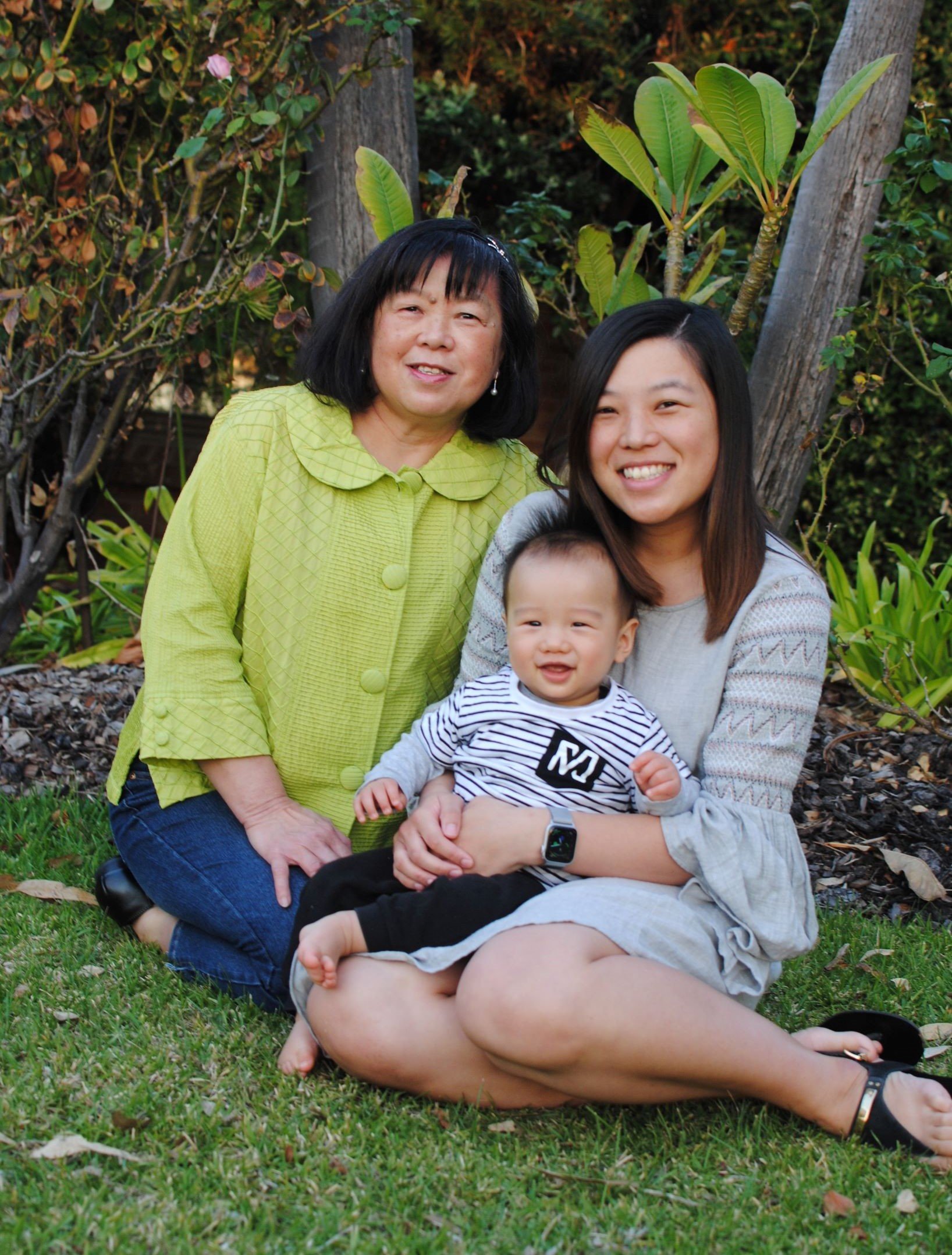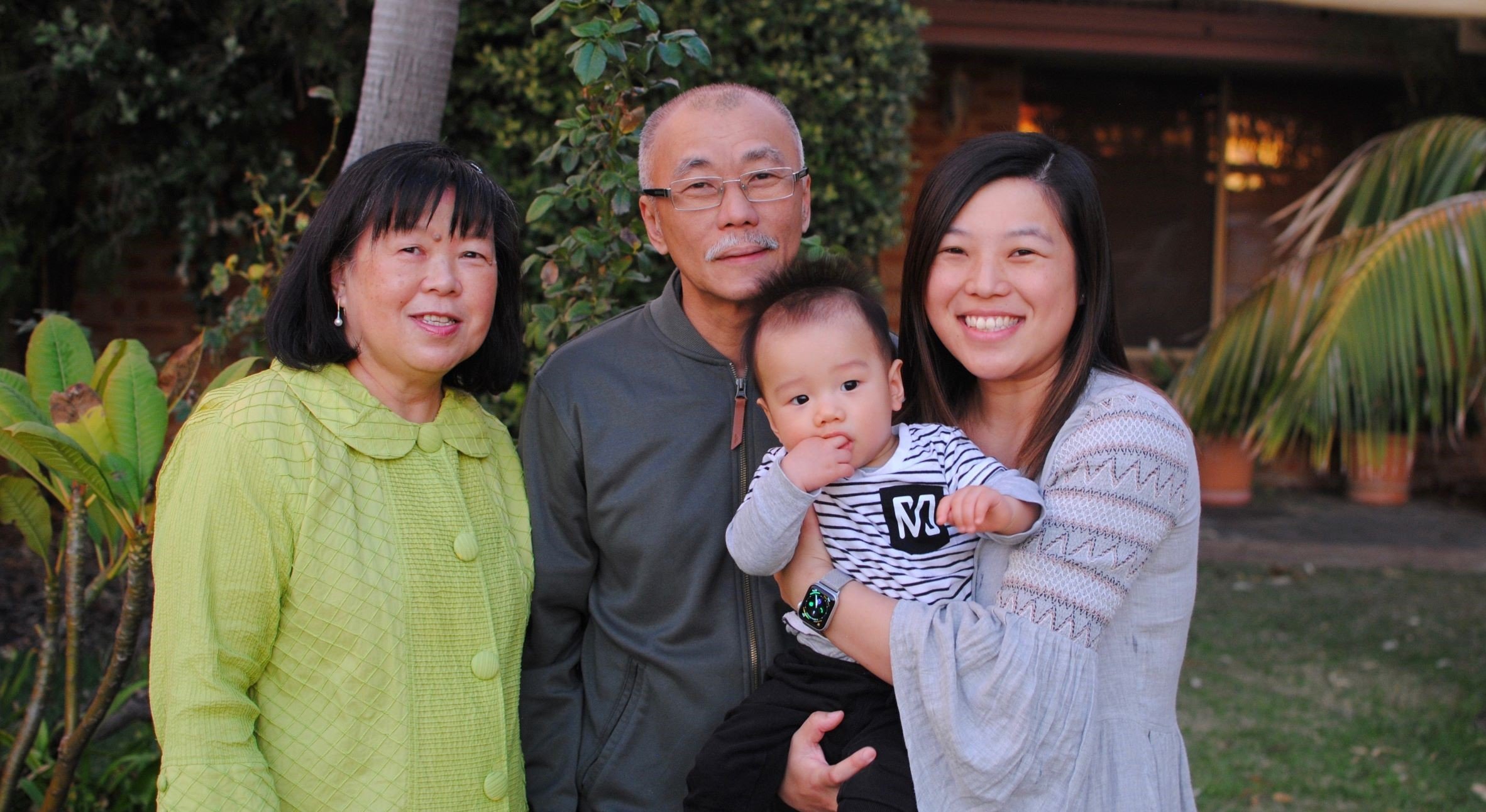
Ditza Teng with her mother Cynthia Teng, father, Clement Teng, and her son, Jeremiah.
Between 1989 and 1991, almost 3,000 WA babies were recruited to the Raine Study – an ambitious research project which would yield a series of paradigm-shifting findings around pregnancy, early childhood, adolescence and adulthood. Three decades on, the Raine Study has not only changed scientific thinking – it has changed the lives of those taking part.
Dr Ditza Teng is part of a special group of West Australians whose health and development has been carefully followed for the past three decades.
A ‘Raine Study kid’, Ditza was one of almost 3,000 babies recruited through King Edward Memorial Hospital between 1989 and 1991 to take part in a new study established by Professors John Newnham, Fiona Stanley, Lou Landau and Con Michael.
The study had two objectives: to develop a long-term cohort to study the role that early life events (from the womb onwards) had on later life; and to investigate the effects of frequent ultrasound scans during pregnancy.
With funding awarded in 1988 from the Raine Medical Research Foundation, where the project got its name, and the National Health and Medical Research Council, the Raine Study was born. Ditza’s mum, Cynthia, was one of 2,900 pregnant women who volunteered to take part. Like all those who signed up, she was randomly assigned to receive either routine obstetric ultrasound or multiple scans.
The study went on to find that ultrasounds on pregnant mothers are safe – information that has since been used to set international standards for ultrasounds during pregnancy.
Thirty years on, the study has outgrown its original aims to become one of the world’s largest cohort studies of pregnancy, childhood, adolescence and adulthood. Now a multi-generational project with a rich set of data, researchers globally have looked to the Raine Study to better understand, and improve, human health and quality of life.
As a child, Ditza was oblivious to the fact that the data and samples collected from her were part of something so very big and special.
“I had no idea of the huge impact I was having,” she said. “My data is unique and valuable, it’s been collected since before I was born, and continues to make an important contribution today.”