Performing surgery on babies and young children takes incredible precision and rigorous training, and the same can be said for the anaesthetists who keep these tiny patients safe and comfortable during the procedure. The Kids Research Institute Australia’s Perioperative Medicine team is helping to change global and local practice by finding safer and gentler ways to both undertake surgery, and care for kids and families afterwards.
When anaesthetists need to intubate a tiny patient, it’s important to get it right as quickly as possible, but it may not always happen on the first attempt.
Professor Britta Regli-von Ungern-Sternberg, head of The Kids Research Institute Australia’s Perioperative Medicine Team, Chair of Paediatric Anaesthesia at The University of Western Australia, and Consultant Paediatric Anaesthetist at Perth Children’s Hospital, was a key contributor to a global study to determine the most accurate ways to intubate babies.
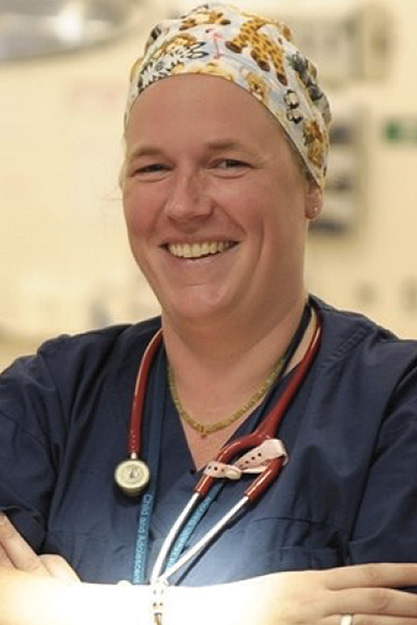
Professor Britta Regli-von Ungern-Sternberg
“We know that with increased attempts to put the breathing tube in, the risk for the patient increases with regards to complications, mainly respiratory complications,” Professor Britta Regli-von Ungern-Sternberg said.
“Children are very prone to airway swelling, so any small damage while intubating can have significant adverse effects on these very young infants.”
The study involved an international randomised control clinical trial of 564 infants in the operating theatres of five hospitals including Perth Children’s Hospital – the only site outside the United States.
The clinical trial established that a technique using a video camera to guide the insertion – known as video laryngoscopy – was the most likely to lead to success on the first attempt.
It found a 93 per cent success rate for intubating children on the first attempt using video laryngoscopy, compared with an 88 per cent success rate for children who were intubated without video guidance.
The findings were published in leading medical journal The Lancet and led to a swift change in practice for anaesthetists across the globe.
Professor Regli-von Ungern-Sternberg said a strong global network of collaboration led to the quick take-up of video laryngoscopy as standard practice.
“We shared the data obviously via the publication but also via conference presentations and other information channels,” she said.
“Uptake was very fast due to the great global network.”
