
Moorditj Marp (strong skin) – SHARE
SHARE brings Aboriginal Health Practitioner (AHP)-led dermatology care into Perth Children's Hospital (PCH) for Aboriginal children and young people.
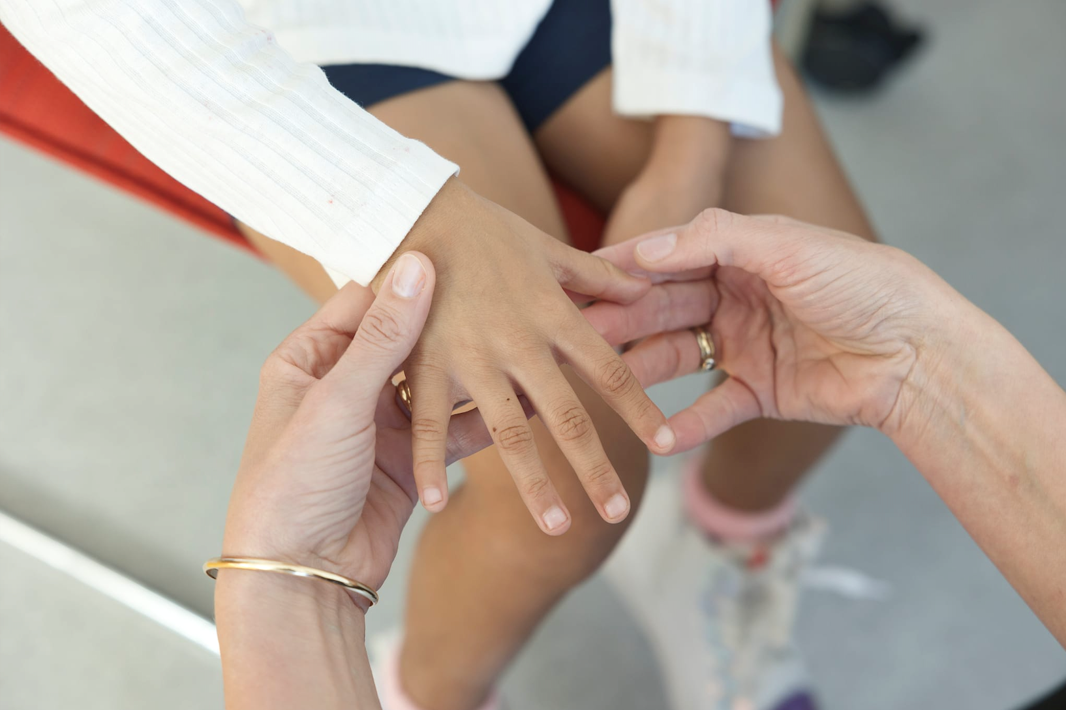
Developing an Aboriginal Health Practitioner-led Skin Health Assessment & Research Evaluation initiative for Aboriginal children at Perth Children's Hospital.
In Noongar* language, Moorditj Marp means "strong skin." Achieving strong skin for strong health is the priority of the Healthy Skin team at The Kids Research Institute Australia.
Skin conditions are common among Aboriginal children and young people (CYP) in Western Australia, particularly skin infections and eczema. These conditions adversely affect health, school attendance, and quality of life. When left untreated, bacterial skin infections can lead to serious complications including sepsis, rheumatic heart disease, and chronic kidney disease, conditions that disproportionately affect Aboriginal people. Aboriginal CYP are hospitalised for skin infections at fifteen times the rate of non-Aboriginal CYP, yet are significantly underrepresented in specialist dermatology services, with non-attendance at outpatient appointments exceeding 40%.
Building on the team's previous work through the Koolungar (children) Moorditj (strong) Healthy Skin project and clinical trials in remote WA, SHARE represents the next step: bringing Aboriginal Health Practitioner (AHP)-led dermatology care into Perth Children's Hospital (PCH), WA's major tertiary paediatric hospital, for Aboriginal CYP from across the state.
Through a co-design process with Aboriginal Elders and the Aboriginal Community Steering Group (ACSG), SHARE offers Aboriginal children admitted to PCH an opportunistic skin health assessment and education by an AHP, followed by specialist dermatology care if needed. It is the first AHP-led research-service initiative in an Australian tertiary paediatric hospital designed to address inequity in skin health and access to healthcare for Aboriginal CYP.
*Noongar is Aboriginal Australian for the South West corner of Western Australia.
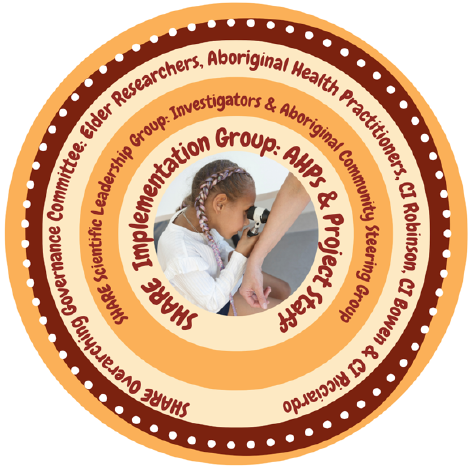
Study components
SHARE comprises six components:
Component 1: A retrospective audit of medical records of children admitted to wards 1B and 2A at Perth Children’s Hospital (PCH) in February 2025 [SHARE Retrospective Audit] – commenced Q2 2026 to ~Q4 2026
A retrospective audit of PCH inpatient digital medical records will establish the baseline prevalence of clinician-documented dermatological disorders in children admitted to the SHARE pilot study wards (Ward 1B: burns, plastics, orthopaedics; Ward 2A: medical) in February 2025. This will allow comparison with prospectively collected SHARE data to quantify the improvement in diagnosis and treatment that the initiative delivers.
Component 2: Healthcare Worker Knowledges, Attitudes & Practices Survey: before and after SHARE Initiative Full Study [SHARE Healthcare Worker Survey] – commencing Q3 2026 to ~Q3 2029
A cross-sectional survey of PCH healthcare workers (medical, nursing, pharmacy, allied health) will assess changes in their knowledge, attitudes, and practices around skin health for Aboriginal children before and after the SHARE Initiative. This component will also evaluate healthcare worker acceptability of the AHP-led model of care within the hospital.
Component 3: SHARE Initiative Pilot Study: Assessing the feasibility of an inpatient Aboriginal Health Practitioner-led Skin Health Assessment & Research Evaluation initiative for Aboriginal children at Perth Children’s Hospital [SHARE Initiative Pilot Study] – commencing Q3 2026 to ~Q2 2027
The pilot study (3 months, 2 wards, ~51 participants) will test the feasibility of the SHARE Initiative and refine processes ahead of the full study. Each morning, the SHARE AHP will identify admitted Aboriginal children on participating wards, approach families, and if consented to, will conduct a culturally safe skin health assessment and education session. Where a skin concern is identified, the admitting team will be notified and may refer to the SHARE Clinical Team for specialist dermatology consultation. Families will be followed up 1-3 months after discharge to assess quality of life outcomes and satisfaction with the initiative.
Component 4: SHARE Initiative Full Study: Conducting an inpatient Aboriginal Health Practitioner-led Skin Health Assessment & Research Evaluation initiative for Aboriginal children at Perth Children's Hospital [SHARE Initiative Full Study] – anticipated commencement 2027, post-completion of SHARE Initiative Pilot Study.
The full study (18 months, 5 wards, ~594 participants) will expand SHARE across additional wards and allow the AHP and dermatologist to work more independently, building on lessons from the pilot. The study will evaluate health outcomes, cultural acceptability, and the broader impact of AHP-led care for Aboriginal families at PCH.
Component 5: Evaluating the impact of the SHARE Initiative on equitable access to dermatology outpatient services for Aboriginal children at Perth Children's Hospital [SHARE Health Service Equity Evaluation] – anticipated commencement 2028, post-completion of SHARE Initiative Full Study
The Health Service Equity Evaluation will assess whether SHARE improves the representation of Aboriginal children in PCH dermatology outpatient clinics and increases attendance rates, addressing longstanding disparities.
Component 6: Evaluating the short- and long-term economic impact of the SHARE Initiative on the health service [SHARE Economic Impact Evaluation] – commencing 2028, post-completion of SHARE Initiative Full Study
The Short-Term Economic Impact Evaluation will compare health service costs for Aboriginal children with skin conditions before and after the SHARE Initiative, examining changes in emergency department, inpatient, and outpatient service use.
The Long-Term Economic Impact Evaluation will use decision-analytic modelling to estimate whether SHARE represents value for money over the longer term by preventing serious skin infection complications, including invasive infection, rheumatic heart disease, chronic kidney disease, and mortality.
Partnering organisations
- The Kids Research Institute Australia
- Wesfarmers Centre of Vaccines & Infectious Diseases
- Child and Adolescent Health Service (CAHS)
- South Metropolitan Health Service (SMHS)
- National Health & Medical Research Council
- Raine Medical Research Foundation
Investigators
Dr Bernadette M Ricciardo, Prof Asha C Bowen, Dr (Uncle) Noel Nannup (Noongar), Aunty Dale Tilbrook (Noongar), Ms Melanie Robinson (Gidja), Dr Stephanie Weston, Dr Anne Halbert, Prof Fiona Wood, Ms Jacinta Walton (Noongar), Dr Heather-Lynn Kessaris (Alawa Mara), Dr Jeffrey Cannon, Mr Russell Honeybun, Dr Matthew Cooper, Mr Wesley Billingham, Dr Rachel Burgess (Wonnarua), Dr Tracy McRae, Dr Ingrid Amgarth-Duff, Dr Hannah Thomas, Ms Jennifer Irvine.