
Search
Showing results for "Neuromuscular disorders "
Neuromuscular disorders can lead to nocturnal hypoventilation. Accurate diagnosis of hypoventilation is imperative to guide treatment decisions. This study determined interobserver agreement for a number of definitions of nocturnal hypoventilation in children and adolescents with neuromuscular disorders.
This research project is a collaboration between The Kids Research Institute Australia, Muscular Dystrophy Western Australia, Perth Children’s Hospital and Curtin University.
Clinical utility of home polysomnography in children with neuromuscular disorders is limited by lack of evidence that sleep-disordered breathing can be reliably identified and inability to diagnose hypoventilation because carbon dioxide is not measured.
To describe and explore carer quality of life and night-time attendance to their child in parents of non-ambulant youth with Neuromuscular Disorders. A cross-sectional population-based, comprehensive survey including the Adult Carer questionnaire, measures of social context and youths' physical status. Associations between carer-QoL or frequency of parents' night-time attendance with independent variables were explored using linear and logistic regression models, respectively.
Mental wellbeing was independently associated with academic achievement and perceived family support but not with physical health variables
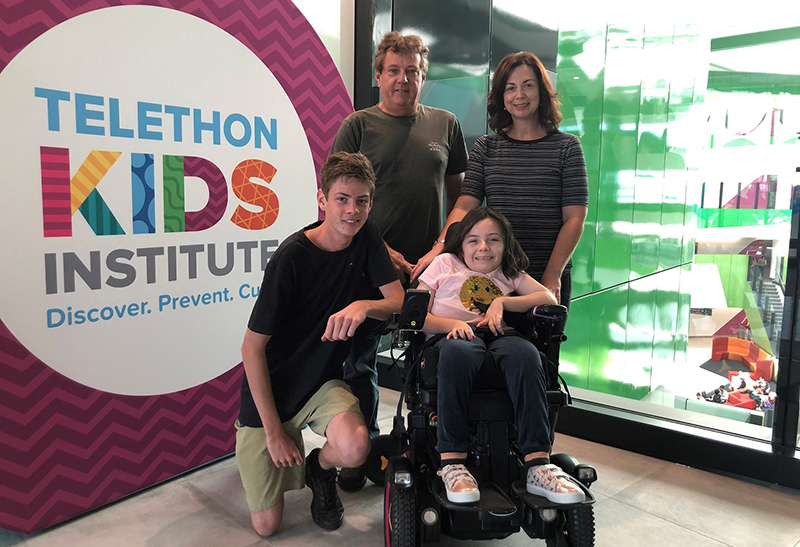
Mackenzie was 10 months old when her parents, Jodie and Scott, were given the life-changing news that their daughter would never walk.
Graham Hall BAppSci PhD CRFS FANZSRS FThorSoc FERS Honorary Research Associate Honorary Research Associate Professor Graham Hall is an
To investigate quality of life (QOL) and psychosocial well-being in youth with neuromuscular disorders (NMDs) who are wheelchair users.
Explored Youth with Neuromuscular Disorders perceptions of health, health behaviors and healthcare engagement
This study explored how children and adolescents with a neuromuscular disorder (NMD) and their parents experienced barriers and enablers to the child's participation.