
Search
HIV, tuberculosis (TB) and malaria are the three most important infectious diseases in Ethiopia, and sub-Saharan Africa. Understanding the spatial codistribution of these diseases is critical for designing geographically targeted and integrated disease control programmes. This study investigated the spatial overlap and drivers of HIV, TB and malaria prevalence in Ethiopia.
As malaria incidence decreases and more countries move towards elimination, maps of malaria risk in low-prevalence areas are increasingly needed. For low-burden areas, disaggregation regression models have been developed to estimate risk at high spatial resolution from routine surveillance reports aggregated by administrative unit polygons.
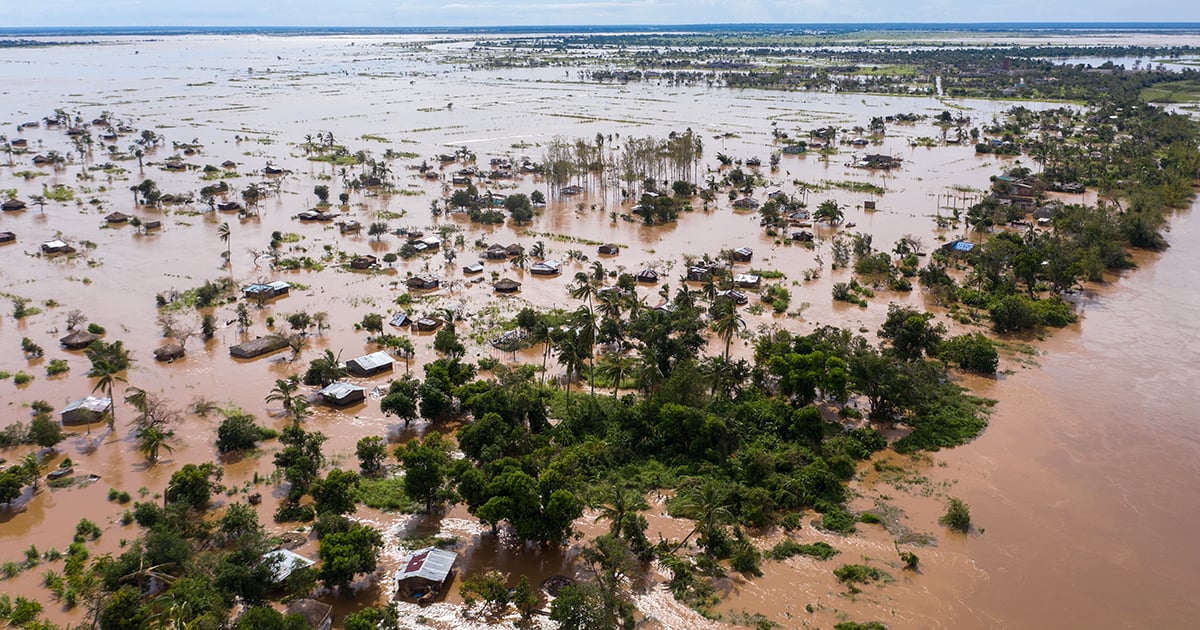
World-first research from The Kids Research Institute Australia and Curtin University predicts climate change could trigger more than 100 million additional malaria cases and 500,000 additional deaths in Africa by 2050, including substantial impacts on children.
Novel malaria vector control strategies targeting the odour-orientation of mosquitoes during host-seeking, such as 'attract-and-kill' or 'push-and-pull', have been suggested as complementary tools to indoor residual spraying and long-lasting insecticidal nets. These would be particularly beneficial if they can target vectors in the peri-domestic space where people are unprotected by traditional interventions.
Climatic conditions are a key determinant of malaria transmission intensity, through their impacts on both the parasite and its mosquito vectors. Mathematical models relating climatic conditions to malaria transmission can be used to develop spatial maps of climatic suitability for malaria. These maps underpin efforts to quantify the distribution and burden of malaria in humans, enabling improved monitoring and control.
Malaria in Lao People's Democratic Republic (Lao PDR) has declined rapidly over the last two decades, from 279,903 to 3926 (99%) cases between 2001 and 2021. Elimination of human malaria is an achievable goal and limited resources need to be targeted at remaining hotspots of transmission.
Malaria is a deadly disease caused by Plasmodium spp. Several blood phenotypes have been associated with malarial resistance, which suggests a genetic component to immune protection.
Seasonal malaria chemoprevention (SMC) with sulfadoxine-pyrimethamine plus amodiaquine prevents millions of clinical malaria cases in children younger than 5 years in Africa's Sahel region. However, Plasmodium falciparum parasites partially resistant to sulfadoxine-pyrimethamine (with quintuple mutations) potentially threaten the protective effectiveness of SMC. We evaluated the spread of quintuple-mutant parasites and the clinical consequences.
Malaria risk maps are crucial for controlling and eliminating malaria by identifying areas of varying transmission risk. In the Greater Mekong Subregion, these maps guide interventions and resource allocation. This article focuses on analysing changes in malaria transmission and developing fine-scale risk maps using five years of routine surveillance data in Laos (2017-2021). The study employed data from 1160 geolocated health facilities in Laos, along with high-resolution environmental data.
The rising burden of mosquito-borne diseases in Europe extends beyond urban areas, encompassing rural and semi-urban regions near managed and natural wetlands evidenced by recent outbreaks of Usutu and West Nile viruses. While wetland management policies focus on biodiversity and ecosystem services, few studies explore the impact on mosquito vectors.