
Search
Showing results for "aboriginal respiratory"
In this review, we explore current knowledge and provide guidance as to when and how the inhaled route may be of value when treating patients whose tracheas are intubated
In partnership with Aboriginal health services, Government agencies and communities, we will develop and implement evidence-based strategies to improve the detection and management of chronic wet cough in Aboriginal and Torres Strait Islander children.
Poor environmental health is prevalent in remote Aboriginal communities and requires further delineation to inform environmental health policy
Strategies to address reasons for and treatment of chronic wet cough and protracted bacterial bronchitis in young Aboriginal children in remote north Western Australia are required
Your help could be crucial to our respiratory research
Early life infections drive high antibiotic prescribing rates in remote Aboriginal communities
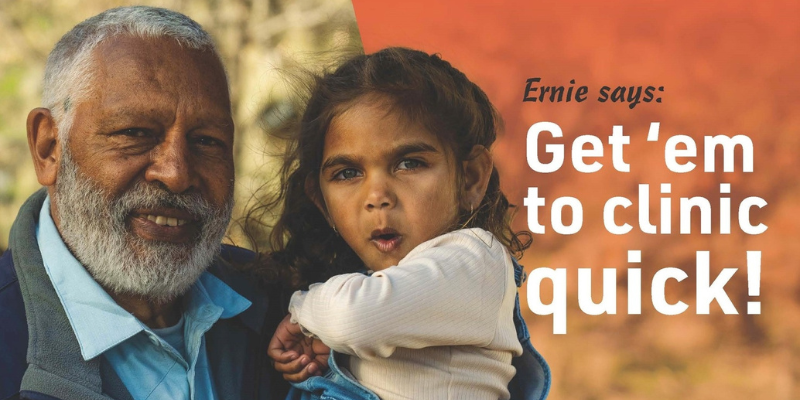
September marks the three-month milestone of an intensive health promotion campaign in the East Kimberley region, which aims to raise awareness of the dangers of a chronic wet cough in Aboriginal children.
The role of children in the spread of severe acute respiratory syndrome coronavirus 2 (SARS-CoV-2) remains highly controversial. To address this issue, we performed a meta-analysis of the published literature on household SARS-CoV-2 transmission clusters (n = 213 from 12 countries). Only 8 (3.8%) transmission clusters were identified as having a pediatric index case.
Results highlight the need for a culturally appropriate information and education of the importance of chronic wet cough in children

A large contingent of researchers from the Wal-yan Respiratory Research Centre are heading to Spain in September to participate in the European Respiratory Society (ERS) International Congress – the largest respiratory meeting in the world.