
Search
Schistosomiasis japonica is an ancient parasitic disease that has severely impacted human health causing a substantial disease burden not only to the Chinese people but also residents of other countries such as the Philippines, Indonesia and, before the 1970s, Japan. Since the founding of the new People's Republic of China (P. R. China), effective control strategies have been implemented with the result that the prevalence of schistosomiasis japonica has decreased markedly in the past 70 years.
Benzathine penicillin G has been used as monthly deep intramuscular (IM) injections since the 1950s for secondary prevention of acute rheumatic fever and rheumatic heart disease (RHD). Injection frequency and pain are major programmatic barriers for adherence, prompting calls for development of better long-acting penicillin preparations to prevent RHD.
Cholangiocarcinoma (CCA) is a serious health challenge with low survival prognosis. The liver fluke, Opisthorchis viverrini, plays a role in the aetiology of CCA, through hepatobiliary abnormalities: liver mass (LM), bile duct dilation, and periductal fibrosis (PDF). A population-based CCA screening program, the Cholangiocarcinoma Screening and Care Program, operates in Northeast Thailand. Hepatobiliary abnormalities were identified through ultrasonography.
In a community-based birth cohort of 158 Australian infants followed to age 2 years, the incidence rate of human parainfluenza virus (HPIV) was 0.42 (95% CI = 0.33, 0.54) episodes per child-year with episodes occurring year-round, peaking in the spring season.
We have demonstrated the potential use of Bayesian Networks in improving antibiotic selection for children with osteomyelitis
Respiratory syncytial virus is pervasive across multiple severity levels and diagnoses. Vaccines targeting children <3 months must be prioritized
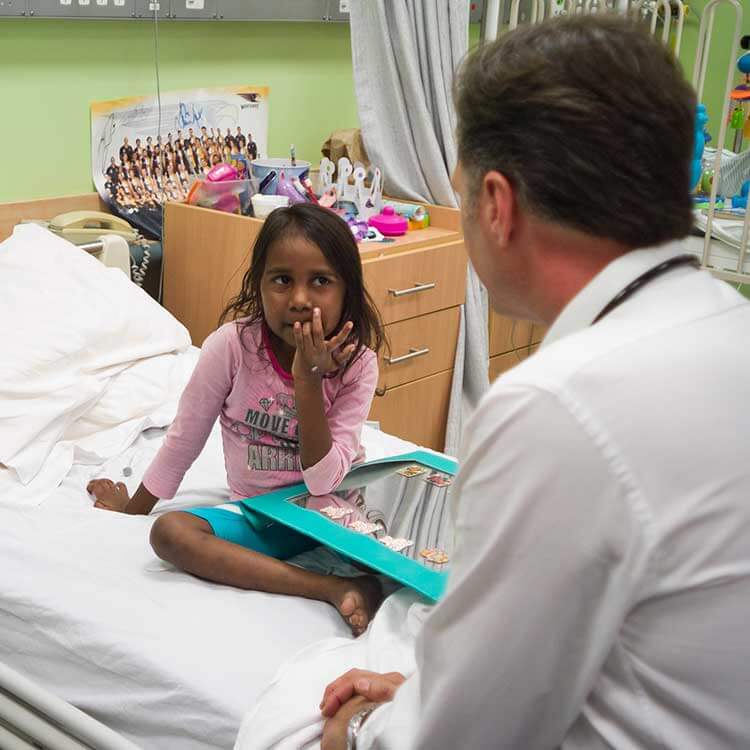
Some of the nation’s leading medical researchers will converge on Darwin this week to step out a plan to wipe out rheumatic heart disease.
Epidemic viral infections predominated as causes of childhood encephalitis in Australia. The leading causes include vaccine-preventable diseases
Active vaccine safety surveillance leading to rapid detection of a safety signal would likely have resulted in earlier suspension of Fluvax from the vaccination programme
Inappropriate antimicrobial prescribing in children was linked to specific risk factors, presenting opportunities for targeted interventions to improve prescribing