
Search
The Australian Technical Advisory Group on Immunisation and New Zealand Ministry of Health recommend all children aged ≥ 5 years receive either of the two mRNA COVID-19 vaccines: Comirnaty (Pfizer), available in both Australia and New Zealand, or Spikevax (Moderna), available in Australia only. Both vaccines are efficacious and safe in the general population, including children. Children and adolescents undergoing treatment for cancer and immunosuppressive therapy for non-malignant haematological conditions are particularly vulnerable, with an increased risk of severe or fatal COVID-19.
In recent decades, the conduct of uniform prospective clinical trials has led to improved remission rates and survival for patients with acute myeloid leukaemia and acute lymphoblastic leukaemia. However, high-risk patients continue to have inferior outcomes, where chemoresistance and relapse are common due to the survival mechanisms utilised by leukaemic cells.
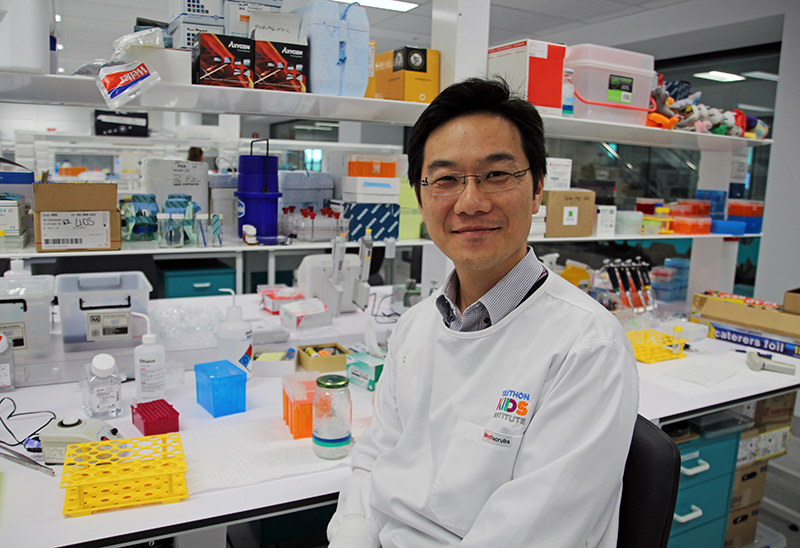
Dr Laurence Cheung is doing everything he can to end the threat of childhood leukemia. His research has the potential to change countless lives, but he also has another important job – being a dad to three beautiful children.
Acute Lymphoblastic Leukemia (ALL) occurring in the first year of life is rare.
The hallmarks of many haematological malignancies and solid tumours are chromosomal translocations, which may lead to gene fusions.
In T-cell acute lymphoblastic leukemia (T-ALL) cytogenetic alterations juxtapose the LIM-domain-only-2 gene (LMO2) with T-cell receptor loci.
Glucocorticoids (GCs) are among the most important drugs for the treatment of acute lymphoblastic leukaemia (ALL).

Co-Head, Leukaemia Translational Research

Co-Head, Leukaemia Translational Research

Honorary Emeritus Fellow