Skip to content

Search

Showing results for "lung disease preterm"

Acute diesel exhaust particle exposure increases viral titre and inflammation associated with existing influenza

Exposure to diesel exhaust particles (DEP) is thought to exacerbate many pre-existing respiratory diseases.

Structural determinants of long term functional outcomes in young children with cystic fibrosis

Structural determinants of long term functional outcomes in young children with cystic fibrosis BACKGROUND: Accelerated lung function decline in

Gestational age at birth and body size from infancy through adolescence: An individual participant data meta-analysis on 253,810 singletons in 16 birth cohort studies

Preterm birth is the leading cause of perinatal morbidity and mortality and is associated with adverse developmental and long-term health outcomes, including several cardiometabolic risk factors and outcomes. However, evidence about the association of preterm birth with later body size derives mainly from studies using birth weight as a proxy of prematurity rather than an actual length of gestation. We investigated the association of gestational age (GA) at birth with body size from infancy through adolescence.

Early nasal microbiota and subsequent respiratory tract infections in infants with cystic fibrosis

Respiratory tract infections (RTIs) drive lung function decline in children with cystic fibrosis (CF). While the respiratory microbiota is clearly associated with RTI pathogenesis in infants without CF, data on infants with CF is scarce. We compared nasal microbiota development between infants with CF and controls and assessed associations between early-life nasal microbiota, RTIs, and antibiotic treatment in infants with CF. 

The PROTECT Trial

Tobias Jenny Strunk Mountain Other Investigators MD, PhD, FRACP MBA MClinEpi Head, Neonatal Health Program Manager, Neonatal Health / Protect Trial

Premmie twins defy the odds

When Samuel and James Considine were born in October 2003, perilously close to what the medical world describes as the limit of viability, each weighed just 700 grams and could fit into the palm of their father’s hand.

Primary Nasal Epithelial Cells as a Surrogate Cell Culture Model for Type-II Alveolar Cells to Study ABCA-3 Deficiency

ATP Binding Cassette Subfamily A Member 3 (ABCA-3) is a lipid transporter protein highly expressed in type-II alveolar (AT-II) cells. Mutations in ABCA3 can result in severe respiratory disease in infants and children. To study ABCA-3 deficiency in vitro, primary AT-II cells would be the cell culture of choice although sample accessibility is limited. Our aim was to investigate the suitability of primary nasal epithelial cells, as a surrogate culture model for AT-II cells, to study ABCA-3 deficiency.

Changes in airway inflammation with pseudomonas eradication in early cystic fibrosis

Neutrophil elastase is a significant risk factor for structural lung disease in cystic fibrosis, and Pseudomonas aeruginosa airway infection is linked with neutrophilic inflammation and substantial respiratory morbidity. We aimed to evaluate how neutrophil elastase (NE) activity changes after P. aeruginosa eradication and influences early disease outcomes. We assessed participants in the AREST CF cohort between 2000 and 2018 who had P. aeruginosa cultured from their routine annual bronchoalveolar lavage (BAL) fluid and who underwent eradication treatment and a post eradication BAL. Factors associated with persistent P. aeruginosa infection, persistent neutrophilic inflammation following eradication and worse structural lung disease one year post-eradication were evaluated.

Researchers share in almost $1.8 million for groundbreaking child health respiratory research

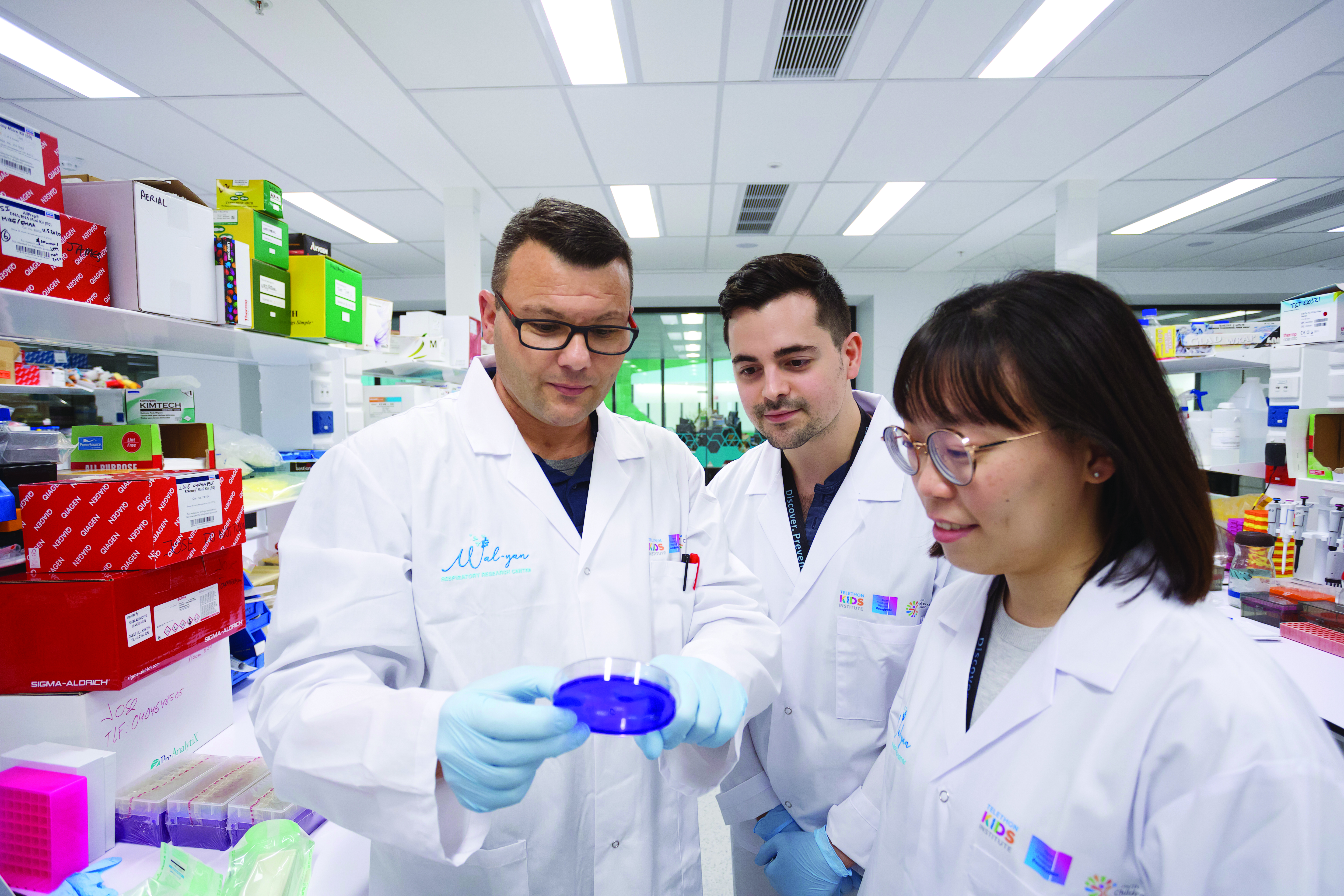
Three researchers from the Wal-yan Respiratory Research Centre will share in almost $1.8 million in grants to continue groundbreaking research to tackle childhood asthma prevention and lung disease.

Identifying barriers and facilitators for the effective diagnosis and provision of primary health care for otitis media from the perspective of carers of Aboriginal children

To identify the barriers and facilitators for timely detection and optimal management of otitis media in Aboriginal children in a primary care setting from the perspective of carers of Aboriginal children.