
Search
Showing results for "early lung health"
Understand the relationship between The Kids Research Institute Australia and Wangle Family Insites, a research-driven app to analyse children’s online activity in real time.
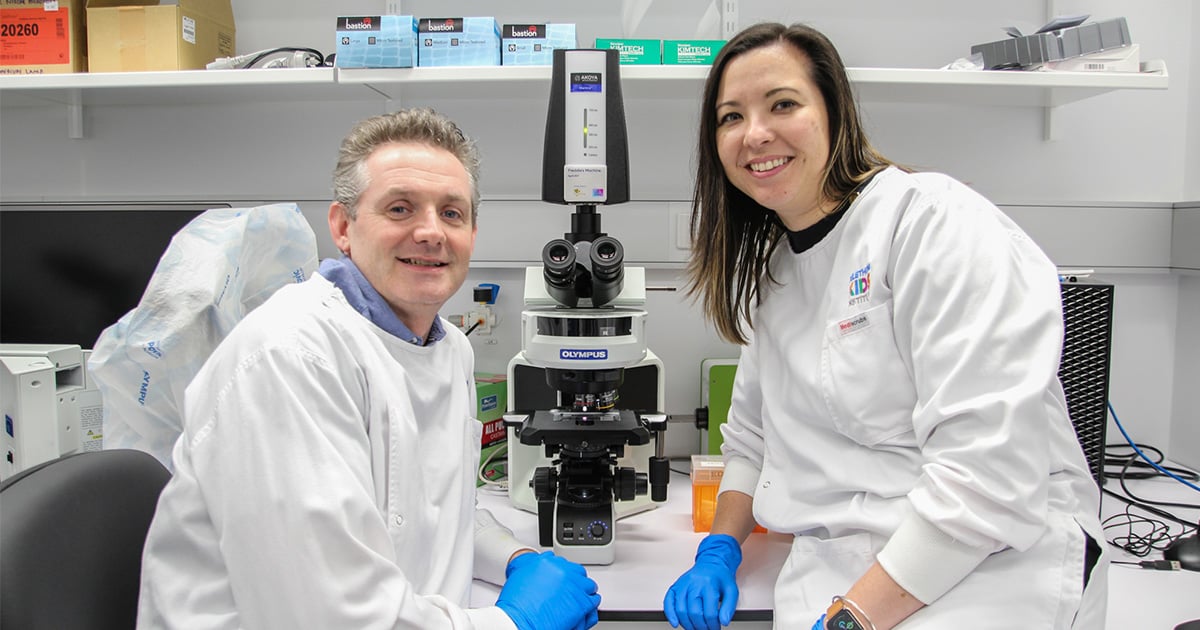
The WA Kids Cancer Centre has secured $1.1 million in funding from the Medical Research Future Fund’s (MRFF) Paediatric Brain Cancer Research Stream 2 to develop more effective and less toxic treatments for rare brain cancers in infants.

Personalised medicine for childhood cancers in West Australia is a step closer thanks to the Zero Childhood Cancer program’s state clinical trial launched today
This report summarises the epidemiology of hospitalisations with laboratory-confirmed influenza during the 2015 influenza season
Determine the frequency of detection of specific viral pathogens in children with febrile seizures
Our results indicate a dissociation between the antibody and T-cell responses to rhinoviruses
In children, we found no relationship between Prn status and markers of severe pertussis
Measures of allergic sensitization and therapeutic strategies could be optimized with knowledge of Der p 2 variants
We performed a 2-week prospective survey of formal ID physician activities related to direct inpatient care, encompassing 53 hospitals throughout Australia,...
Non-Aspergillus molds and non-albicans Candida contributed substantially to pediatric invasive fungal infection in our study