
Search
Showing results for "Childhood interstitial lung disease "
Alexander Anthony Deborah Pat Larcombe Kicic Strickland Holt BScEnv (Hons) PhD BSc (Hons) PhD PhD PhD, DSc, FRCPath, FRCPI, FAA Honorary Research
Our study will be the first to assess vaccine efficacy targeting H. influenzae in children with recurrent PBB, CSLD and bronchiectasis.
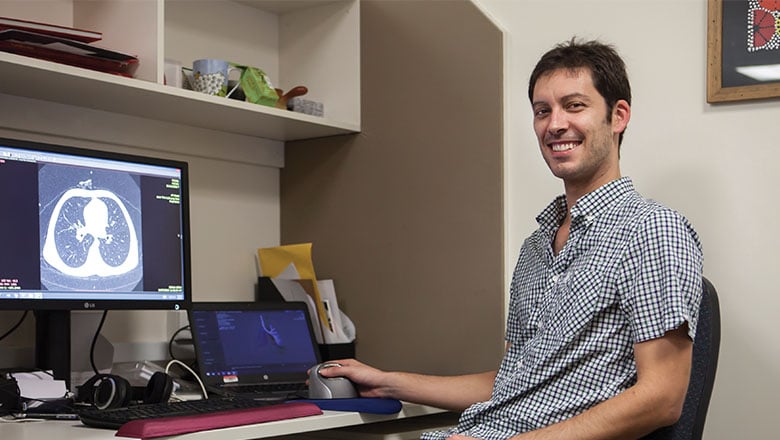
PRAGMA-CF, a new way of measuring early lung disease in young kids with cystic fibrosis is changing the way we detect and treat CF.
Research question: Are asthma and allergies more common in adolescents conceived with assisted reproductive technologies (ART) compared with adolescents conceived without?
The lungs are one of the last organs in the body to develop as a baby grows. They're also one of the most important.
To estimate the developmental trends of quantitative parameters obtained from chest computed tomography (CT) and to provide normative values on dimensions of bronchi and arteries, as well as bronchus-artery (BA) ratios from preschool age to young adulthood.
Obesity is linked to altered lung function and increased perioperative respiratory adverse events (PRAEs). We examined the effects of obesity, respiratory symptoms, and posture on PRAEs, lung mechanics, and ventilation distribution in children undergoing general anesthesia.
To examine follow-up outcomes at corrected postnatal age (cPNA) 2 years of preterm infants previously enrolled in an RCT and treated with IN-REC-SUR-E or IN-SUR-E in 35 tertiary neonatal intensive care units.
Two lytic double-stranded DNA (dsDNA) bacteriophages, belonging to the family Herelleviridae, were isolated from wastewater in Western Australia. Biyabeda-mokiny 2 appears to belong to the genus Kayvirus, and Koomba-kaat 1 to Silviavirus.
This study aimed to characterise bacteriophages for potential therapeutic use against Staphylococcus aureus, focusing on clinical respiratory isolates of methicillin-sensitive (MSSA) and methicillin-resistant (MRSA) strains. Specifically, it sought to evaluate phage lytic activity, host range, stability, biofilm disruption capabilities, and overall safety for therapeutic use.