Skip to content

Search

Showing results for "early childhood"

Increasing emergency department visits for anaphylaxis in very early childhood: A canary in the coal mine

The incidence of anaphylaxis is increasing globally in tandem with changing environmental and lifestyle factors. There is very limited data on very early childhood presentations. We aim to assess changes in rates, characteristics and management of infant anaphylaxis in a paediatric ED over a 15-year period.

Movement behavior policies in the early childhood education and care setting: An international scoping review

Meeting 24-h movement behavior guidelines for the early years is associated with better health and development outcomes in young children. Early childhood education and care (ECEC) is a key intervention setting however little is known about the content and implementation of movement behavior polices in this context. To inform policy development this international scoping review examined the prevalence, content, development and implementation of ECEC-specific movement behavior policies.

The built environment and early childhood development: qualitative evidence from disadvantaged Australian communities

This paper explores neighborhood-built environment features related to ‘better than expected’ and ‘as expected’ early childhood development outcomes (ECD) in 14 Australian disadvantaged communities. This paper draws from mixed methods data collected in the Kids in Communities Study–an Australian investigation of community effects on ECD–in communities across five states and territories.

Infection Transmission in Early Childhood Education and Care: a mixed methods study to inform future interventions

The COVID-19 pandemic has exposed many uncertainties and incorrect assumptions about respiratory pathogen transmission.

Macronutrients in Human Milk and Early Childhood Growth—Is Protein the Main Driver?

Infant growth trajectories reflect current health status and may predict future obesity and metabolic diseases. Human milk is tailored to support optimal infant growth. However, nutrient intake rather than milk composition more accurately predicts growth outcomes. Although the role of protein leverage in infant growth is unclear, protein intake is important for early infancy growth.

Empowering parents: ORIGINS secures MRFF grant to develop early childhood flourishing tool

ORIGINS sub-project, The Flourishing Child, has received a $746,051 grant from the Medical Research Future Fund to develop a Flourishing Assessment and Pathway Tool to address gaps in early intervention for children's mental health.

The Early Years Partnership

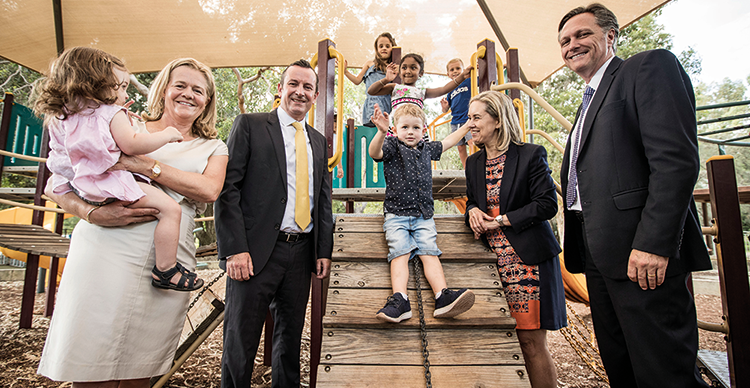
The Early Years Partnership is a 10-year (2018-2028) partnership between the WA State Government (Departments of Communities, Health, and Education), Minderoo Foundation and The Kids Research Institute Australia as the evidence and evaluation partner.

Nutrition in Early Life

The vision of the Nutrition in Early Life team is to work together with the community to produce quality research, for improving our knowledge of how a mother’s diet during pregnancy and breastfeeding can improve both her and her child’s health.

Healthcare & Early Diagnosis

Exploring opportunities for early diagnosis and intervention and the impact this has on improving family healthcare.

Early Years Systems Evidence

The Early Years Systems Evidence (EYSE) team specialises in working in partnership with governments and service providers, with a distinct focus on improving the life chances of children in Australia.