
Search
Showing results for "aboriginal respiratory"
Children with chronic medical diseases are at an unacceptable risk of hospitalisation and death from influenza and SARS-CoV-2 infections. Over the past two decades, behavioural scientists have learnt how to design non-coercive 'nudge' interventions to encourage positive health behaviours. Our study aims to evaluate the impact of multicomponent nudge interventions on the uptake of COVID-19 and influenza vaccines in medically at-risk children.
Australian children and adolescents were among the last local cohorts offered COVID-19 vaccines. Despite promising initial uptake, coverage subsequently plateaued, requiring further efforts to improve access and build parents’ recognition of the importance of COVID-19 vaccination.

PAEDS monitors for key vaccine preventable conditions and severe side effects from vaccine in 5 paediatric hospitals in Australia.

A decade long partnership with Wesfarmers Ltd. and the Wesfarmers Centre of Vaccines and Infectious Diseases has led to world-class paediatric research and important collaborations fuelling the Centre’s trajectory towards easing the burden of infectious diseases.
Chris Glenn Lea-Ann Peter Ruth Brennan-Jones Pearson Kirkham Richmond Thornton PhD BA (Education) PhD Candidate PhD MBBS MRCP(UK) FRACP PhD Head, Ear
The Staphylococcus aureus Network Adaptive Platform (SNAP) trial is a multifactorial Bayesian adaptive platform trial that aims to improve the way that S. aureus bloodstream infection, a globally common and severe infectious disease, is treated. In a world first, the SNAP trial will simultaneously investigate the effects of multiple intervention modalities within multiple groups of participants with different forms of S. aureus bloodstream infection.
Adaptive clinical trials have designs that evolve over time because of changes to treatments or changes to the chance that participants will receive these treatments. These changes might introduce confounding that biases crude comparisons of the treatment arms and makes the results from standard reporting methods difficult to interpret for adaptive trials. To deal with this shortcoming, a reporting framework for adaptive trials was developed based on concurrently randomised cohort reporting.
Otitis media (OM) is a common childhood disease characterised by middle ear effusion and inflammation.
Asha Tom Bowen Snelling BA MBBS DCH FRACP PhD GAICD FAHMS OAM BMBS DTMH GDipClinEpid PhD FRACP Head, Healthy Skin and ARF Prevention Head, Infectious
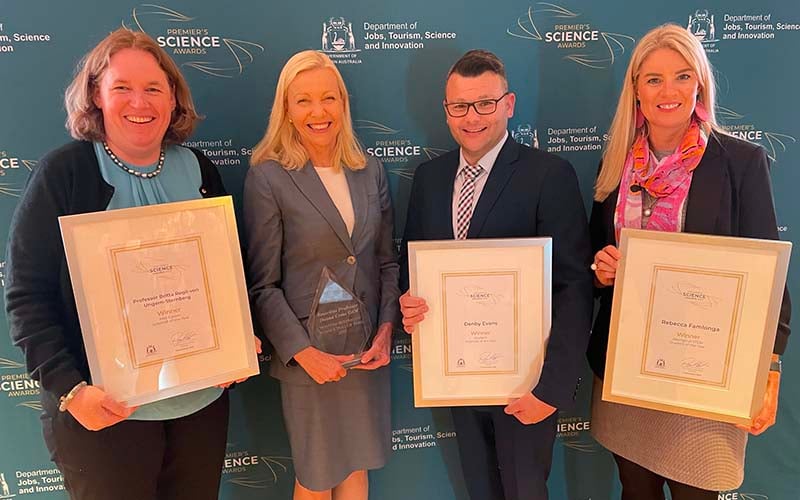
Three outstanding researchers have won 2023 Premier’s Science Awards, with another inducted into the prestigious WA Science Hall of Fame.