
Search
Showing results for "aboriginal respiratory"
An innovative response-adaptive approach to driving improvements in health outcomes, applied to cystic fibrosis.
The Opportunity The Communications and Development team implements the Institute's overall communications, marketing and philanthropy strategies, as
André Schultz MBChB, PhD, FRACP Head, BREATH Team Head, BREATH Team Prof André Schultz is the Head, BREATH Team at The Kids Research Institute
The Third Conversation
Prenatal alcohol exposure is associated with a range of adverse offspring neurodevelopmental outcomes. Several studies suggest that PAE modifies DNA methylation in offspring cells and tissues, providing evidence for a potential mechanistic link to Fetal Alcohol Spectrum Disorder.
Alexander David Martyn Larcombe Martino Symons BScEnv (Hons) PhD BSc PhD B.A. (Hons) PhD. Honorary Research Fellow Head, Chronic Diseases Research
Alexander David Martyn Larcombe Martino Symons BScEnv (Hons) PhD BSc PhD B.A. (Hons) PhD. Honorary Research Fellow Head, Chronic Diseases Research
A systematic review: Identifying the prevalence rates of psychiatric disorder in Australia's Indigenous populations.
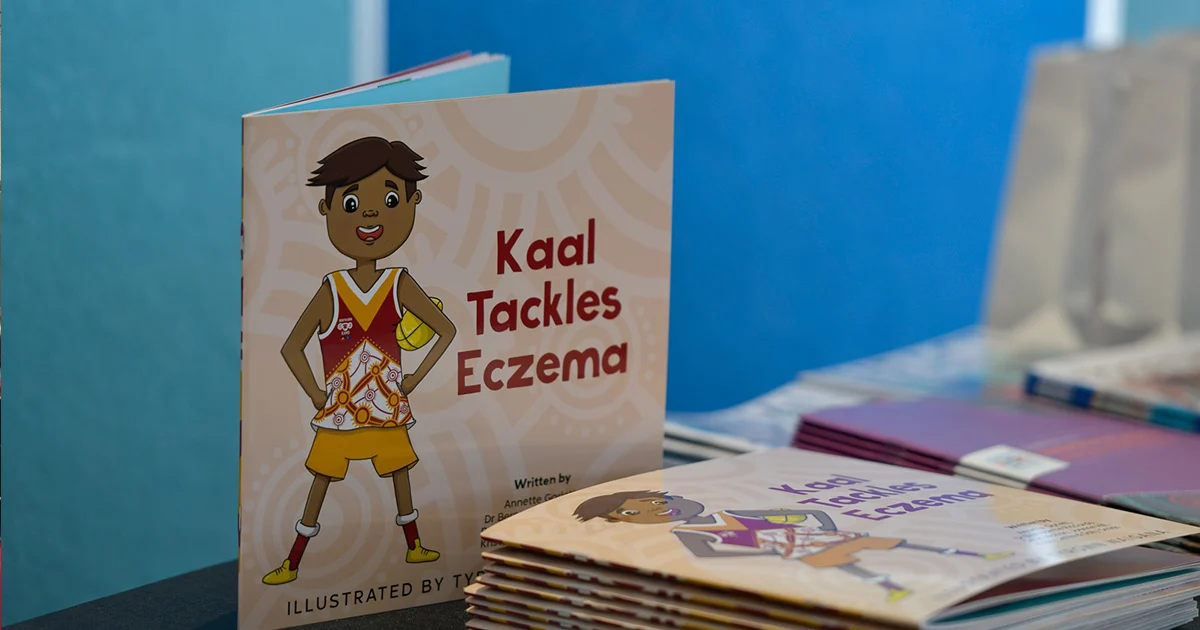
In close partnership with Aboriginal Elders and community members in Western Australia's south-west, we created ‘Kaal Tackles Eczema’, a children’s book to help Aboriginal families manage eczema. Our research showed a high prevalence and need for culturally relevant resources. The book uses Noongar language and art to educate and reduce infections, and is available online and in schools.
The aim of this review was to investigate the impact of short message service (SMS)-based interventions on childhood and adolescent vaccine coverage and timeliness.