
Search
Showing results for "preterm birth lungs"
In partnership with Aboriginal health services, Government agencies and communities, we will develop and implement evidence-based strategies to improve the detection and management of chronic wet cough in Aboriginal and Torres Strait Islander children.
Lung-function impairment underlies chronic obstructive pulmonary disease (COPD) and predicts mortality. In the largest multi-ancestry genome-wide association meta-analysis of lung function to date, comprising 580,869 participants, we identified 1,020 independent association signals implicating 559 genes supported by ≥2 criteria from a systematic variant-to-gene mapping framework. These genes were enriched in 29 pathways. Individual variants showed heterogeneity across ancestries, age and smoking groups, and collectively as a genetic risk score showed strong association with COPD across ancestry groups.
Children’s interstitial and diffuse lung disease (chILD) is a complex heterogeneous group of lung disorders. Gene panel approaches have a reported diagnostic yield of ~ 12%. No data currently exist using trio exome sequencing as the standard diagnostic modality.
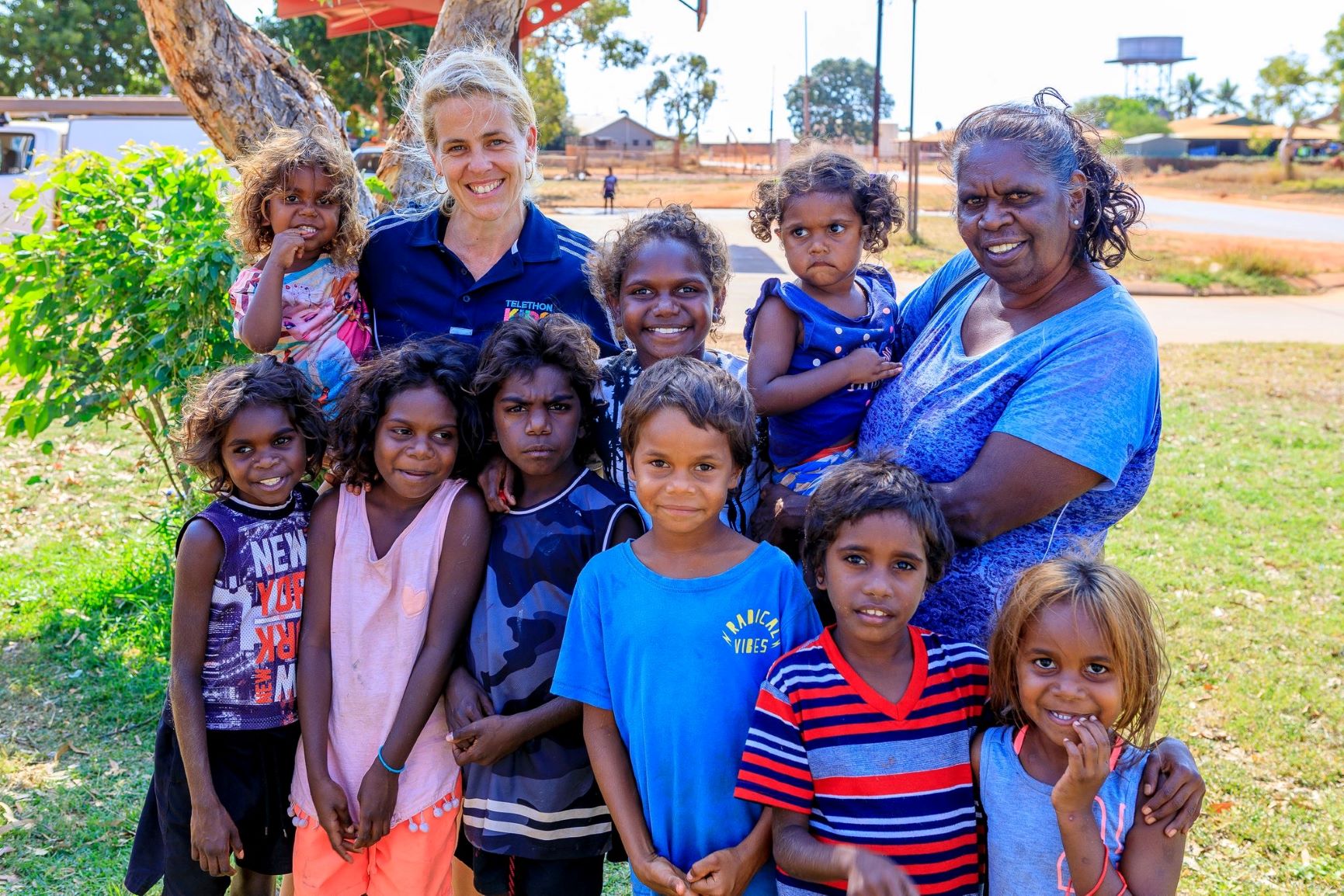
Respiratory illness accounts for 12% of the age-standardised gap in mortality between Indigenous and non-Indigenous Australians.
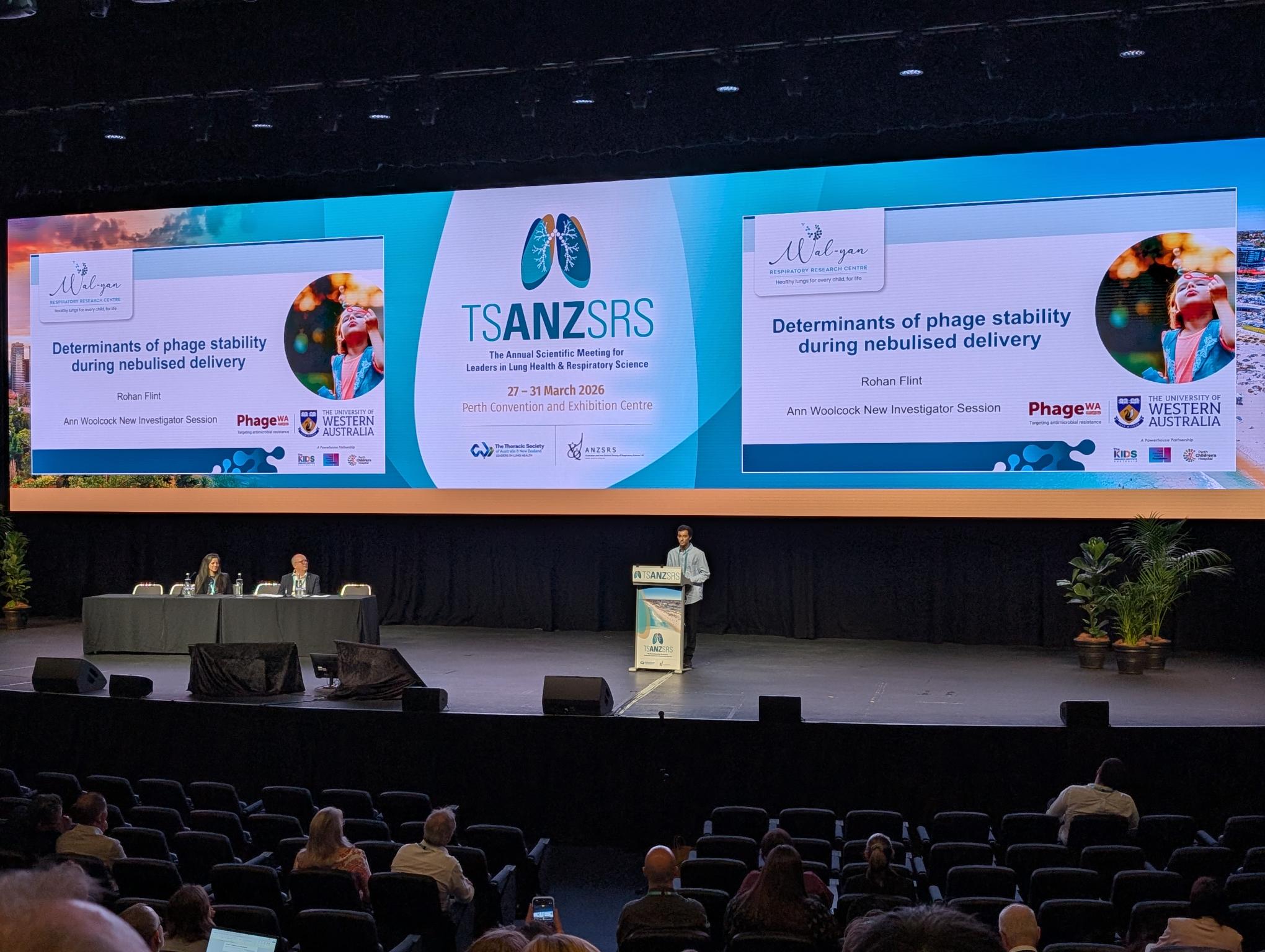
Wal-yan Respiratory Research Centre was well represented at this year's Thoracic Society of Australia and New Zealand and Society of Respiratory Science (TSANZSRS) Annual Scientific Meeting.

Bronchiectasis is a condition where the lungs become damaged and prone to infections.
Inguinal hernia surgery is one of the most common electively performed surgeries in infants. The common nature of inguinal hernia combined with the high-risk population involving a predominance of preterm infants makes this a particular area of interest for those concerned with their perioperative care. Despite a large volume of literature in the area of infant inguinal hernia surgery, there remains much debate amongst anesthetists, surgeons and neonatologists regarding the optimal perioperative management of these patients.
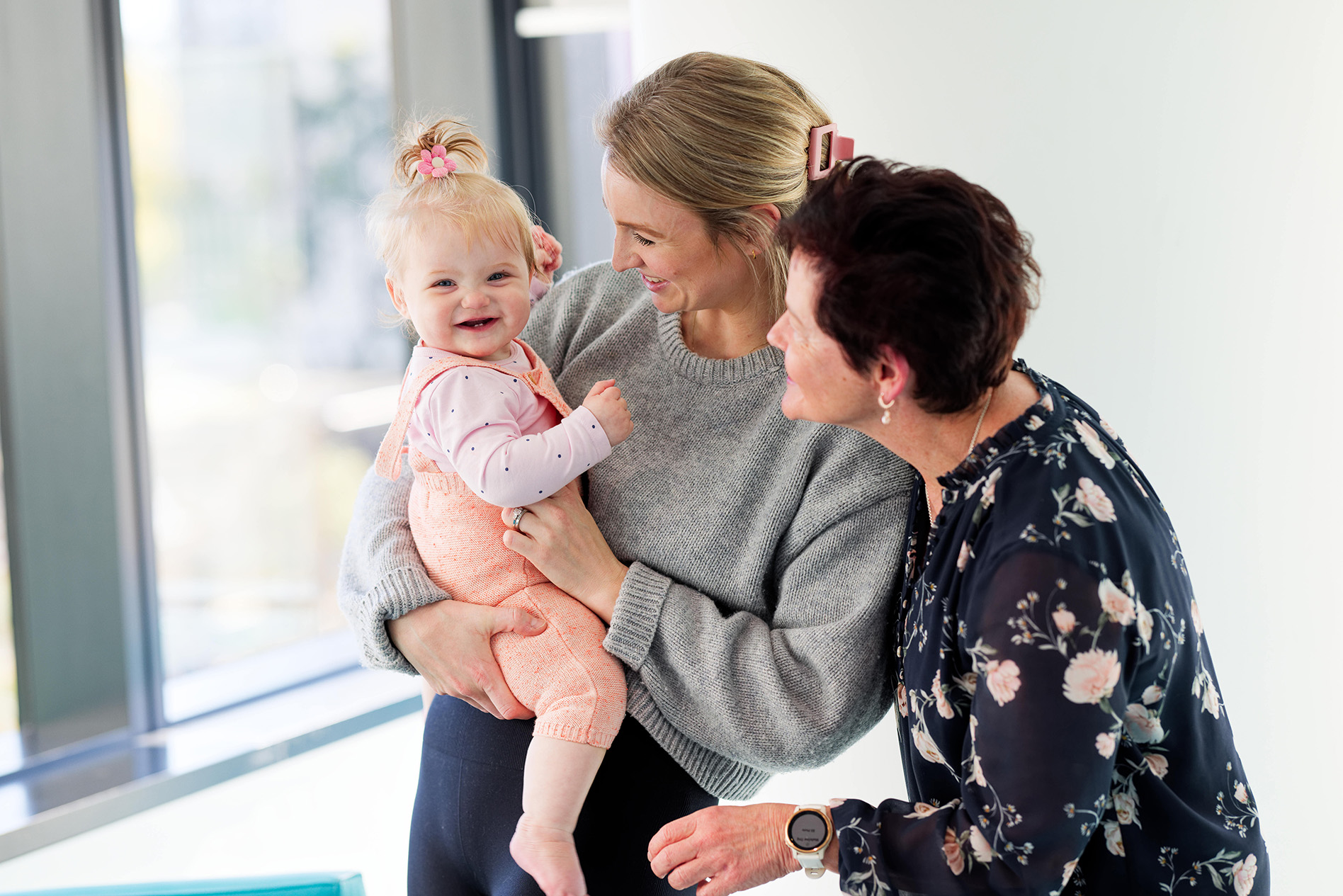
RSV hospitalises millions of babies worldwide every year: our research is helping to change that.
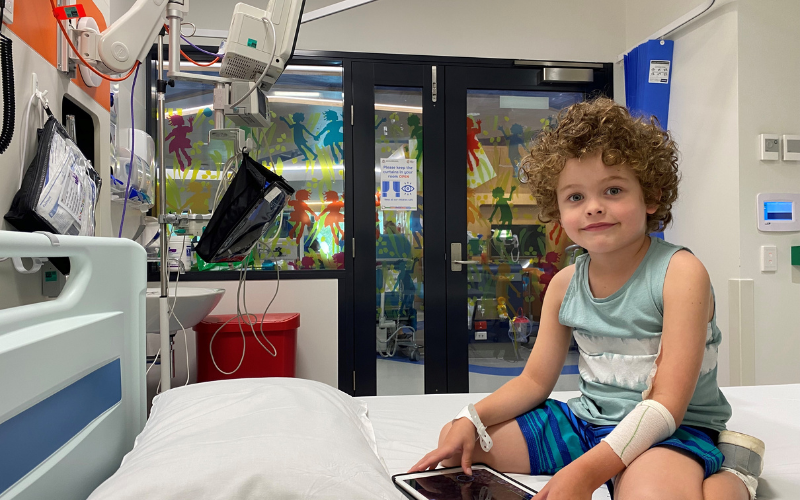
Access to phage therapy, a treatment option for antibiotic resistant superbugs, is now one step closer for people with CF in WA thanks to a $500,000 donation from Conquer Cystic Fibrosis to the Wal-yan Respiratory Research Centre.
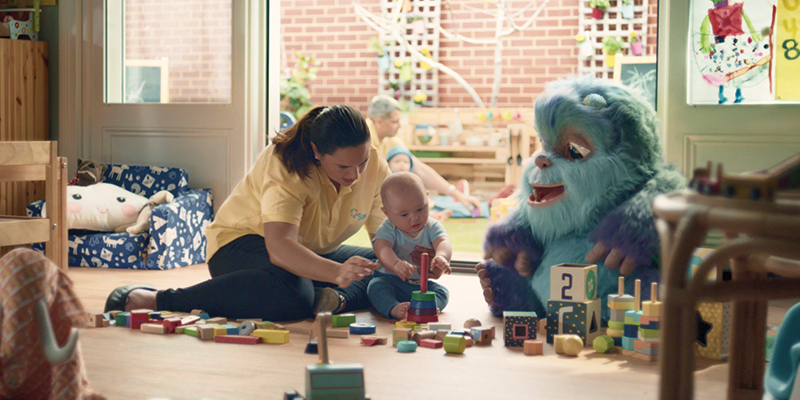
A lovable blue creature by the name of Bobbie has won the hearts and minds of Western Australians.