
Search
Showing results for "aboriginal respiratory"
Chronic suppurative otitis media (CSOM), sometimes referred to as chronic otitis media (COM), is a chronic inflammation and often polymicrobial infection of the middle ear and mastoid cavity, characterised by ear discharge (otorrhoea) through a perforated tympanic membrane. The predominant symptoms of CSOM are ear discharge and hearing loss. Systemic antibiotics are commonly used to treat people with CSOM. This is the first update to the review published in 2021, and is one of a suite of seven Cochrane reviews evaluating the effects of non-surgical interventions for CSOM.
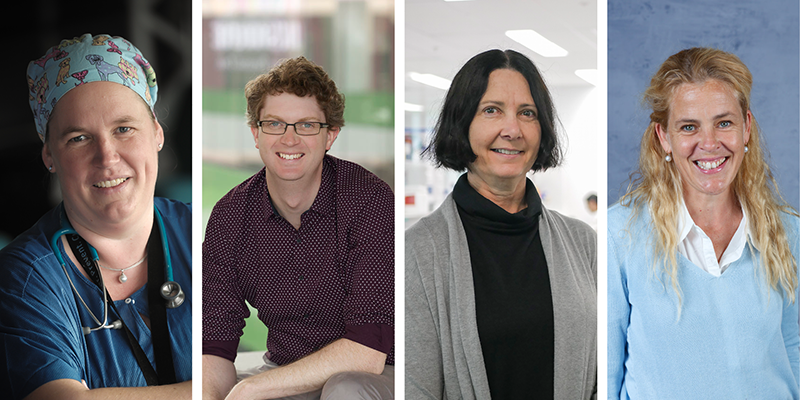
Research projects sharing in a $2.1 million funding boost will seek to translate research findings into changes that benefit patients and help the health system run more efficiently.
Neuromuscular disorders can lead to nocturnal hypoventilation. Accurate diagnosis of hypoventilation is imperative to guide treatment decisions. This study determined interobserver agreement for a number of definitions of nocturnal hypoventilation in children and adolescents with neuromuscular disorders.
On this Research Impact page, we list stories helping to show our exciting in-progress research currently "in the pipeline" towards translation. This is research which shows a real spark of potential to make a significant difference to children and families worldwide.
Australian infants who received whole-cell pertussis vaccines were less likely to be diagnosed with food allergy in childhood
In many countries, infant vaccination with acellular pertussis (aP) vaccines has replaced use of more reactogenic whole-cell pertussis (wP) vaccines. Based on immunological and epidemiological evidence, we hypothesised that substituting the first aP dose in the routine vaccination schedule with wP vaccine might protect against IgE-mediated food allergy. We aimed to compare reactogenicity, immunogenicity, and IgE-mediated responses of a mixed wP/aP primary schedule versus the standard aP-only schedule.
This paper examined the link between low serum Vitamin D levels and development of non-alcoholic fatty liver disease (NAFLD) in adolescents between 14 and 17...
The Western Australian Influenza Vaccine Effectiveness study commenced in 2008 to evaluate a new program to provide free influenza vaccine to all children...
The rebuilding of trust requires the development of meaningful relationships in order to break down the barriers so as to increase access and develop culturally secure responses by services
Research in Aboriginal contexts remains a vexed issue given the ongoing inequities and injustices in Indigenous health.