
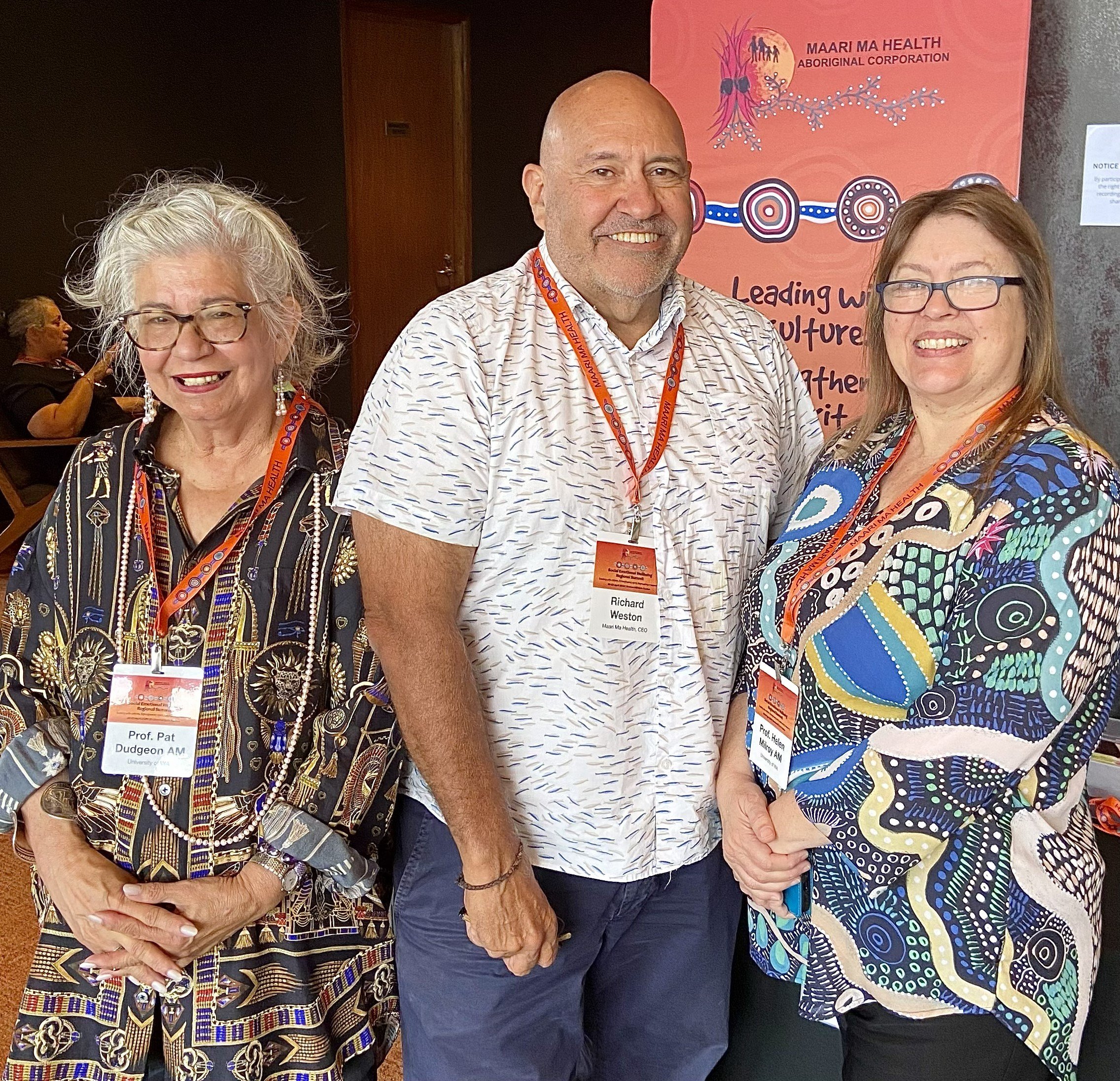
Professor Pat Dudgeon (UWA), Richard Weston (Maari Ma Health CEO), and Professor Helen Milroy
Kids has been at the forefront of childhood respiratory research. Our work is varied and wide-ranging ... better investigate causes and incidence of…
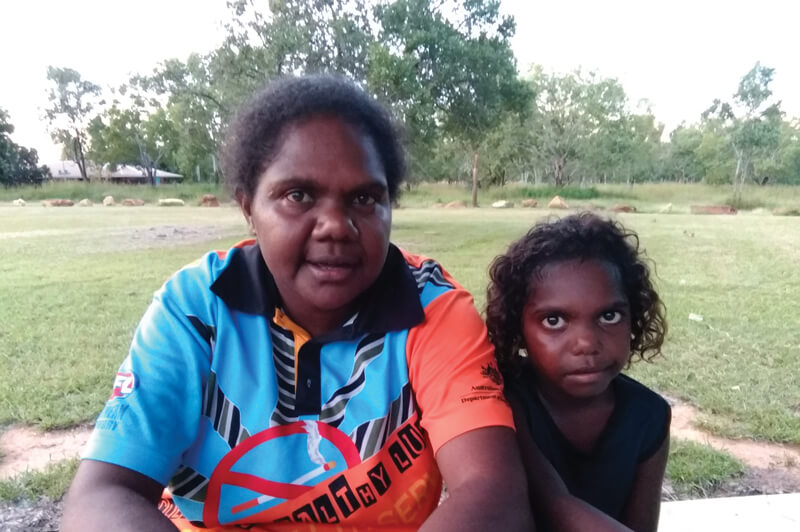
Australia, RHD occurs overwhelmingly in Aboriginal and Torres Strait Islander communities, with ... “Central to the project is the leadership of Abor…
engagement with, and building the capacity of, local Aboriginal community members to ensure real-world impact ... and public health control of skin i…
National Trachoma Surveillance and Reporting Unit to collate, analyse and report trachoma prevalence data and document trachoma control strategies in…
The aim was to evaluate the incidence, sex distribution, ethnicity, age at diagnosis, clinical presentation and morbidity of all childhood-onset cong…
Traditional markers modestly predict chronic kidney disease progression in Aboriginal and Torres Strait Islander people. Therefore, we assessed assoc…
evaluating a new medication that may help prevent Respiratory Syncytial Virus (RSV) disease. <img
Asthma exacerbations in children are associated with respiratory viral infection and atopy, resulting in systemic immune activation and infiltration…

Horvat Communications Specialist, Wal-yan Respiratory Centre <a href="mailto:alex.horvat@thekids