
Search
Showing results for "early lung health"
The Western Australian Aboriginal Child Health Survey is the most extensive survey of Aboriginal families ever undertaken.
The Wal-yan Respiratory Research Centre is made up of multi-disciplinary teams that are committed to improving the lives of children and their families living with respiratory disease.

More than 14 researchers from the Wal-yan Respiratory Research Centre will be welcomed as presenters and facilitators at The Thoracic Society of Australia and New Zealand and The Australia and New Zealand Society of Respiratory Science (TSANZSRS) Annual Scientific Meeting (ASM) this weekend.
The COVID-19 pandemic has posed significant challenges for healthcare workers worldwide, potentially affecting their sense of coherence (SOC) and overall well-being. This study aimed to identify factors associated with different levels of SOC among healthcare workers, exploring demographic characteristics, work-related factors, changes in relationships and social habits, and the overall well-being.
Britta Regli-von Ungern-Sternberg AM FAHMS MD, PhD, DEAA, FANZA Chair of Paediatric anaesthesia, University of Western Australia; Consultant
Children with asthma face serious mental health risk, but the pathways remain unclear. This study aimed to examine bullying victimisation and perpetration in children with asthma and a comparison sample without a chronic health condition, and the role of bullying in moderating psychosocial adjustment outcomes for those with asthma. A sample of children with and without asthma, and their parents, were recruited from hospital clinics.
Recent studies have demonstrated that some children with acute bronchiolitis can be successfully managed using home oxygen therapy.
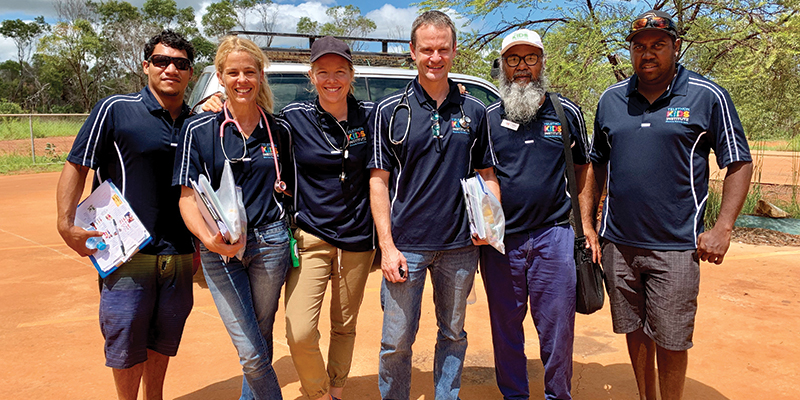
Prevalence of chronic lung disease in Aboriginal children is conservatively estimated at 1.5 per cent
The aim of the task force was to provide technical recommendations regarding oscillometry measurement
The Horizon2020 LifeCycle Project is a cross-cohort collaboration which brings together data from multiple birth cohorts from across Europe and Australia to facilitate studies on the influence of early-life exposures on later health outcomes. A major product of this collaboration has been the establishment of a FAIR (findable, accessible, interoperable and reusable) data resource known as the EU Child Cohort Network. Here we focus on the EU Child Cohort Network's core variables.