
Search
Showing results for "early lung health"
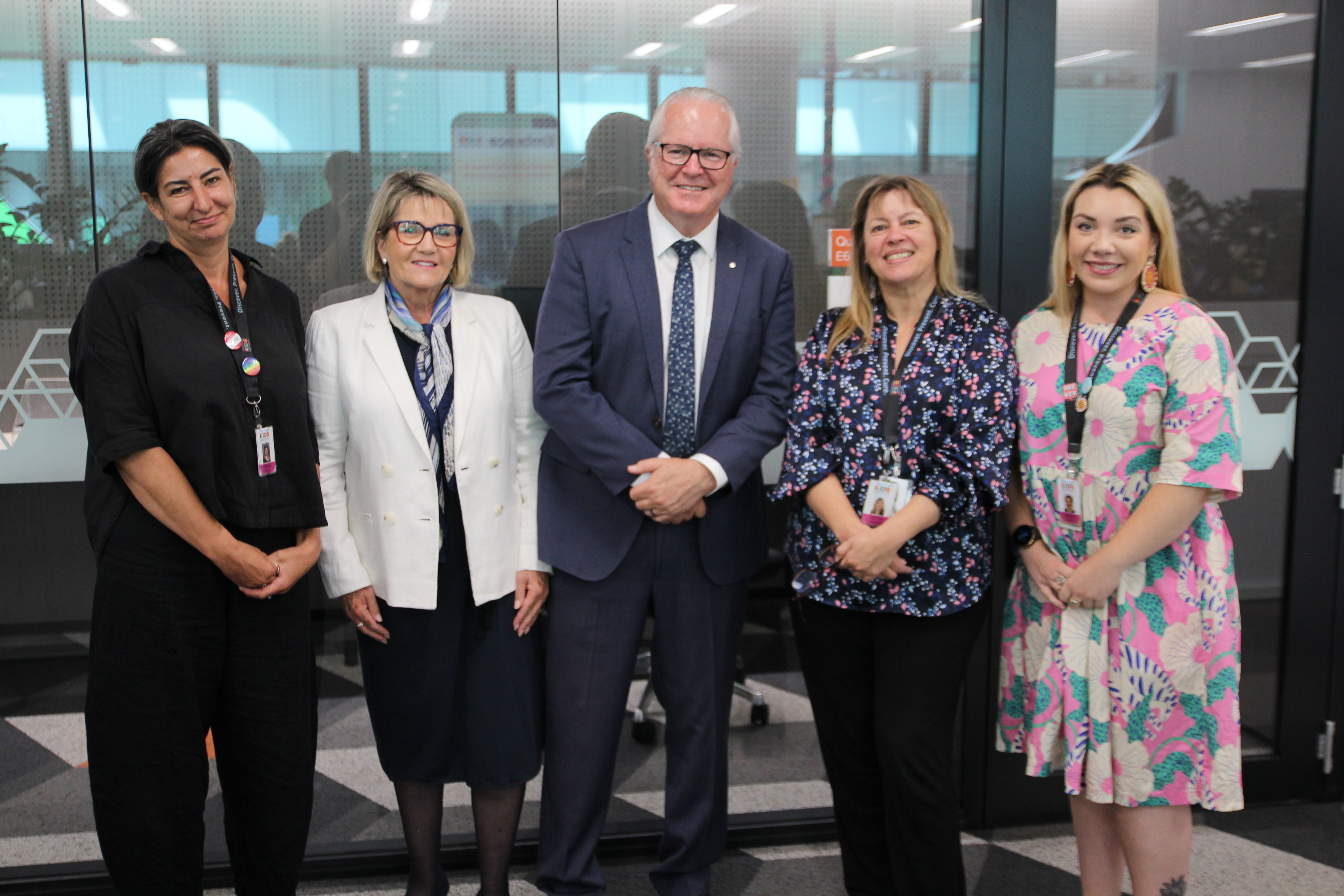
WA Governor Chris Dawson invites further youth mental health research

Embrace at The Kids Research Institute Australia has identified the top 10 unexplored infant, child and youth mental health research priorities in consultation with the Western Australian community.
This work initially examines particle deposition in a Weibull-type geometry, comparing traditional computational fluid dynamics approaches with a novel...
Transcriptomic analyses from early human immunodeficiency virus (HIV) infection have the potential to reveal how HIV causes widespread and lasting damage to biological functions, especially in the immune system. Previous studies have been limited by difficulties in obtaining early specimens.
There is limited evidence regarding the optimal time to commence parenteral nutrition in term and late preterm infants.
Autism early intervention research has indicated a research-to-practice gap, including continued use of practices with inadequate research support, and insufficient use of empirically supported practices. The present study explored the processes and mechanisms through which providers working with young children on the autism spectrum learn, select, and implement the various practices in their clinical repertoires.
There is a greater prevalence of multiple sclerosis (MS), a neurological autoimmune condition, in populations living further from the equator, hypothesised to be due to reduced sunlight exposure. There exists a proven sunlight surrogate therapy for dermatological inflammatory conditions, in the form of narrowband NB-UVB phototherapy. Yet, there is a paucity of randomized trials of the therapeutic delivery of NB-UVB beyond dermatology for conditions with a systemic inflammatory component.
Sex-specific developmental differences in brain structure have been documented in older children and adolescents, with females generally showing smaller overall brain volumes and earlier peak ages than males. However, sex differences in gray matter structural development in early childhood are less studied. We characterized sex-specific trajectories of gray matter volume development in children aged 2–8 years.
This paper explores neighborhood-built environment features related to ‘better than expected’ and ‘as expected’ early childhood development outcomes (ECD) in 14 Australian disadvantaged communities. This paper draws from mixed methods data collected in the Kids in Communities Study–an Australian investigation of community effects on ECD–in communities across five states and territories.
Recent studies in very premature infants (<32 weeks gestation) have shown that early commencement of parenteral nutrition immediately after birth improves physical growth. However, there are concerns that early use of very high dose of amino-acids (>3.5 g/kg/day immediately after birth) may cause metabolic acidosis, elevated blood urea, slower head growth and refeeding-hypophosphatemia syndrome. A recent multicentre randomized controlled trial found that commencement of parenteral nutrition within 24-h of admission increases the risk of infections and prolongs the duration of ventilation and ICU stay in full-term neonates, older infants and children. The study also found that delaying to day 8 of admission increased the risk of hypoglycaemia.