
Search
Showing results for "early lung health"
We aimed to quantify the diagnostic utility of mannitol challenge testing for asthma in a community cohort and a symptomatic wheezing subset of this cohort.
Multiple-breath washout (MBW) is an established technique to assess functional residual capacity (FRC) and ventilation inhomogeneity in the lung. Indirect calculation of nitrogen concentration requires accurate measurement of gas concentrations.

When Samuel and James Considine were born in October 2003, perilously close to what the medical world describes as the limit of viability, each weighed just 700 grams and could fit into the palm of their father’s hand.
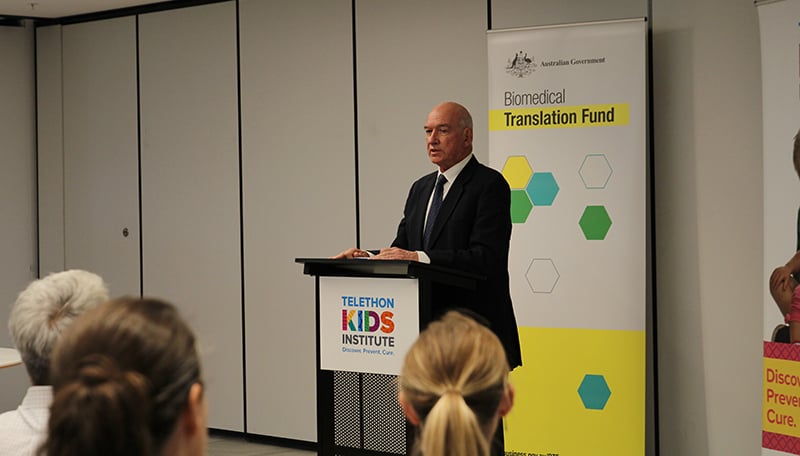
A The Kids Research Institute Australia spin-off company has received $20 million from the Medical Research Commercialisation Fund to develop a promising new therapy for the treatment of Cystic Fibrosis.
The emergence of multi-drug resistant (MDR) bacteria is recognised today as one of the greatest challenges to public health. As traditional antimicrobials are becoming ineffective and research into new antibiotics is diminishing, a number of alternative treatments for MDR bacteria have been receiving greater attention. Bacteriophage therapies are being revisited and present a promising opportunity to reduce the burden of bacterial infection in this post-antibiotic era.
Alexander Anthony Larcombe Kicic BScEnv (Hons) PhD BSc (Hons) PhD Honorary Research Fellow Head, Airway Epithelial Research; WA Cystic Fibrosis
This study explored how children and adolescents with a neuromuscular disorder (NMD) and their parents experienced barriers and enablers to the child's participation.
This review focuses on smokers and nonsmokers and evaluates the most recent data regarding the potential health effects of e-cigarettes
Identify entrenched areas of asthma management and treatment in which progress has stalled and to challenge current principles

Predicting disease progression in cystic fibrosis ABSTRACT Introduction: Progressive lung disease is the major cause of morbidity and mortality in