
Search
Showing results for "Childhood interstitial lung disease "

New research from the Wal-yan Respiratory Research Centre points to a more accurate set of warning signs that can flag declining lung function years before it becomes serious.

Wal-yan Respiratory Research Centre researcher Ms Denby Evans has been awarded one of four inaugural fellowships supported by the State's Future Health Research and Innovation (FHRI) Fund and Brightspark Foundation, enabling her to further her research into ways to improve the lung health of people
We hypothesized that allergic inflammation decreases the level of circulating 25(OH)D and tested this using a mice model of house dust mite (HDM) induced...

More than 15 researchers from the Wal-yan Respiratory Research Centre will head to the Gold Coast this weekend to take part in at The Thoracic Society of Australia and New Zealand and The Australia and New Zealand Society of Respiratory Science (TSANZSRS) Annual Scientific Meeting (ASM).
The pathophysiology of BPD has changed in recent years as advances in neonatal care have led to increased survival of smaller, more preterm, infants who...

The clinical utility of lung clearance index in early cystic fibrosis lung disease is not impacted by the number of multiple-breath washout trials
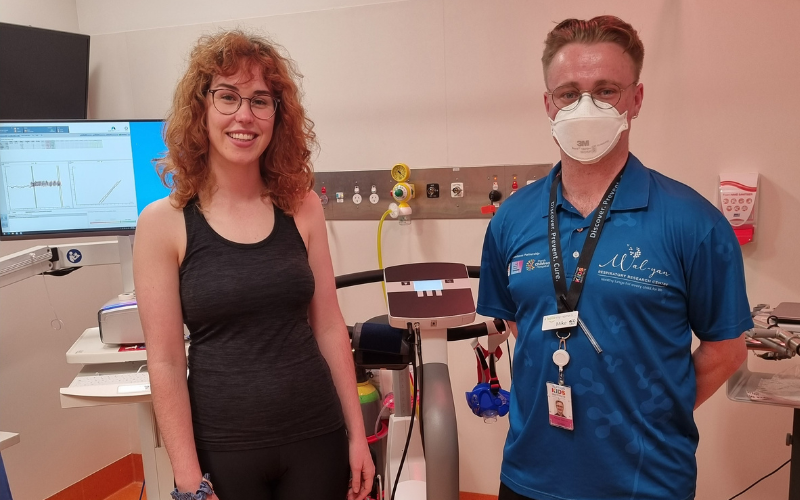
Natasha, who is a participant in the West Australian Lung Health in Prematurity (WALHIP) study, this week became the first person to receive a lung health assessment using new state-of-the-art lung function testing equipment at Perth Children’s Hospital.
Pulmonary function measures reflect respiratory health and are used in the diagnosis of chronic obstructive pulmonary disease.

Analysis of worldwide research shows that despite advances in neonatal care, preterm babies have lower lung function throughout their life.
We aimed to research relationships between 25(OH)D levels from birth to 10 y/o and susceptibility to allergic sensitization, respiratory issues and asthma.