
Search
Showing results for "mental health aboriginal"
The Raine Eye Health Study (REHS) was conceived to determine the prevalence of and risk factors for eye disease in young adults, and to characterize...
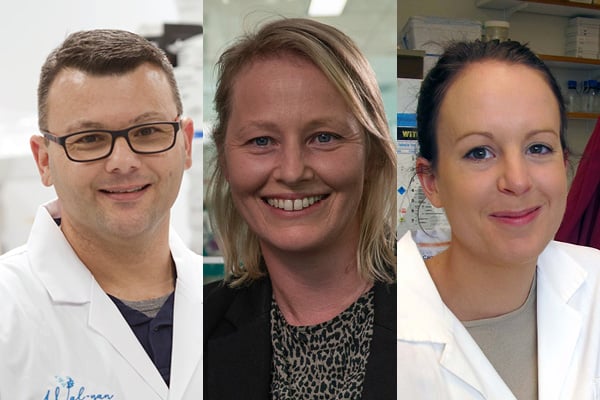
Three researchers from the Wal-yan Respiratory Research Centre will share in almost $1.8 million in grants to continue groundbreaking research to tackle childhood asthma prevention and lung disease.
Physical inactivity is a leading contributor to increased cardiovascular morbidity and mortality. Almost 500 million new cases of preventable noncommunicable diseases (NCDs) will occur globally between 2020 and 2030 due to physical inactivity, costing just over US$300 billion, or around US$ 27 billion annually (WHO 2022). Active adults can achieve a reduction of up to 35% in risk of death from cardiovascular disease.
Children are more vulnerable than adults to climate-related health threats, but reviews examining how climate change affects human health have been mainly descriptive and lack an assessment of the magnitude of health effects children face. This is the first systematic review and meta-analysis that identifies which climate-health relationships pose the greatest threats to children.
The bacille Calmette-Guérin (BCG) vaccine has immunomodulatory "off-target" effects that have been hypothesized to protect against coronavirus disease 2019.
Human flourishing, the state of optimal functioning and well-being across all aspects of an individual's life, has been a topic of philosophical and theological discussion for centuries. In the mid-20th century, social psychologists and health scientists began exploring the concept of flourishing in the context of health and high-level wellness.
Recent research has documented a wide range of health, economic, and social benefits conferred by vaccination, beyond the direct reductions in morbidity, mortality, and future healthcare costs traditionally captured in economic evaluations.
A lack of diversity in genomics for health continues to hinder equitable leadership and access to precision medicine approaches for underrepresented populations. To avoid perpetuating biases within the genomics workforce and genomic data collection practices, equity, diversity, and inclusion (EDI) must be addressed.
Long-standing health inequalities in Australian society that were exposed by the severe acute respiratory syndrome coronavirus 2 (SARS-CoV-2) pandemic were described as "fault lines" in a recent call to action by a consortium of philanthropic organizations. With asthma a major contributor to childhood disease burden, studies of its spatial epidemiology can provide valuable insights into the emergence of health inequalities early in life.
The global human population is still growing such that our collective enterprise is driving environmental catastrophe. Despite a decline in average population growth rate, we are still experiencing the highest annual increase of global human population size in the history of our species-averaging an additional 84 million people per year since 1990.