
Search
Showing results for "Childhood interstitial lung disease "
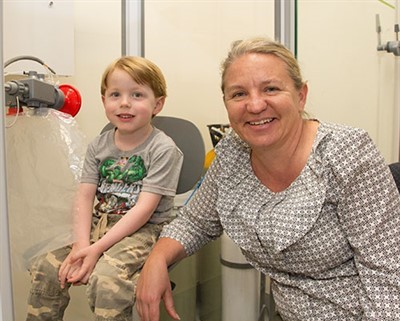
That's why Melissa has signed up her four year old healthy son Odin for a study at Perth's The Kids Research Institute Australia that will help kids with cystic fibrosis.
PCV10 did not reduce NTHi density in the nasopharynx or middle ear, and was associated with increased pneumococcal nasopharyngeal density
We know from research that the risk of death from respiratory disease is 14 times higher for adults with cerebral palsy than for other adults. Respiratory disease is the most common cause of premature death in children and young people with cerebral palsy and one of the main causes of hospitalisation.
Preterm infants have immature control of breathing and impaired pulmonary gas exchange. We hypothesized that infants with bronchopulmonary dysplasia (BPD) have a blunted ventilatory response and peripheral oxygen saturation (SpO2 ) instability during a hypoxic challenge.
The aim of this study was to examine the relationship between nasopharyngeal pneumococcal colonization in early life and the development of T cell responses.
The European Respiratory Society Oscillometry Taskforce identified that clinical correlates of bronchodilator responses are needed to advance oscillometry in clinical practice. The understanding of bronchodilator-induced oscillometry changes in preterm lung disease is poor. Here we describe a comparison of bronchodilator assessments performed using oscillometry and spirometry in a population born very preterm and explore the relationship between bronchodilator-induced changes in respiratory function and clinical outcomes.
Nanoparticles are being developed for diverse biomedical applications, but there is concern about potential to promote inflammation, particularly in the lungs.
Alexander Larcombe BScEnv (Hons) PhD Honorary Research Fellow Honorary Research Fellow Associate Professor Alexander Larcombe began work at The Kids
This review describes the evolution of bronchopulmonary dysplasia definitions, evaluates the benefits and limitations of each approach
People born preterm (<37 weeks’ gestation) have lower peak oxygen consumption (peak VO2), a well-established indicator of long-term health outcomes, compared to term-born peers. However, responses to exercise can vary with exercise mode, which has implications for prognostic assessments.