
Search
Showing results for "preterm birth lungs"

Results of an innovative clinical trial led by Perth researchers have shown that the drug interferon could help reduce the spread of COVID-19 from a positive person to their household contacts, with the study helping to inform treatment options for a future pandemic.
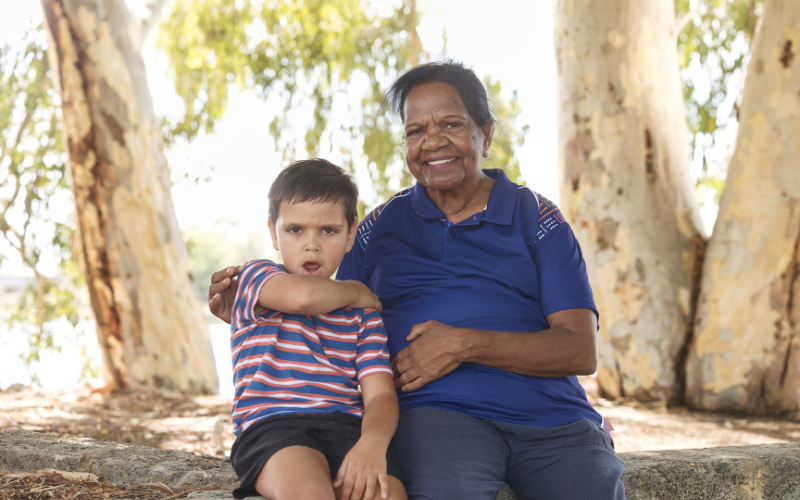
An intensive health promotion campaign which aims to raise awareness of the dangers of a chronic wet cough in Aboriginal children launched this month in Perth.

Wal-yan Respiratory Research Centre researchers will use almost $1.2 million in WA Child Research Fund grants to determine why Indigenous children develop bronchiectasis at such high rates after contracting bronchiolitis, and to test a promising novel treatment for respiratory syncytial virus (RSV).

A new paper published in Frontiers in Pediatrics offers clinicians a practical roadmap to improve healthcare outcomes for Indigenous children, starting with respect, communication, and cultural understanding.
Studies in Europe show exposure of pregnant women to high levels of microbial products stimulate immune function maturation in their offspring
ATP Binding Cassette Subfamily A Member 3 (ABCA-3) is a lipid transporter protein highly expressed in type-II alveolar (AT-II) cells. Mutations in ABCA3 can result in severe respiratory disease in infants and children. To study ABCA-3 deficiency in vitro, primary AT-II cells would be the cell culture of choice although sample accessibility is limited. Our aim was to investigate the suitability of primary nasal epithelial cells, as a surrogate culture model for AT-II cells, to study ABCA-3 deficiency.
A standardised framework for selecting outcomes for evaluation in trials has been proposed by the Core Outcome Measures in Effectiveness Trials working group. However, this method does not specify how to ensure that the outcomes that are selected are causally related to the disease and the health intervention being studied. Causal network diagrams may help researchers identify outcomes that are both clinically meaningful and likely to be causally dependent on the intervention, and endpoints that are, in turn, causally dependent on those outcomes.
There is no consensus on how best to measure responses to interventions among children and adults with cystic fibrosis (CF). We have systematically reviewed and summarised the characteristics and measurement properties of tests and tools that have been used to capture outcomes in studies among people with CF, including their reliability, validity and responsiveness. This review is intended to guide researchers when selecting tests or tools for measuring treatment effects in CF trials. A consensus set of these tests and tools could improve consistency in how outcomes are captured and thereby facilitate comparisons and synthesis of evidence across studies.
The aim of this study is to identify and quantify the preferences of patients with cystic fibrosis regarding treatment outcomes
This review will discuss the necessary steps required for a Bayesian adaptive platform trial to optimize treatment of pulmonary exacerbations of cystic fibrosis