
Search
Showing results for "e-cigarettes"
The Infectious Disease Ecology and Modelling team led by Professor Nick Golding, combines mathematical and statistical modelling, ecology, and public health to address malaria and other infectious and vector-borne diseases. The team uses modelling and maps to measure the risk posed by some of the world’s most important and neglected diseases – including malaria, Japanese Encephalitis and COVID-19 – and provide rapid modelling analyses to policy makers.
Social media allows users to connect with others’ experiences and points of view, with TikTok being the fastest-growing platform worldwide. Highly viewed videos related to neurodiversity on TikTok have an increasing role in understanding and acceptance of neurodivergent individuals.
Information on the hospital service use among individuals with CDKL5 Deficiency Disorder, an ultrarare developmental epileptic encephalopathy, is limited, evidence of which could assist with service planning. Therefore, using baseline and longitudinal data on 379 genetically verified individuals in the International CDKL5 Disorder Database, we aimed to investigate rates of seizure-related and other hospitalizations and associated length of stay in this cohort.
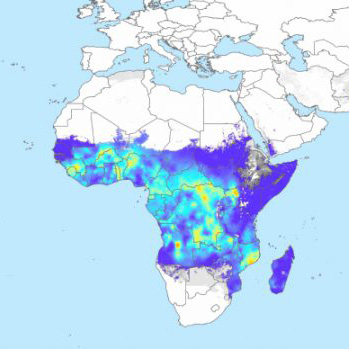
Bacillus Calmette-Guérin (BCG) protects children from severe tuberculosis and remains the only licensed vaccine for tuberculosis. Subnational estimates of BCG coverage are essential for identifying underserved populations across Africa. This study aimed to map BCG vaccination coverage in Africa from 1990 to 2022.
B-cell acute lymphoblastic leukemia (B-ALL) is the most common pediatric cancer. Current therapeutic regimens have improved 5-year event-free survival rates to 90%, however clinical outcomes for high-risk subgroups, such as BCR-ABL1+ B-ALL and relapsed ALL, remain poor. In addition, 16% of newly diagnosed children with ALL present with vertebral compression fractures. Moreover, 16% of children with ALL undergoing glucocorticoid therapy also experience a high incidence of vertebral fractures, indicating that bone health may be compromised by both leukemia progression and osteotoxicity of chemotherapy.
MECP2 duplication syndrome (MDS) is an ultrarare, X-linked neurodevelopmental disorder that is poorly understood in terms of its natural history and phenotypic variability. There is limited information on how individuals with MDS acquire, retain or lose fundamental functional skills (gross motor, purposeful hand function and communication) - that of which this study aimed to better characterise in the largest case series to date.
No studies have yet examined high-resolution shifts in the spatial patterns of human movement in Australia throughout 2020 and 2021, a period coincident with the repeated enactment and removal of varied governmental restrictions aimed at reducing community transmission of SARS-CoV-2. We compared overlapping timeseries of COVID-19 pandemic-related restrictions, epidemiological data on cases and vaccination rates, and high-resolution human movement data to characterize population-level responses to the pandemic in Australian cities.
Aim: To compare growth in individuals with cyclin-dependent kinase-like 5 (CDKL5) deficiency disorder with population norms and to investigate the effect of gastrostomy on growth.
Individuals with borderline personality disorder (BPD) are at a substantial risk of harm to themselves and others, experience high levels of functional impairment and typically are high users of tertiary healthcare to address their mental health concerns. As indicators for BPD typically emerge in adolescence, a day therapy service in Bentley, Western Australia, Touchstone Child and Adolescent Mental Health Service (CAMHS), was developed as an intensive intervention for adolescents with indicators for BPD and its associated symptomology.
To assess potential benefits and direct healthcare cost savings with expansion of an existing childhood influenza immunisation program, we developed a dynamic transmission model for the state of Western Australia, evaluating increasing coverage in children < 5 years and routinely immunising school-aged children.