
Search
Showing results for "clinical trials"
Review the hospital-based research that the Wesfamers Centre of Vaccines & Infectious Diseases conducts.
Deborah Lea-Ann Peter Peter Ruth Lehmann Kirkham Jacoby Richmond Thornton AO, MBBS, MSc PhD BA (Hons) MSc MBBS MRCP(UK) FRACP PhD Honorary Emeritus
Validated measures capable of demonstrating meaningful interventional change in the CDKL5 deficiency disorder (CDD) are lacking. The study objective was to modify the Rett Syndrome Gross Motor Scale (RSGMS) and evaluate its psychometric properties for individuals with CDD.
Andrew Desiree Gail Kandice Videos Whitehouse Watch and listen to Andrew Silva Alvares Varcin PhD MBBS, FRACP, MPH, PhD PhD M.Psych (Clinical), PhD
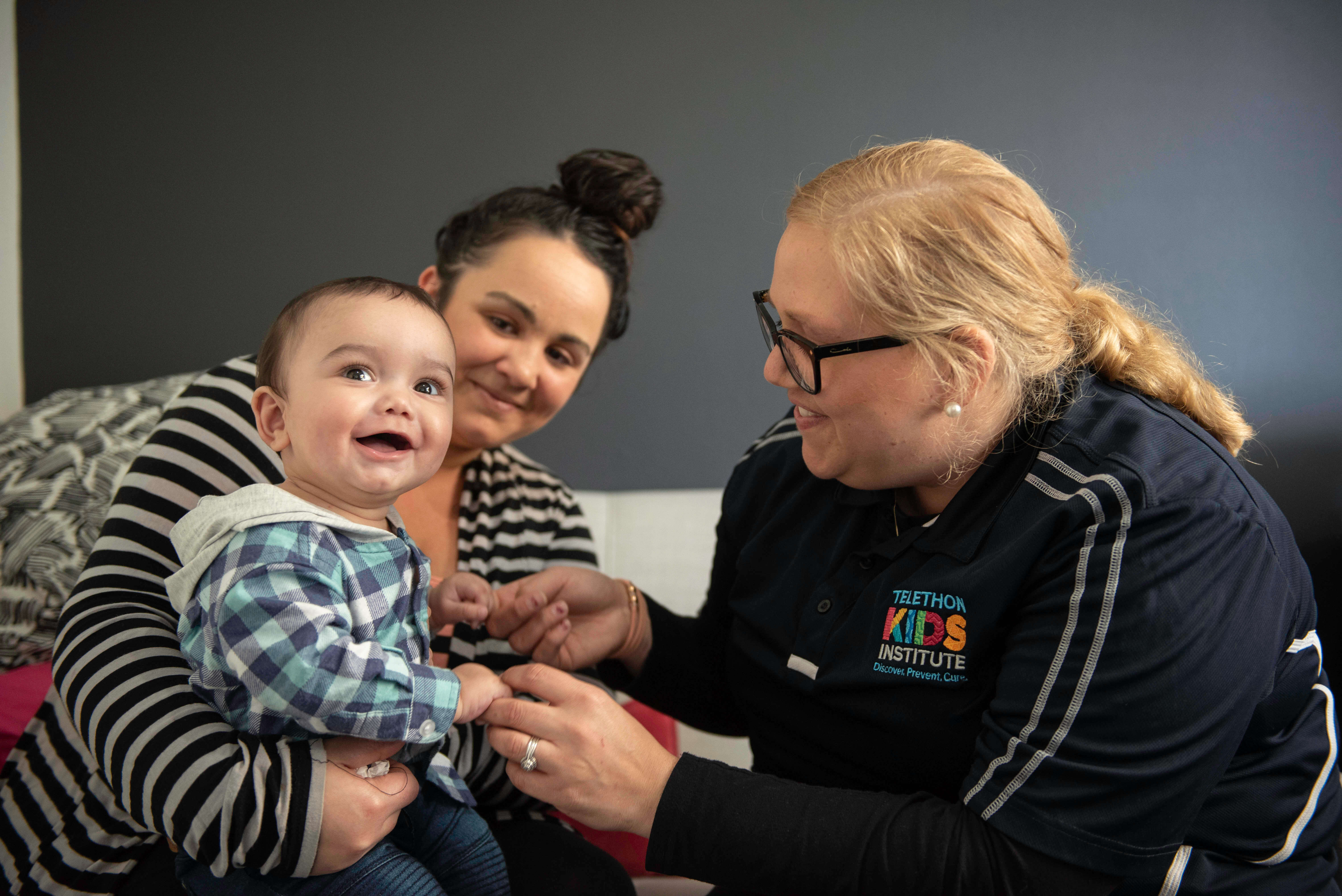
The major funder of the Wesfarmers Centre of Vaccines and Infectious Diseases based at The Kids Research Institute Australia has been recognised as Australia’s most generous giver.

At the Institute's Annual General Meeting on May 27, Professor Michael Good was elected to our Board of Directors.
The current prevalence of mental health problems in Western populations is approximately 20% and half of all adult mental health disorders are estimated to...
Stopping Acute Rheumatic Fever Infections to Strengthen Health
Asthma affects > 10% of children in Australia and New Zealand (NZ), with up to 5% of those having severe disease, presenting a management challenge. We aimed to survey tertiary paediatric respiratory services across Australia and NZ using a custom-designed questionnaire, to conduct a cross-sectional observational study of the numbers of children with problematic severe asthma seen, the number treated with biologic therapy, outpatient clinic/multidisciplinary team services available, investigations and tools routinely used and approaches utilised for transition to adult care.
The primary objective was to determine whether a behaviour change intervention delivered to hospital staff would (1) improve the proportion of Aboriginal and/or Torres Strait Islander (Aboriginal) babies being registered and (2) reduce hospital admissions and emergency presentations for babies <6 months old. The secondary objective was an observational analysis to determine factors that might influence the proportion of registered Aboriginal births in Western Australia.