Skip to content

Search

Showing results for "Childhood interstitial lung disease "

Assessment of different techniques for the administration of inhaled salbutamol in children breathing spontaneously via tracheal tubes, supraglottic airway devices, and

Perioperative respiratory adverse events account for a third of all perioperative cardiac arrests, with bronchospasm and laryngospasm being most common. Standard treatment for bronchospasm is administration of inhaled salbutamol, via pressurized metered dose inhaler. There is little evidence on the best method of attaching the pressurized metered dose inhaler to the artificial airway during general anesthesia. The aim of this study is to investigate the best method to deliver aerosolized salbutamol via pressurized metered dose inhaler to the lungs of an anesthetized child.

Assessment of different techniques for the administration of inhaled salbutamol in children breathing spontaneously via tracheal tubes, supraglottic airway devices, and tracheostomies

Perioperative respiratory adverse events account for a third of all perioperative cardiac arrests, with bronchospasm and laryngospasm being most common. Standard treatment for bronchospasm is administration of inhaled salbutamol, via pressurized metered dose inhaler. There is little evidence on the best method of attaching the pressurized metered dose inhaler to the artificial airway during general anesthesia. The aim of this study is to investigate the best method to deliver aerosolized salbutamol via pressurized metered dose inhaler to the lungs of an anesthetized child.

Meet the Finalists: Illuminate PitchFest 2025

We are excited to introduce ten trailblazing researchers who will be taking to the stage this February to pitch their bold and innovative ideas to our philanthropic community.

The measurement properties of tests and tools used in cystic fibrosis studies: a systematic review

There is no consensus on how best to measure responses to interventions among children and adults with cystic fibrosis (CF). We have systematically reviewed and summarised the characteristics and measurement properties of tests and tools that have been used to capture outcomes in studies among people with CF, including their reliability, validity and responsiveness. This review is intended to guide researchers when selecting tests or tools for measuring treatment effects in CF trials. A consensus set of these tests and tools could improve consistency in how outcomes are captured and thereby facilitate comparisons and synthesis of evidence across studies.

Outcomes and endpoints reported in studies of pulmonary exacerbations in people with cystic fibrosis: A systematic review

There is no consensus about which outcomes should be evaluated in studies of pulmonary exacerbations in people with cystic fibrosis (CF). Outcomes used for evaluation should be meaningful; that is, they should capture how people feel, function or survive and be acknowledged as important to people with CF, or should be reliable surrogates of those outcomes. We aimed to summarise the outcomes and corresponding endpoints which have been reported in studies of pulmonary exacerbations, and to identify those which are most likely to be meaningful.

Compatibility of pentoxifylline injection with syringe and inline filters

Tobias Strunk MD, PhD, FRACP Head, Neonatal Health tobias.strunk@thekids.org.au Head, Neonatal Health Clinical Professor Tobias Strunk is a

Clinical Epigenetics

Epigenomic research at The Kids explores the links between childhood disease and the molecular hallmarks of epigenetic control.

Elizabeth Wilkes

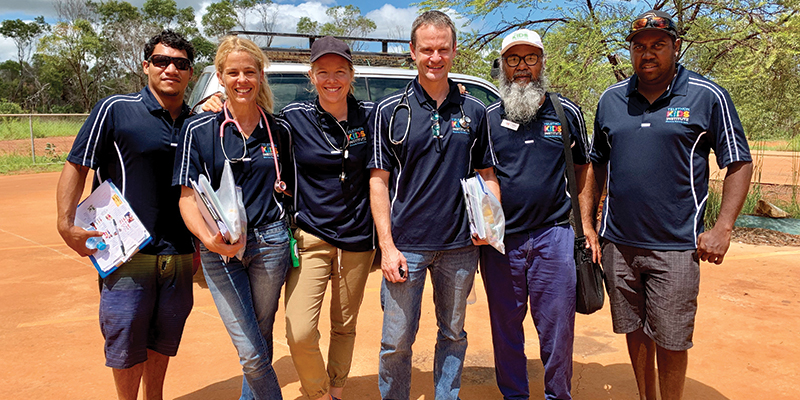
Liz Wilkes is a Noongar woman with family connections to the Wadjuk and Ballardong tribes. She has a background in nursing and a passion for Aboriginal health and community engagement.

Expertise and technologies

The Kids has a range of specialised expertise, tools, platforms and technology to undertake cutting-edge science.