
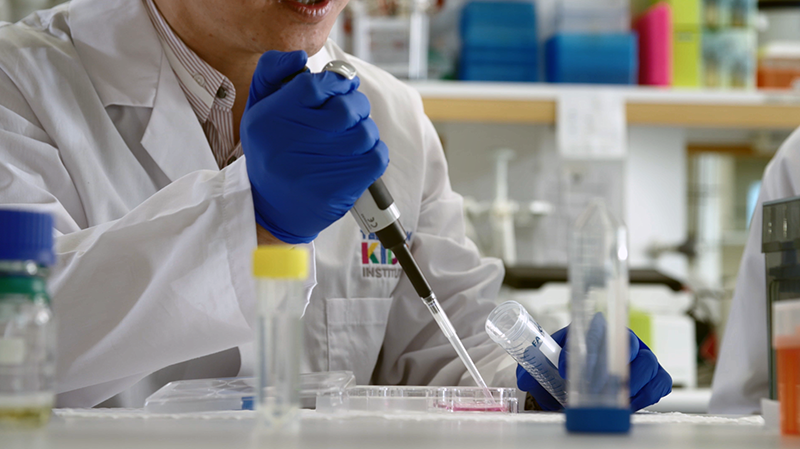
to tackle health issues including respiratory disease, brain cancer, vaccination and Aboriginal health ... Aboriginal children, respiratory disease i…
played a leadership role in the END Rheumatic Heart Disease Program at TKI. Her research seeks to address the ... Acute Rheumatic Fever (ARF) and Rhe…
Providing a safe and effective coronavirus disease 2019 (COVID‐19) vaccination program is required to mitigate against the current and future negativ…
What would you discover to help a child? At The Kids, our researchers are committed to Type 1 Diabetes research that makes a real difference.
Skin exposure to ultraviolet radiation alters the faecal microbiome, and further investigations to explore the implications of this in health and dis…
CMT4D disease is a severe autosomal recessive demyelinating neuropathy with extensive axonal loss leading to early disability, caused by mutations...
Reviewed in this article these studies have identified positive association at 21 genes with association at five of these replicated in independent p…
As we discuss, equal weekly visits to major fast-food outlets by the affluent and deprived do not translate into biological equivalency.
To examine if skin autofluorescence differed in early adulthood between individuals with type 1 diabetes and age-matched controls and to ascertain if…
Sustainable Development Goal 3.2 has targeted elimination of preventable child mortality, reduction of neonatal death to less than 12 per 1000 livebi…