
Search
Showing results for "1"
Visceral leishmaniasis (VL) is fatal if untreated, and there are no vaccines for this disease
Vitamin D is synthesised by ultraviolet (UV) irradiation of skin and is hypothesized to be a direct mediator.
Mapping murine genes controlling cutaneous leishmaniasis (CL) identified Fli1 as a candidate influencing resistance to L. major and enhanced wound healing.
Intervention for individuals with autism spectrum disorder (ASD) typically commences after diagnosis. No trial of an intervention administered to infants before diagnosis has shown an effect on diagnostic outcomes to date.
Emerging research suggests that maternal immune activation (MIA) may be associated with an increased risk of adverse neurodevelopmental and mental health outcomes in offspring. Using data from the Raine Study, we investigated whether MIA during pregnancy was associated with increased behavioral and emotional problems in offspring longitudinally across development.
The increase in childhood allergic disease in recent decades has coincided with increased folic acid intakes during pregnancy. Circulating unmetabolized folic acid (UMFA) has been proposed as a biomarker of excessive folic acid intake. We aimed to determine if late-pregnancy serum UMFA and total folate concentrations were associated with allergic disease risk in the offspring at 1 y of age in a population at high risk of allergy.
Egg allergy affects almost 1 in 10 Australian infants. Early egg introduction has been associated with a reduced risk in developing egg allergy; however, the immune mechanisms underlying this protection remain unclear.
At the end of a 60-day course of narrowband UVB phototherapy, administered to individuals with early multiple sclerosis, there were changes in the relative proportions of circulating B-cell subsets. This study investigated phototherapy-associated changes to cytokine responses of B cells when exposed to a TLR7 ligand.
Exome sequencing is widely used in the diagnosis of rare genetic diseases and provides useful variant data for analysis of complex diseases. There is not always adequate population-specific reference data to assist in assigning a diagnostic variant to a specific clinical condition.
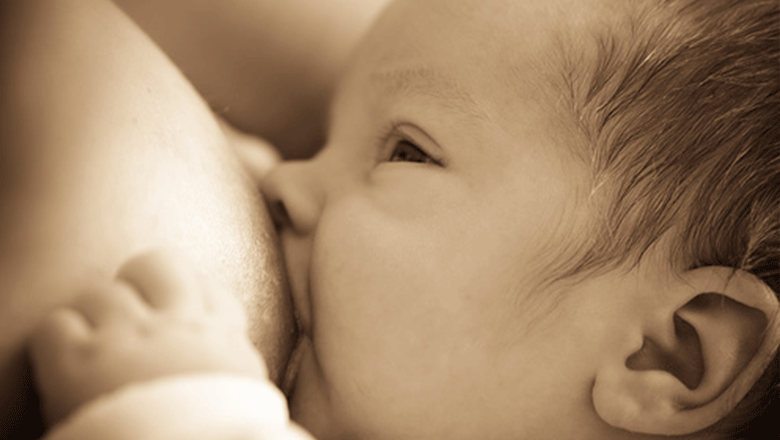
As a child health researcher, I'm often asked by new Mums what's the best thing they can do for their babies? And my answer is always the same, breastfeed.