
Search
Showing results for "Neuromuscular disorders "
We hope that through earlier diagnosis and treatment of muscle weakness during sleep, we can prevent future lung failure in children with neuromuscular disorders.
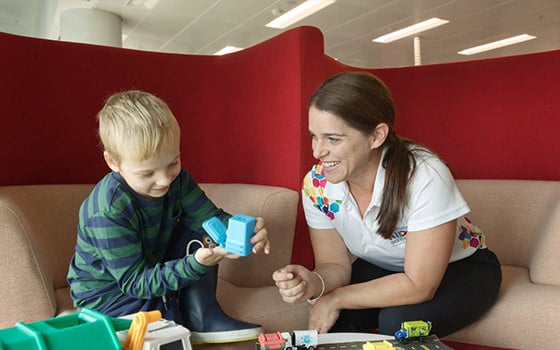
Our vision is to increase awareness and improve outcomes for children with movement disorders and other neurodevelopmental conditions impacting on motor function.
Young Minds Matter provides information on the prevalence and impacts of mental disorders on children and adolescents in Australia.
Britta Regli-von Ungern-Sternberg AM FAHMS MD, PhD, DEAA, FANZA Chair of Paediatric anaesthesia, University of Western Australia; Consultant
The prevalence of mental disorders is the proportion of children & adolescents in the population who meet DSM-IV criteria for a diagnosis of a mental disorder.
Amy Andrew Helen Jenny Martyn Melissa Videos Finlay-Jones Whitehouse Watch and listen to Andrew Leonard Downs Symons Licari BPsych(Hons), MPsych(

In this The Kids Research Institute Australia subsite, our Rett syndrome research team manages a national and international database of Rett syndrome.
We examine the level of comorbidity found between Autism spectrum disorder and Schizophrenia spectrum disorders at a clinical and trait level
The aim of the WA Register for Autism Spectrum Disorders is to monitor diagnostic trends of Autism Spectrum Disorders. These disorders develop in
The Telethon Kids Institute has welcomed the expansion of clinical services for young people with Fetal Alcohol Spectrum Disorders (FASD).