
Search

New research by The Kids Research Institute Australia has found children who attend playgroups achieve better early primary school outcomes.
This project provides guidance to help school leaders review the evidence for different programs, as well as a review of universal, evidence-based pre-school and school-based social and emotional learning programs available in Australia.
The Life Course Centre is a national centre funded by the Australian Research Council Centre of Excellence Scheme and hosted through the University of Queensland with collaborating nodes at the University of Western Australia, Sydney University and University of Melbourne.
The early years is a critical stage to establish optimal nutrition and movement behaviours. Community playgroups are a relaxed environment for parents with a focus on social connection and supporting parents in their role as 'First Teachers'. Playgroups are therefore an opportunistic setting to promote health behaviours in the early years.
Knowledge of developmental trends in meeting age-specific 24-hour movement behaviour guidelines is lacking. This study describes developmental trends in device-measured physical activity and sedentary time over a three-year period among Western Australian children aged two to seven years, including differences between boys and girls.
Childcare services such as preschools and long day care centres have been identified as a key setting to promote physical activity in early childhood as they provide access to large numbers of children for prolonged periods. Yet, specific standards for the type and amount of physical activity children accumulate whilst attending childcare are lacking. The purpose of this study was to derive population-referenced percentile values for children's total movement and energetic play whilst attending early childhood education and care services.
This study investigated where preschool children were more or less active in outdoor play areas in Early Childhood Education and Care (ECEC) centers using a novel method of combined device-measured physical activity, spatial data and on-site audit data.
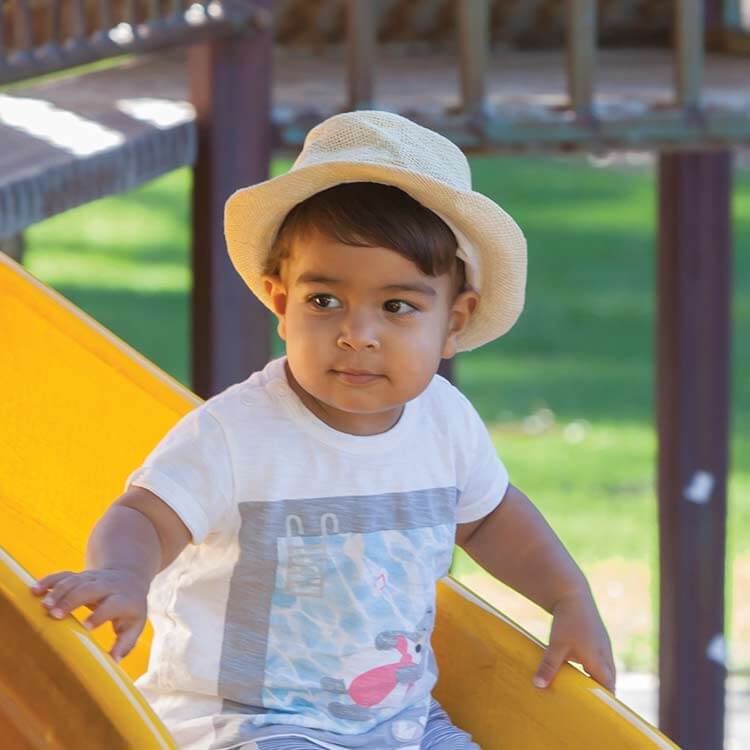
The Early Years Systems Evidence (EYSE) team specialises in working in partnership with governments and service providers, with a distinct focus on improving the life chances of children in Australia.
The importance of play for a child’s development is irrefutable. Playgroups provide a safe environment for children of similar ages to play and develop prior to starting school.
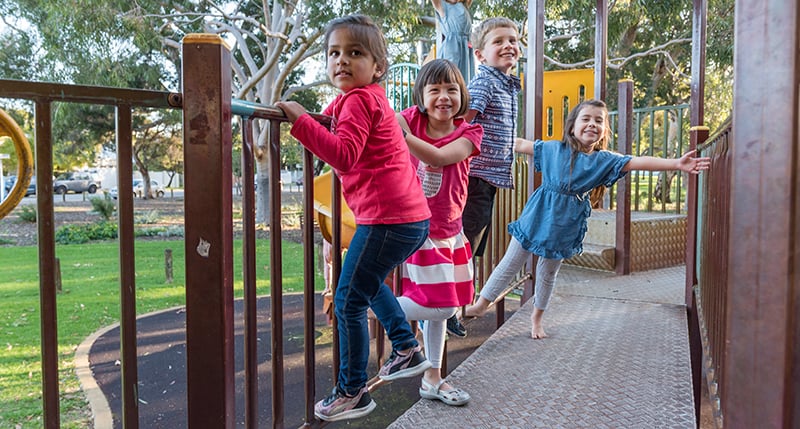
We have all heard of the phrase ‘it takes a village to raise a child’ but unfortunately in contemporary western society that ‘village’ can be hard to find.