
Search
Showing results for "early lung health"
Health care workers (HCWs) faced an increased risk of Coronavirus Disease 2019 (COVID-19). Australia’s COVID-19 vaccine rollout commenced in February 2021 to priority groups, including HCWs. Given their increased risk, as well as influence on patients’ vaccine uptake, it was important that HCWs had a positive COVID-19 vaccination experience, as well as trusting the vaccine safety and efficacy data.
Respiratory disease is a leading cause of morbidity, mortality, and poor quality of life in children with cerebral palsy (CP). This study describes the prevalence of CP-related respiratory disease and the non-modifiable risk factors for respiratory-related hospital admissions in the Aotearoa New Zealand population.

Register now to attend this compelling talk at the Heath Ledger Theatre in Perth on the evening of Wednesday, November 1 2017.
A world-first survey of Australian doctors and medical students has shown they are burnt-out and likely to have poorer mental health than the general community.
A new study led by Australian researchers has outlined for the first time the best treatment options for children suffering from meningioma

T1D can be a traumatic diagnosis for children and young people, and often involves strict adherence to painful treatments, comorbid mental health conditions, and shortened life expectancy.
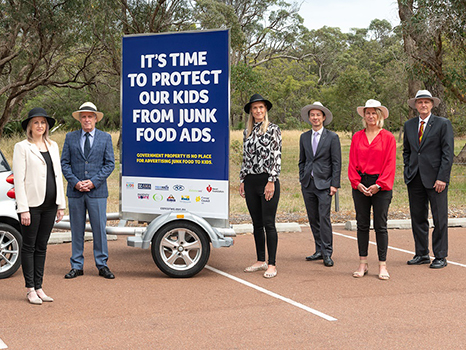
WA’s leading health agencies have joined forces to call on the State Government to immediately end junk food advertising on government property.
Chris Deborah Peter Tanisha Greta Karina Brennan-Jones Lehmann Richmond Cayley Bernabei Tao PhD AO, MBBS, MSc MBBS MRCP(UK) FRACP BBiomed (Hons) BSc
In order to help doctors and families reduce the risk of fractures, we developed clinical guidelines for managing bone health in Rett syndrome.
Sports gambling has become increasingly normalised among young people, with the proliferation of sponsorship deals and a 300% rise in the number of gambling advertisements in the past 7 years.