
Search
Showing results for "1"
Acute flaccid paralysis (AFP) surveillance continues globally as part of the World Health Organization's goal to eradicate poliomyelitis. The Australian Paediatric Surveillance Unit, Paediatric Active Enhanced Disease Surveillance network, and National Enterovirus Reference Laboratory collaborate in AFP surveillance in Australia, capturing and reviewing cases of AFP for all aetiologies in order to exclude poliovirus. We aimed to describe the AFP epidemiology in childhood over an 11 year period.
BRAF genomic alterations are the most common oncogenic drivers in pediatric low-grade glioma.
Developmental and epileptic encephalopathies (DEE) are rare, often monogenic neurodevelopmental conditions. Most affected individuals have refractory seizures. All have multiple severe impairments which can be as life-limiting as or more limiting than the seizures themselves. Mechanism- and gene-targeted therapies for these individually rare, genetic conditions hold hope for treatment, amelioration of disease expression, and even cure.
Australian Aboriginal and Torres Strait Islander women with diabetes in pregnancy (DIP) are more likely to have glycaemic levels above the target range, and their babies are thus at higher risk of excessive fetal growth. Shoulder dystocia, defined by failure of spontaneous birth of fetal shoulder after birth of the head requiring obstetric maneuvers, is an obstetric emergency that is strongly associated with DIP and fetal size.
Infection by group A Streptococcus (Strep A) results in a diverse range of clinical conditions, including pharyngitis, impetigo, cellulitis, necrotising fasciitis, and rheumatic heart disease. In this article, we outline the recommended strategies for Strep A treatment and prevention and review the literature for economic evaluations of competing treatment and prevention strategies.
ZFTA-RELA (formerly known as c11orf-RELA) fused supratentorial ependymoma has been recognized as a novel entity in the 2016 WHO classification of CNS tumors and further defined in the recent 2021 edition.

Scientific Software Developer
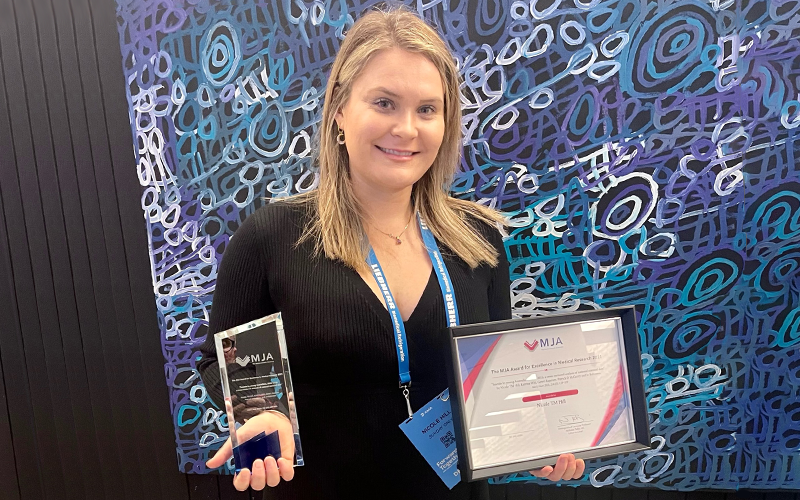
Dr Nicole Hill and a team of co-researchers from Orygen have received the 2021 Medical Journal of Australia (MJA) award for Excellence in Medical Research.
Pediatric acute lymphoblastic leukemia (ALL) therapy is accompanied by treatment-related toxicities (TRTs) and impaired quality of life. In Australia and New Zealand, children with ALL are treated with either Children's Oncology Group (COG) or international Berlin-Frankfurt-Munster (iBFM) Study Group-based therapy.
The majority of children acquire language effortlessly but approximately 10% of all children find it difficult especially in the early or preschool years with consequences for many aspects of their subsequent development and experience: literacy, social skills, educational qualifications, mental health and employment.