
Search
Showing results for "lung disease preterm"

Program Assistant
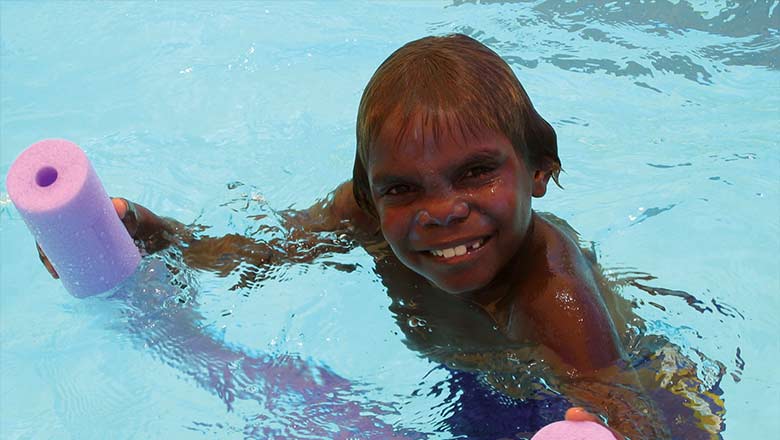
A comprehensive study into the impact of swimming pools in remote Aboriginal communities has found significant health and social benefits for children.
Dental caries remains the most common chronic disease in childhood, affecting almost half of all children globally. Dental care and examination of children living in remote and rural areas is an ongoing challenge that has been compounded by COVID.
The impact of smallpox (variola) on Aboriginal communities in Australia beginning in 1789 was catastrophic and continues to cause intergenerational trauma. Historically biased perspectives and contemporary misinformation of the disease's introduction and spread impede modern-day truth-telling and efforts towards reconciliation and national healing.
Cereal-derived polyphenols have demonstrated protective mechanisms in colorectal cancer (CRC) models; however, confirmation in human studies is lacking. Therefore, this study examined the association between cereal polyphenol intakes and CRC risk in the Melbourne Collaborative Cohort Study (MCCS), a prospective cohort study in Melbourne, Australia that recruited participants between 1990 and 1994 to investigate diet-disease relationships.
Children with long-term conditions are vulnerable due to the treatments required for their conditions. Since the start of the coronavirus disease 2019 (COVID-19) pandemic, Western Australians experienced restrictions that changed daily life activities but were able to return to some of their previous routines due to the restrictions.
The coronavirus disease 2019 (COVID-19) pandemic continues to impact mental health and wellbeing globally. There is a lack of scientific documentation highlighting the mental health impact of COVID-19 in Bhutan. We present the mental health burdens and control measures taken, and suggest ways to further strengthen mental health services in Bhutan.
Peanut allergy is the most common food allergy in Australian school-aged children and is rarely outgrown. Access to oral immunotherapy (OIT), a disease-modifying treatment for food allergy, is limited in many regions of the world, including Australia.
Neonatal sepsis is a deadly disease with non-specific clinical signs, delaying diagnosis and treatment. There remains a need for early biomarkers to facilitate timely intervention. Our objective was to identify neonatal sepsis gene expression biomarkers that could predict sepsis at birth, prior to clinical presentation.
Neisseria meningitidis is commensal of the human pharynx and occasionally invades the host, causing the life-threatening illness invasive meningococcal disease. The meningococcus is a highly diverse and adaptable organism thanks to natural competence, a propensity for recombination, and a highly repetitive genome.