Skip to content

Search

Showing results for "vitamin d asthma"

CD4+ T cells drive an inflammatory, TNF-α/IFN-rich tumor microenvironment responsive to chemotherapy

While chemotherapy remains the first-line treatment for many cancers, it is still unclear what distinguishes responders from non-responders. Here, we characterize the chemotherapy-responsive tumor microenvironment in mice, using RNA sequencing on tumors before and after cyclophosphamide, and compare the gene expression profiles of responders with progressors.

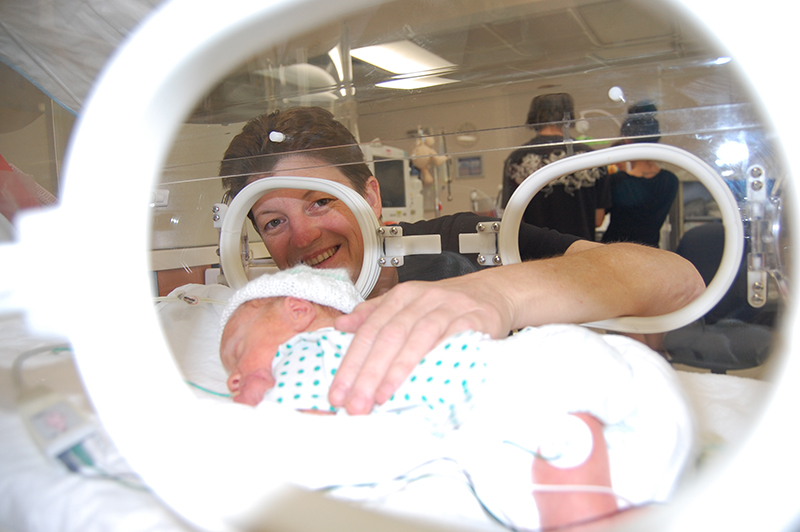
Living with lung disease: experimental models to assess the long-term effects of prematurity

Laboratory models provide an important tool in helping to understand the cellular and molecular drivers of respiratory disease. Many animal models exist that model the neonatal outcomes of preterm birth.

The ventilatory response to hypoxia is blunted in some preterm infants during the second year of life

Preterm birth and subsequent neonatal ventilatory treatment disrupts development of the hypoxic ventilatory response (HVR). An attenuated HVR has been identified in preterm neonates, however it is unknown whether the attenuation persists into the second year of life.

Primary Nasal Epithelial Cells as a Surrogate Cell Culture Model for Type-II Alveolar Cells to Study ABCA-3 Deficiency

ATP Binding Cassette Subfamily A Member 3 (ABCA-3) is a lipid transporter protein highly expressed in type-II alveolar (AT-II) cells. Mutations in ABCA3 can result in severe respiratory disease in infants and children. To study ABCA-3 deficiency in vitro, primary AT-II cells would be the cell culture of choice although sample accessibility is limited. Our aim was to investigate the suitability of primary nasal epithelial cells, as a surrogate culture model for AT-II cells, to study ABCA-3 deficiency.

Climate Change and Children’s Health: A Commentary

This commentary describes the likely impacts on children's health and wellbeing from climate change, based on the solid science of environmental child health.

Cohort profile of the HealthNuts study: Population prevalence and environmental/genetic predictors of food allergy

HealthNuts is a single-centre, multi-wave, population-based longitudinal study designed to assess prevalence, determinants, natural history and allergy...

Early respiratory infection is associated with reduced spirometry in children with cystic fibrosis

We hypothesized that the presence of these markers of cystic fibrosis lung disease in the first 2 years of life would be associated with reduced lung...

Biodiesel exhaust-induced cytotoxicity and proinflammatory mediator production in human airway epithelial cells

Our results show that canola biodiesel exhaust exposure elicits inflammation and reduces viability of human epithelial cell cultures in vitro when compared...

About

The ultimate goal of ORIGINS is to reduce the rising epidemic of non-communicable diseases through 'a healthy start to life'.

Developmental Origins

Developmental Origins of Health and Disease