
Search
Showing results for "lung disease preterm"
Australia commenced administration of the Spikevax (Moderna mRNA-1273) COVID-19 vaccine in August 2021 and Nuvaxovid (Novavax NVX-CoV2373) in January 2022. This study describes the short-term safety profile of priming doses of the Spikevax and Nuvaxovid vaccines given between September 2021 and September 2023.
Despite universal access to government-funded direct-acting antivirals in 2016, the rate of hepatitis C treatment uptake in Australia has declined substantially. Most hepatitis C is related to injecting drug use; reducing the hepatitis C burden among people who inject drugs is, therefore, paramount to reach hepatitis C elimination targets.
The global burden of non-communicable diseases (NCDs) continues to grow. Although developing settings face fastest growth in incidence, no country is exempt.
CMT4D disease is a severe autosomal recessive demyelinating neuropathy with extensive axonal loss leading to early disability, caused by mutations...

Project Officer
Tom Snelling BMBS DTMH GDipClinEpid PhD FRACP Head, Infectious Disease Implementation Research 08 6319 1817 tom.snelling@thekids.org.au Head,
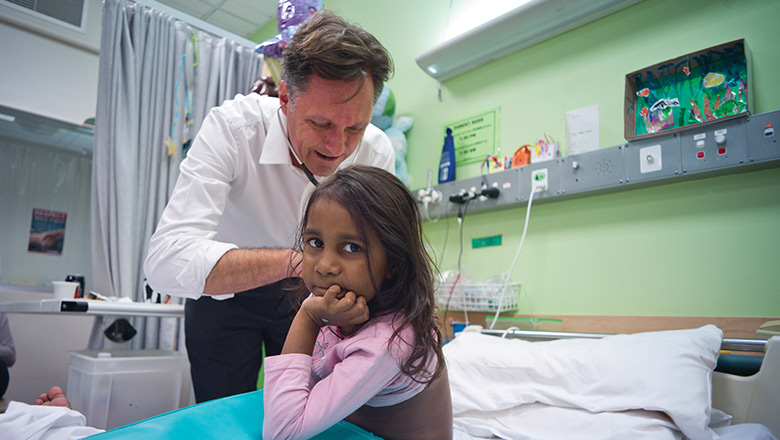
The Kids Research Institute Australia is spearheading a trans-Tasman effort to develop a vaccine for rheumatic fever.

In this The Kids Research Institute Australia subsite, our Rett syndrome research team manages a national and international database of Rett syndrome.
Mesothelioma is a rare and universally fatal cancer linked to exposure to asbestos. Until recently, standard of care treatment was chemotherapy; a treatment resulting in a minimal survival extension, and not improved upon for almost twenty years. However, the advent of cancer immunotherapy – and in particular the immune checkpoint inhibitor class of drugs - has resulted in recently approved new treatment options, with more currently under investigation.
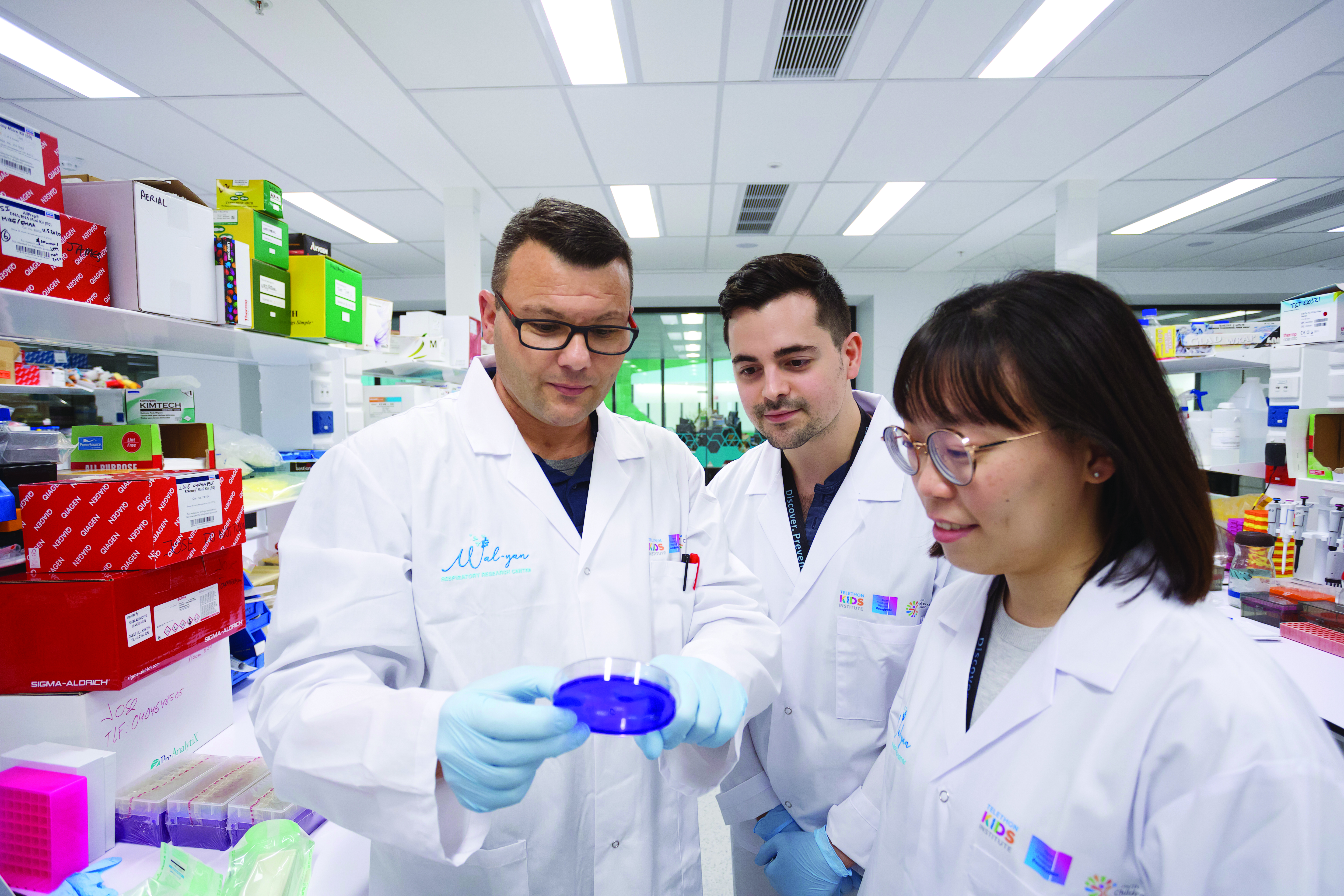
Cutting-edge work is offering new hope to children with Cystic Fibrosis.