
Search
Showing results for "Childhood interstitial lung disease "
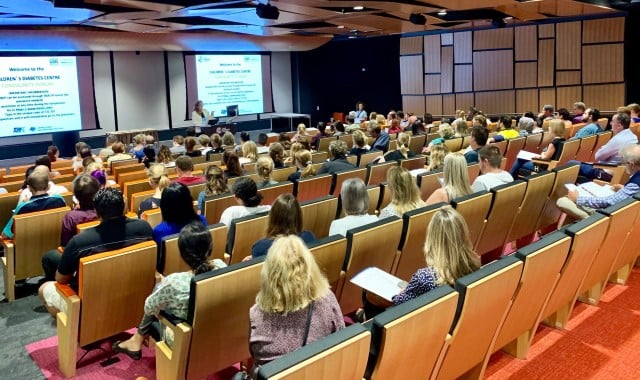
The Children’s Diabetes Centre was honoured to have leading international experts Laurel Messer and Professor Mike Riddell as guest speakers at its community forum and research symposium recently.
The textbook view of vaccination is that it functions to induce immune memory of the specific pathogen components of the vaccine, leading to a quantitatively and qualitatively better response if the host is exposed to infection with the same pathogen
We report an 8 year old girl who was diagnosed with THES by the Undiagnosed Disease Program-WA with compound heterozygous pathogenic variants in SKIV2L
Secondary care could be the optimal sector for managing child and adolescent obesity, given low primary care uptake and limited tertiary services.
HDM allergy is associated with asthma, allergic rhinitis and atopic dermatitis.
In Western Australia, community pharmacists are authorized to administer a range of vaccines without a prescription. Since mid-July 2021, pharmacists can also administer Coronavirus Disease 2019 (COVID-19) vaccines. Little is known about how pharmacists think and feel about giving and receiving COVID-19 vaccines and how they discuss it with patients.
Modern precision sequencing techniques have established humans as a holobiont that live in symbiosis with the microbiome. Microbes play an active role throughout the life of a human ranging from metabolism and immunity to disease tolerance. Hence, it is of utmost significance to study the eukaryotic host in conjunction with the microbial antigens to obtain a complete picture of the host-microbiome crosstalk.
The MELODY Study is a Phase 3 randomized, double-blind, placebo-controlled, single-dose study to determine if MEDI8897 will prevent medically attended Respiratory Syncytial Virus (RSV) -confirmed Lower Respiratory Tract Infection (LRTI) in healthy infants entering their first RSV season.
The study is a phase 3, Multicentre, Randomised, Double-blind, Active Comparator-controlled Study to Evaluate the Safety and Tolerability of V114 in Health Infants.
This study aims to investigate a new vaccine which has been developed to protect children from RSV.